Search This Blog

Monday, October 8, 2018

Pass the Ketchup, Please


With a need to eat more wisely as I age, I spend a lot of time in the grocery store reading labels. While I have eliminated some foods from my shopping list that used to be standards, one staple I still insist on having is ketchup. However, when I realized how much sugar and salt go into my favorite condiment, I wondered if I could make it at home. And because I love history—and the history of the American west in particular--the next thought was ‘where was ketchup created’ and did they have it in the old west?

The origins of ketchup are thought to be in a Chinese pickled fish sauce or brine made in the late 1600s. The British brought the table sauce back from their explorations of Malay states—present day Malaysia and Singapore—and by 1740 it was a staple in their cuisine. The Malay word for the sauce was kÄ•chap, which evolved into “ketchup” and became “catchup” and “catsup” in America.

Original versions of “ketchup” were made from lots of different savory items. One very popular one in America was mushrooms. Check out the picture of “Mushroom Ketchup.”  The 1913 edition of Webster’s Dictionary defines catchup as “a table sauce made from mushrooms, tomatoes, walnuts, etc.”

Tomatoes weren’t used in making the sauce until the early 1800s. A recipe published in 1801 seems
to be the first making what you and I would recognize as ketchup—although I doubt it would taste the same. Cooks didn’t begin adding sugar to the mixture until later in the century.

Most families made their own ketchup. In 1837, a man named Jonas Yerks is credited with making tomato ketchup a national food by producing and distributing his product across the U.S. It wasn’t long before other companies joined the rush, including H.J. Heinz, who launched their brand of ketchup in 1869.

Early versions were thin and watery, more like the fish sauce than the thick tomato product we’re accustomed to, but had less vinegar than the modern recipe. In fact, I doubt we’d recognize the jar of ketchup served by a Harvey Girl in a Harvey House Restaurant in the 1880s as the same product Americans have come to love--but it’s fun to know it was there.

Tracy

Check out the six novels that make up "Under a Western Sky" today!

Sunday, October 7, 2018

Grace Greenwood - Honorary First Lady of the Pikes Peak Region #PrairieRosePub


As part of an ongoing series about early women in the Pikes Peak Region, October's post is about Grace Greenwood.

To read others post in this series:
Elizabeth McAllister
Cara Bell

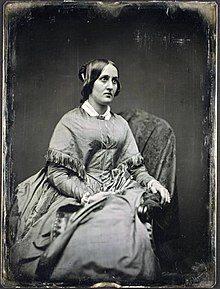
Unlike the first two ladies in the series, 'Grace Greenwood' only lived in the area a short time, but her writings sang the praises of Colorado and the Pikes Peak area. But who was 'Grace Greenwood'?

Image result for images of grace greenwood
Image from Wikipedia
Grace Greenwood was the pen name for Sara Jane Lippincott. On September 23, 1823, Sara Jane Clarke was born to Deborah and Dr. Thaddeus Clarke in Pompey, New York. She went to school in Rochester, New York and later moved to Brighton, Pennsylvania with her family.

From an early age, Sara wrote and submitted poems and sketches, and had her first piece of prose published when she was twenty. Like others of her time she used a pen name. Once she started using the name Grace Greenwood, it became who she was. Even friends started calling her by the name Grace.

According the Inez Hunt and Wanetta Draper in their book "Colorado's Restless Ghost" Sara was "Exuberant and self-sufficient in an era when frailty was the fashion. Grace [Sara] grew too tall, was too vital, and too clever. She simply didn't fit her time nor her place; she outgrew them all."

Marrying late in life to Leander K. Lippincott, the couple had one child which they named Ann.While Grace traveled about with their daughter, Leander stayed behind. In 1876 he was indicted for land fraud and fled the country.

Image result for grace greenwood cottage manitou springs colorado
Image from Wikimedia Commons
Grace first came to Colorado in the early 1870s and it was noted in the 'Colorado Magazine' of September 1871, "Grace Greenwood is one of the literary attractions in Denver. She is here on a visiting, lecturing and observation tour, is corresponding for the New York Times and writing up the country in her most graceful style.''  After a visit to Colorado Springs and Manitou Springs she purchased land in the latter town in 1873 and set about having a cottage built for her . While the 'cottage' was being built she stayed with relatives, the Mellons, and enjoyed the company of the town leaders. After moving in, there was an attempted burglary but Grace took her Italian stiletto and went in hot pursuit. After the incident the following appeared in the local paper:
             
          We now give warning to all gentlemen of burglarious proclivities that a good and gallant friend having provided us with a six shooter, we intend to practice diligently with it, firing promiscuously from our balconies o'nights. I am not Mrs. J.B. Lippincott, and haven't any diamonds, our silver is plated, our money in the bank if we haven't over-drawn...I intend setting the shrubbery full of steel traps...no use for them to call again at Clematis Cottage [the name she gave her home] and may be slightly dangerous. P.S. another friend has lent us a brindle-bull terrier--very powerful.

Grace traveled, wrote, lectured and pursued many different causes in her lifetime. She lived in Europe for a time in the 1880s and wrote a a biography of Queen Victoria while there. She died at the home of her daughter on April 20, 1904 at the age of eighty-one.

In the end this woman who championed prison reform, woman's rights, the end of the death penalty and was staunchly anti-slavery, is little known today. To quote the Hunt/Draper book "Her brilliant flash across the Colorado skies had been meteoric and spectacular, but her flame burned out quickly and left no trace." Perhaps it is time to remember the Honorary First Lady of the Pikes Peak Region. 


Doris Gardner-McCraw -
Author, Speaker, Historian-specializing in
Colorado and Women's History
Member of National League of American Pen Women,
Women Writing the West,
Pikes Peak Posse of the Westerners

Angela Raines - author: Where Love & History Meet
For a list of Angela Raines Books: Here 
Photo and Poem: Click Here 
Angela Raines FaceBook: Click Here


Saturday, October 6, 2018

NEW CALLS FOR SUBMISSION AT PRP!


SIX GUNS AND PRAIRIE ROSES


PRAIRIE ROSE PUBLICATIONS CALL OUT FOR SUBMISSIONS FOR NEW WESTERN HISTORICAL LINE!

What happens when a hired gun is forced to save a damsel in distress? Or when an ex-lawman must pick up his six guns once more to stand between a “prairie rose” and outlaws when they come calling?

At PRAIRIE ROSE PUBLICATIONS, we are opening a call out for submissions for exciting stories like these! This new line, SIX GUNS AND PRAIRIE ROSES, will feature stories of men who are “gun handy” –– for better or worse—who come to the rescue of a woman in need, or in danger.

Does she readily accept his help—or is your heroine anything but a delicate flower looking for assistance? Is she from West Texas, or is she an Eastern socialite? Or could she be an immigrant from another country, making her way west?

Along the way, these lovers will find their own brand of romance (sweet to steamy) as danger lurks at every turn! Make us wonder if this couple is going to survive to see their HEA!

SETTING: Historical American West—west of the Mississippi River
TIME PERIOD: 1830-1899
HEAT LEVEL: Sweet, sensual, spicy, steamy—no erotica
WORD COUNT: 35K-70K

Please send your submissions to Cheryl Pierson for consideration at: fabkat_edit@yahoo.com


THE SWORD AND THE ROSE


PRAIRIE ROSE PUBLICATIONS CALL OUT FOR SUBMISSIONS FOR NEW MEDIEVAL ROMANCE LINE!

What happens when a knight is granted his own small keep, only to learn he must marry to hold it? Or when a young noble woman is faced with an ultimatum from her king—she’ll wed the man he chooses for her—even if he is a sworn enemy—or else!

At PRAIRIE ROSE PUBLICATIONS, we are opening a call out for submissions for action-filled stories like these. This new line, THE SWORD AND THE ROSE, will feature stories of mercenaries, knights, and noblemen—or other men of medieval times—who come to the rescue of a woman in danger. Though these lovers may not realize it or plan for it to happen, their circumstances will inevitably lead to a very happy-ever-after ending for both of them!

Does your heroine welcome your hero’s help, or is she determined to try to be independent—and hold things together without him? Is he a stranger to her, or someone she’s known from the past?

Somewhere along the way, the couple will find their own brand of romance (sweet to steamy) as danger lurks at every turn!
Make us wonder if this medieval couple is truly destined to enjoy their HEA!

HISTORICAL MEDIEVAL SETTING
HEAT LEVEL: Sweet, sensual, spicy, hot—no erotica
WORD COUNT: 35K-70K

Please send your submissions to Cheryl Pierson for consideration at: fabkat_edit@yahoo.com


WOMEN OF DESTINY CALL FOR SUBMISSIONS

Do you have a story to tell about a very special heroine? One who defied the conventions of society to follow her dreams? Maybe your heroine aspired to become a doctor, or an attorney, or some other vocation that was most generally dominated by males. She may have been a woman who preached the gospel, or perhaps she was forced to take over the family business and keep it solvent during a time in our history when men ‘ran the show’ in these realms…and didn’t allow women to participate.

But sometimes, Fate has plans that won’t be altered, and these WOMEN OF DESTINY dream big—with Lady Luck as the wind in their sails, and grit and determination as their rudder, how can they be stopped? Add a good supporting hero in the mix, some unforeseen ups and downs (of course!) and an exciting tale of perseverance and true love is born!

These are just some of the ideas we’ve come up with for these special women and their very unusual success stories! If you have a historical heroine who is destined for an unconventional role in life—discovering love on the way—we’d like to invite you to submit to our new WOMEN OF DESTINY line at Prairie Rose Publications!

Stories will be set in the HISTORICAL time period of 1830-1899.
Primary setting of stories will be in the United States.
Romance? BUT OF COURSE! Any heat level, but please, no erotica.
Length: 50,000-90,000 words.
Open call for submissions immediately (7/21/18)—we look forward to seeing what wonderful creations you come up with!

NEW OR PREVIOUSLY PUBLISHED WORK MAY BE SUBMITTED
Please send your submissions to Cheryl Pierson for consideration at: fabkat_edit@yahoo.com


AND THERE ARE MORE! Just check out our submissions page at the PRP website for all open calls --Men in Uniform, Witty Cozies, and always, any stories that fit our imprints are welcome submissions!
http://prairierosepublications.com/

Thursday, October 4, 2018

The Mail Order Bride Murder

C.A. Asbrey 


 Caroll Rablen, a veteran from WW1, was deaf in one ear from an exploding shell in the trenches. When he returned home t the USA, he married briefly, but the marriage lasted less than a year due to his wife's disagreements with Rablen's domineering father. Still keen to find a wife, he started placing advertisements to seek out a Mail Order Bride.

Amongst those who replied was Eva Young, also known as Brandon, who had also been married before and had an 11 year old son. If Carroll had looked more closely, he might have noticed the immature tone in Eva’s letters.  If he’d taken the time to scrutinize her words he might have been able to recognize a flaw in her thinking.  According to the July 14, 1929 edition of the Ogden, Utah newspaper the Ogden Standard-Examiner, one of Eva’s first correspondences demonstrated that not only did she seem much younger than thirty-three years old, but she also had a dark side.  “Mr. Rablen, Dear Friend,” the letter began. “You wrote about a son I have. He has had no father since he was a month old. The father left me. I haven’t seen him.  If a man leaves me I don’t want to see them. And I’ll make sure I can’t.”

Eva left Texas for California in late April 1929 and they were married the evening of April 29, 1929.  The dance that followed the nuptials at the Tuttletown school house was well attended by Carroll’s friends and neighbors.  Most were happy he had found someone to share his life, but Carroll's father did not approve, finding her too flighty and flirtatious. On the night of the wedding Eva twirled around the room dancing with anyone who wanted to join her.  She was elated with her situation. Carroll on the other hand chose to wait outside for his new bride in the car. According to the Ogden Standard Examiner, Carroll was slightly deaf and despondent over the other physical ailments that kept him from fully enjoying the festivities. His bride clearly had no such limitations.

When Carroll’s father, Stephen Rablen began regaling guests with his rendition of  “Turkey in the Straw” on his fiddle, Eva excused herself and went outside to visit with her husband. She took a tray of sandwiches and coffee to him. On the way out she bumped into a woman called Alice Shea and spilled coffee on her dress. The new husband smiled proudly at her and commented on how thoughtful it was for her to bring him some refreshments. Carroll helped himself to a cup of coffee, blew across the top of it to cool it down then took a sip.  He made a bit of a face as if the coffee lacked something. He took another drink to determine what it needed.

Shortly after Carroll swallowed the brew a third time, he dropped the cup and began to scream. Wedding guests were soon alerted and poured out of the building to see what was wrong.  Carroll’s father pushed through the crowd to get to his son. “Papa. Papa,” Carroll repeated, reaching out for Stephen’s hand. “The coffee was bitter…so bitter.”

Emergency services were called to the scene but by the time they arrived Carroll had slipped into an unconscious state. Attendees at the reception told reporters for the local newspaper that Eva simply stood back and watched the action play out around her.  She wore no expression at all; no worry, concern, anxiety, nothing. An ambulance transported Carroll to the hospital and Eva road along quietly in the vehicle with her husband. He was pronounced dead at the scene.

Because Carroll’s illness came on so suddenly doctors suspected foul-play.  An autopsy was performed but the contents in Carroll’s stomach revealed the no presence of poison. There was no other evidence to charge her with the murder. Eventually the prosecution would call upon a man named Heinrich who was known as The Wizard of Berkeley. He examined the corpse and found traces of strychnine in his stomach. However the coffee cup was also analyzed and traces of poison were found there. In a pivotal find he also tested the coffee stain on Alice Shea's dress. That also tested positively for strychnine.
 

On May 1, 1929, the day of Carroll’s funeral, the Sheriff of Tuolumne County returned to the spot where the groom died.  In a patch of grass only a few spots where Rablen’s automobile was parked, a bottle of strychnine was found. The bottle was traced to a drugstore in near Tuttletown.  The register showing the purchase of the item had been signed for by Mrs. Joe Williams. The description of Mrs. Williams given by the clerk at the drugstore suggested Eva Brandon Rablen bought the item.

 Dr. Edward O. Heinrich

The sheriff asked Carroll’s widow to accompany him to the drugstore where without hesitation the clerk identified her as the purchaser of the poison.  

Authorities escorted Eva to the police station and she immediately claimed her husband had poisoned himself because he was brokenhearted over his health problems.  Stephen arrived at the station soon afterwards and told police that he suspected his daughter-in-law killed his son over a $3,500 insurance policy. He accused Eva of finding her victims through mail-order bride advertisements and suggested she killed her last husband, a mail-order groom named Hubert Brandon. Stephen demanded Eva be arrested for murder.

Eva was arrested for the crime, but not on her father-in-law’s orders.  A handwriting expert had compared the signature on a drugstore’s registry with one Eva provided authorities with at the station.  The two were a match. Eva was charged with premeditated murder.

Newspaper articles about the homicide referred to Eva as “Borgia of the Sierras.”  The public was ravenous for specifics about the killing and the trial was so popular it was held outdoors to accommodate the crowds. “Quarrels, quarrels, I was sick of and tired of them,” Eva told a judge about her marriage.  “We talked things over. It was decided we should both commit suicide. But I couldn’t bring myself to do it. Finally I decided to poison him. It was the best way out, I thought.  Now they want to hang me? I could only put him out of the way because I felt it was the only way to get my freedom.”

Eva was sentenced to life in prison at San Quentin for murder.  The day the authorities escorted her to the ferry that would take her to the penitentiary she was all smiles.  Reporters and inquisitive spectators on hand at the dock asked Eva why she killed Carroll. She politely told them she couldn’t give them the information they wanted.  “I can’t tell you why. I can’t tell you why I confessed to putting strychnine in my husband’s coffee. I told the court all and I want to tell all.”

Eva was helped onto the ferry that would transport her to San Quentin.  Sheriff Jack Dambacher of Sonora County and his wife decided to travel with Eva to prison.  “I feel fine,” she told her traveling companions, “not a bit tired. I’m not at all downhearted or discouraged.”  Eva’s eleven year-old son, Albert Lee waited at the dock with his aunt and uncle to say goodbye to his mother. Eva showed little emotion as she held her child close to her.  “I will be all right,” she told him. “I’m going to study Spanish. I’ve always been crazy to learn Spanish. Then if I get along well with that I can take on other subjects.”  Eva’s sister assured her that she would take very good care of her boy and promised her that those who lived in the Sonora area would help with Albert as well. “He will not suffer for what wasn’t his fault.  We will see he wants for nothing.”

Eva's confession eliminated the need for a trial.She was sentenced to life in prison without possibility of parole or commutation. Her defense attorneys focused on Eva’s supposedly arrested mental development in an attempt to gain her release. As one expert told the media: “The response of the ductless glands to situations varies with their congenital capacity and acquired susceptibility. In the ability of one endocrine system to inhibit another we have the germ of the unconscious. Hence the modus operandi of the repressions and the supressions, compensations and dissociations, which may unite to integrate, or refuse to integrate, and so disintegrate and deteriorate a personality.”

This is not something modern science would agree with, however her limited mental capacity undoubtedly saved her from the death penalty.


INNOCENT AS SIN (The Innocents Mystery Series) (Volume 2) by C. A. Asbrey

Nat Quinn and Jake Conroy are just doing their job—robbing a bank! But when Nat sees Pinkerton agent Abigail MacKay is already there, he knows something isn’t right. Is she on the trail of The Innocents again, or has she turned up in Everlasting, Wyoming, by coincidence?
Abi can’t believe her bad luck! Nat and Jake are about to make her true identity known, and botch the undercover job she has carefully prepared for—a job she’s been working on for months. When Jake discovers she’s cooperating with a sadistic bounty hunter who never brings in his prisoners alive, he suspects Nat might be the next target. How could Abi betray them like this?
On top of everything else, someone has dumped a frozen corpse after disguising it as a tramp. The town is snowed in and the killer isn’t going anywhere, but can Abigail’s forensic skills solve the murder before anyone else is killed? Abi and Nat manage to admit their feelings for one another, but will that be enough to overcome the fact that they’re on opposite sides of the law?  
The Innocents and Abigail MacKay must work together to solve the murder case, but they’re still best enemies. It’s an emotional standoff, and they’re all INNOCENT AS SIN…

EXCERPT

     It took another half-hour before Jake saw her neat, feminine figure approaching, her light blue dress standing out against the sun-parched dust of the streets. By this time, his breath came in rapid, shallow pants until his fingers prickled and his head spun. The everyday sounds of the town swamped his senses until they crashed around his skull in an echoing cacophony. Her voice reverberated, unusually strident and harsh, echoing between the screaming and shouting from years ago in his head.
     "Jake?" Abigail's eyes darted around drinking in the surroundings, looking for danger. Why greet her openly in the street, near her gate? His glazed eyes sparkled and the pupils looked enormous, but he didn’t seem drunk.
     "Abi, come with me. It's urgent."


Wednesday, October 3, 2018

Scary Stuff by Sarah J. McNeal #blogabookscene


This is me, not supposed to be a scary picture, but might be.

I was afraid of the dark when I was a kid, and afraid of foxes, too. Consequently, I slept with a nightlight surrounded by all my toys (I didn’t want to hurt any of my toys’ feelings if I left one of them out.) Pop used to tell me I made straw men and then got scared of them. I had no idea what he meant when he told me that back when I was a kid. As an adult I realize he was just saying I let my imagination get a hold of me. I’m grateful for it now because what else is a fiction writer except a person whose imagination takes them someplace…and sometimes that place might get scary.
I wanted to write a short story for a Halloween anthology by Prairie Rose Publications, but I’m not into vampires or terrifying ghosts so what could I write with a western flavor involving my Wilding family? Slowly, my imagination began to open into an idea that just might work…sort of a Steve Erwin meets Jurassic Park kinda thing.


THE BEAST OF HAZARD (1940’s Wilding short story)

 Buy Link: AMAZON

Joe and Lola’s youngest child and only son, Joey Wilding, has transformed the family ranch into a veterinary clinic where he treats anything from house cats to cattle. He meets a circus performer who finds herself in desperate straights.

A Terrorized Town…A Killer Beast…And Deliverance

Excerpt:
 Joey walked through the woods to take the shortcut back home. Even in the half-light of approaching night, he could find his way back to the Wilding ranch. He sensed rather than saw something move just on the other side of the old pond. He kept his eyes and ears alert as he made his way through the low brush.

Something’s following me. Menacing and dangerous, it seemed to stalk him from somewhere beyond the bushes. Without a gun, he only had a knife to protect himself. His best option was to pick up his pace without running to get back to safety. Running would draw attention to him and whatever it was that shadowed him, it would identify him as prey.

And then he heard it growl. The ground practically shook beneath his feet with its deep, low pitched sound. Never, in all his life, had he heard such a sound. If death made a noise, it would sound like that. Heart pumping adrenaline made his hands shake, but he knew not to let it show. With every ounce of will he possessed, he put one foot in front of the other until he reached home. 


For more stories about the Wildings click on this link: The Wildings   

All Wilding Books are available on Kindle Unlimited


Diverse stories filled with heart


Monday, October 1, 2018

What's In A Name?

What’s In A Name? by Elizabeth Clements

Have you ever looked at a map and been amazed by the plethora of interesting names for places, provinces and states? It’s interesting to see the influence of native history in the naming of many places because they were the first inhabitants of the Plains. This is probably one of several reasons why I used the beautiful Cypress Hills as the setting for my book, Beneath A Horse-Thief Moon, because it was referred to as The Thunder-Breeding-Hills by the tribes that roamed the plains leading up to this vast forest. When the Métis fur traders arrived, they called the forest les montagnes des Cypres, which was mistakenly translated into English as Cypress Hills. There are no cypress trees here, mainly pines and aspens.


For the purpose of length, I shall restrict my blog to a few places in Alberta and Saskatchewan that derived their names from translations from the numerous First Nations people that roamed the western prairie provinces and American northern western states. Firstly, though, I thought I’d mention that my country’s name, Canada, was given by the French explorer, Jacques Cartier. The Huron-Iroquois word “kanata” means a village or settlement.

In 1535, two Aboriginal youths told French explorer Jacques Cartier about the route to kanata; they were actually referring to the village of Stadacona, the site of the present-day City of Québec. For lack of another name, Cartier used the word “Canada” to describe not only the village but the entire area controlled by its chief, Donnacona.
It wasn’t until 1791 when Canada became the official name of our country.

Alberta was a territory until it became a province of Canada in 1905 (together with Saskatchewan) and was named in honor of the fourth daughter of Queen Victoria—Princess Louise Caroline Alberta. Famous Lake Louise in Banff National Park is also given part of that royal name. Saskatchewan derived its name from the Saskatchewan River, which the indigenous Cree people called Kisiskatcfhewsani Sipi, meaning “the swiftly flowing river”. This same river flows through Medicine Hat but is called the South Saskatchewan River.

When Sir John A. Macdonald decided Canada needed a transcontinental railway, the Canadian Pacific Railway was constructed. Many communities sprang up along the railway line. This was the case with Medicine Hat, which is the English translation of Saamis (pronounced Sa-Mus), the Blackfoot word for the “eagle feather headdress worn by medicine men”.

Medicine Hat, the city where I live, has several legends for the origin of its name. The most popular version (and which I prefer) is that the Cree and Blackfoot had an altercation in the fork of the South Saskatchewan River and in the fierce battle, the Cree medicine man lost his headdress in the river, hence it became known as the place where the medicine man lost his hat.

Another legend  of this community’s name is about a mythical Mer-man  river serpent named  Soy-yee-daa-bee—the creator, who appeared to a hunter and instructed him to sacrifice his wife to get mystical powers, which were manifested in a special hat.” I much prefer the official one that was chosen about the Cree medicine man.

There are a few interesting historical facts about Medicine Hat. Rudyard Kipling visited  Medicine Hat circa 1905 and immortalized it by saying it’s a city with “all hell for a basement” because the city is situated over massive reserves of gas. That’s why our city is also known as The Gas City.

After the 1988 winter Olympic Games in Calgary, Alberta, that city was going to dismantle the large teepee they had built for the Games. One of our local citizens and art collector heard of the plan and initiated the purchase and it was dismantled and re-erected here. It was named the Saamis Teepee and is officially the tallest teepee in the world. Here is an award-winning photograph my son, Nick, took of the teepee during a lightning show.


Moving a little further west in the province, we have Calgary, known for the greatest outdoor show on earth, the Calgary Stampede. When the North-West Mounted Police (NWMP) established a fort there in 1875, it was originally called Fort Brisebois after a NWMP officer but in 1876  Colonel James Macleod renamed the post Fort Calgary for Calgary Bay in Scotland. The Scottish name is derived from the Gaelic words Cala-ghearridh, meaning pasture by the bay.
Part of the Blackfoot Confederacy, Lethbridge is located in the south-west corner of Alberta just a few miles from the Montana border and nestled in the foothills of the Rocky Mountains. This area had many names, such as Coal Banks because of its rich deposits of coal. The Blackfoot called it Aksiiksahko or Steep Banks. It was renamed to Lethbridge in honor of William Lethbridge, a wealthy businessman.

However, besides coal, Lethbridge had a much earlier role when in 1869 the U.S. army outlawed alcohol trading with the Blood nation in Montana. Not to be outdone, two men set up a trading post near Lethbridge, selling mostly alcohol, river water, chewing tobacco and lye. It eventually became nicknamed Fort Whoop-Up. The NWMP took over, bringing law and order to the area. The fort stands today as a popular visitors’ stop and sometimes in the summer there are performances of the RCMP Musical Ride.


Moving east into southern Saskatchewan, we find the historic town of Maple Creek, which is just a few miles from the bulk of the Cypress Hills. For centuries this area was the winter quarters for the various tribes because of the abundance of firewood in the Cypress Hills. In 1875 the NWMP built Fort Walsh in the Cypress Hills, operating there until 1983 when it closed the fort and set up barracks in Maple Creek because the railroad had arrived that spring. When the railroad reached the area, the crew quartered here and as was often the case, a tent town sprang up, followed quickly by families that left defunct Fort Walsh and resettled in this growing village. The community was named for the Manitoba maples that grew along the creek. It’s proximity to the Cypress Hills Interprovincial Park makes it a popular tourist center for exploring the park a few miles south.

Regina is the capital of Saskatchewan but prior to 1905 this flat area was called the District of the Assiniboine and was the buffalo hunting ground of the Cree. The Cree only killed enough buffalo for meat and used the hides for clothing and covering their teepees. They piled the bones into stacks because they believed the buffalo would return to visit the bones of their herd. They called the area Oskana-Ka-asateki or “the place where bones are piled”. Sadly, the European buffalo hunters came along and shot the buffalo by the thousands for their hides. This is a picture of the bones being loaded onto rail cars for shipment to a bone factory.


When the fur traders came to the area, they dubbed the site Pile of Bones. The community grew, especially when homesteaders could claim 160 acres of land for ten dollars. In 1882, the town elders felt the settlement should have a more dignified name and decided on Regina, this being the Latin word for queen. Regina also became the headquarters for the North-West Mounted Police for many years and remains the training ground for the Mounties to this day.

An unusual name for a community was derived from the Cree who called the saskatoon berry misâskwatômina, which grows in abundance in the area. When the railroad created a settlement, they called the village Saskatoon.  In 1883 the Toronto Methodists wanted to escape from the bad influence of alcohol in the city and decided to set up a “dry” community. They traveled via the newly constructed railroad to Regina and then made the rest of the journey by horse-drawn cart. However, they were unable to buy a large tract of land to suit their needs, and simply integrated into the community.
Another unique name for a city is Moose Jaw. The Cree called it moscâstani-sîpiy which means a warm place by the river, perhaps because of the Coteau Range that shelters the valley. The beginning of the word, moscâ sounds a bit like moose jaw. Also, some people felt the nearby creek was shaped somewhat like a moose’s jawbone. The Dominion government decided to make Moose Jaw a major terminal because of the abundance of water supplies for their steam engines.
In 2000 I was fortunate to spend a few days in Moose Jaw to visit the wolf caves that were used by cattle rustlers and horse thieves in the late 1800’s. What a treasure trove of history and landscape. I actually stood in a wolf cave and breathed in the suffocating smell of dirt. No wonder I  could draw on my reaction to this experience and use it in my Prairie Moon trilogy.

Another experience—unforgettable—was visiting the underground tunnels in Moose Jaw. For decades the city officials denied these tunnels existed until one day a city bus fell through a cave-in and the secrets were exposed. One section of the tunnels shows where Chinese hid from persecution and worked for a pittance. The living conditions affected me so deeply that it compelled me to write a poem about it and that history bothers me to this day. There is another tunnel tour that explores the prohibition days and some very interesting tales, especially a female bootlegger who took unusual risks. I so have to go back to Moose Jaw and area and do some more exploring.

When we left Moose Jaw after four days of exploring, we drove west toward Eastend and the rolling terrain where Sitting Bull once camped out after Custer’s last stand. This inspired yet another story idea and several chapters which I would love to finish this winter.

There are so many more Canadian places of interest, but I have to rein in my enthusiasm for fear of making you go cross-eyed from so many words. Thus, I just selected a few names that are associated with the “taming of the West”. If a vacation brings you to Canada, this is just a sampling of really neat places to visit and explore. I’d love to hear about some of the names of places that resonate with you. 

Thursday, September 27, 2018

New Release — The Tempestuous Debutante (Cotillion Ball Saga Book 4) by Becky Lower

Jasmine Fitzpatrick is determined to outshine the other debutantes this season at the Cotillion Ball—but how can she attract a husband without a new wardrobe? Her father has decreed she will be relegated to the gowns from her season the previous year—cut short by a broken ankle. Even before the glittering society season begins, impetuous Jasmine sets her sights on a man she’s never met—simply because he has an English title. Never mind he’s nearly twice her age—Alistair Wickersham, the Viscount of Pemberley, would certainly never let her be seen wearing last year’s gowns!

Jasmine and her mother, Charlotte, hatch a scheme to get the viscount to take note of Jasmine, but there are more than a few obstacles to overcome—the main one being a wealthy young widow who has already captured Alistair’s attention.

Parr O’Shaughnessy, the viscount’s handsome business partner, loses his heart the very moment he meets vivacious, spirited Jasmine. But she makes it clear to him she’s after a titled marriage—to the viscount. Parr knows he somehow must steer clear of Jasmine—or his love for her could topple his loyalty to the viscount, ruining their friendship and business dynasty.

When tragedy looms, will Jasmine see where her heart really lies? Winning Jasmine’s love could mean losing everything else Parr holds dear, but how can he live without THE TEMPESTUOUS DEBUTANTE?

EXCERPT


     Her mother reached over and patted Jasmine’s hand. “We may both have had the same topic on our minds, but we are definitely not thinking along the same lines. To begin with, you don’t need a debutante gown, since you were introduced to society last year.”

     Her uneasy stomach turned over. “But…but…No!” She leapt to her feet and began to pace the room “I was a debutante for all of fifteen minutes last season, before I fell and broke my ankle. I demand to start over. There are other nineteen-year-olds who are among those to be introduced this year.”
     Jasmine sensed moisture beginning to form at the back of her eyes. Two fat tears slid down her smooth cheeks. 
     Her mother was oblivious to her tears, though. “You know I’m sorry that your season came to such an abrupt end last April, but the rules of the debutante ball are rules, and must be followed to the letter. Annie Schemerhorn thought of everything when she introduced the ball to New York society a few years ago. You made your debut last year, so now, you will be a returning debutante. I’m sorry, but that’s the way it must be.”
     Jasmine’s tears fell in earnest now as she wrung her hands. “But you know ‘returning’ debutantes are those who are too plain to have captured a husband during their season. I cannot be one of those ‘poor unfortunates.’”