Search This Blog

Showing posts with label Dark Maiden. Show all posts

Monday, October 24, 2022

The Restless Dead in the Middle Ages - ghosts who return. A blog for the Halloween month

The restless dead in the Middle Ages

Did people in the Middle Ages believe in ghosts? They certainly believed in restless spirits, which they called revenants, from the Latin meaning ‘to return’. It was believed that the unquiet dead, particularly those who had died by violence or by reason of a grudge, or those who would not give up strong passions and carnal pleasures, would return to haunt the living. These revenants might appear within a graveyard or in a particular area, known to them in life, and terrorize the living.


In 'Dark Maiden' I have a woman who is tormented by a lusty revenant who comes to her bed and tries to lie with her. Yolande, my heroine, learns that in this case the restless dead is the woman's husband. As an exorcist, Yolande takes certain steps to ensure that his widow is no longer plagued. You can find out what she does in the novel.
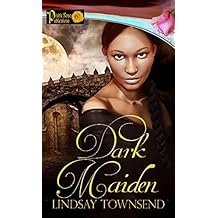


In my "Dark Maiden" we learn what revenants are, plus the dangers of being a black, female exorcist in a time of suspicion and plague.


Excerpt.

“Revenants are spirits who will not rest,” Geraint said before the reeve’s wife had another objection. “They are departed souls who will not leave, because they wish to have revenge, or justice.”

“Or they cling to a place they loved in life, or to their beloved,” added Yolande quietly.

In an echo of the large-breasted goodwife, the reeve’s wife folded her arms across her middle. “Is this not a matter for our priest?”

“But Godith, Father William is so old, and consider what he says concerning the rest,” Michael pleaded.

“That all trouble is the girls’ own sins.” Godith crossed herself, while Yolande sighed and stared into the fire.

“One of those priests,” she remarked softly in Welsh.

“Now we know why he did not summon you, or come out of his house or church to welcome you,” Geraint answered in the same tongue. “A black female exorcist will be a great evil to him.”

“And Father William has often taken to his bed this past ten days.” Michael shrugged his drooping shoulders in a gesture of hopelessness.

“No priest here, and at the darkest time of the year, when spirits and the dead gather,” Yolande said in Welsh. Geraint wished he could tip the priest out of this village and drag in another. The Archbishop of York should be able to help her and would do very well.

“What are you saying? Are you talking about me?” demanded Godith’s youngest daughter.

“No, my lovely.” Geraint snapped his fingers. The girl drew a new blue ribbon from her hair and exclaimed with delight.

Yolande cast him a look. “Still up to your old tricks?”

“You will not wear the ribbons I bought for you, so why should I not give them to these girls?” The three lasses, chattering like magpies, tugged more new ribbons from their hair.

“How do you do it?” Yolande inquired as the tension in the hut vanished like a burst soap bubble.

“You have the secrets of your trade and I have mine.” He wanted to give her more, of course—bright ribbons, bright tunics to suit her sultry looks—but so far she had smiled at him very prettily for his ribbons but not worn them. And as for tunics…she had told him, quietly, that an envious spirit or demon would be tempted to tear such clothes off her and he could not argue with that. She was the exorcist.

Their eyes met, she still in drab sage-and-mud-colored  clothes, he in his tattered motley. What would it be like to kiss her again, really kiss her? He need only lean forward to find out…

His fragile dream was shattered by the reeve, who pushed himself up from the family’s low sleeping platform and said to Yolande, “I have something to show you in the lean-to.”

Geraint gave the rest of his bowl of porry to the twins and leapt to his feet. “I will come too.”

If Michael Steward was about to confess anything, he wanted to hear it. And he was not about to let Yolande out of his protection, whatever her skills.

She may be the exorcist but by the pricking at the base of my neck I would say there is danger here, a practical, knife blade kind of risk. My kind of danger.

* * * * *

She knew she and Geraint had been betrayed, even before Michael Steward broke into a ragtag run outside the lean-to, galloping and gasping into the night. She knew even before the torches bloomed into fire and a stink of anxious, stale bodies crowded into her nostrils. She knew by instinct as Geraint knew. She could feel the tension in his body as he stepped straight behind her, shielding her as so often in these past few months.

Yolande had her bow, her sacred bow of Saint Sebastian, but no room to draw it. And she could do better by far than make these fearful people her unrelenting enemies.

The instant before the torches were lit in the dying garden plot of the reeve’s house, she had made her plan and acted on it.

She raised her fist and called out, “I have a mandrake here and the seven herbs of Christ. If you do me or mine harm, the herbs will change into spears. The mandrake will turn into a man and you will die.”

She paused, allowing her pity for the villagers’ fear to drain away. “You will die badly, believe me.”

“Believe her,” hissed Geraint out of the gloom, keeping out of range of the flickering torchlight. “I have seen the mandrake-man and it is terrible.”

“That proves you are a witch!” shouted a woman, and one of the torches swayed as she lost her footing on the damp ground.

“No witch may touch the seven herbs of Christ and live,” said Yolande calmly. Glimpsing a flash of white as another villager moved an arm, she stooped, plucked a pebble from the earth and threw it all in a single movement. The woman howled and dropped her dagger, where it lay gleaming.

“You are black as Satan!” called another woman, and others in the circle echoed her cry.

“Or  Saint Maurice or the Magi,” Yolande replied.

Godith came to the door. “How do we know you came in answer to the reeve’s call?”

“I came, Godith, because that is my Christian duty. You need my help here.”

“But you are black,” mumbled Godith. Encouraged by shouts of agreement, she joined the crowd.

Mother of God, I grow weary of this complaint. For so many, I am either a luck-charm or an evil. And Geraint is blacker-hued than me, at least in the summer. “I have touched relics of the saints that are darker.” She grinned, knowing her teeth and eyes would show very white and bright against the torches. “Come, shall we say the creed together?”

“But Godith  is right. How do we know you are not sent by them?” protested a third voice, high as a shrilling bat.

“By Christ, they are all women here,” muttered Geraint, and Yolande caught the strain in his voice. He would fight any man but females he revered.

“Fear not, honeyman,” she whispered. “Not one is possessed, and I can deal with the rest.”

To Godith and her cohorts she made the sign of the cross and recited the first line of the Lord’s Prayer in Latin. In English she said, “No demon can do that, believe me.”

“And believe me, my heart, when I say you should convert these women quickly,” said Geraint beside her. “Before we are burned to a cinder or torn limb from limb would be best.” He switched to Welsh. “You have never used mandrake in your life.”

“You are not the only one who can make a feint,” she replied in the same tongue.

“Take care you do not do so with me, cariad, is all I ask.”

She chuckled, keeping her laugh fat and easy while she scanned the big eyes and fluttering fingers that hovered round the crackling torches. 


#DiverseRomance #Romance DARK MAIDEN http://amzn.to/2qEuKcL

UK http://amzn.to/2q33Auf

ChapterOne http://bit.ly/2sEydfW

Ghosts, revenants, incubi , vampires and demons haunt medieval England, as Yolande and Geraint must use their love to survive.

Lindsay Townsend

Monday, April 25, 2022

My Romance Writing - the Hows and Whys.

This blog explains a bit about my love of romance, particularly historical romance, plus how and why I write it. 


How does my work differ from others of its genre?

I write about tender, realistic, developing relationships, set in the past. People in past times did fall in love and that's what I like to show. I also strive to show the non-noble, non-royal sides of history - how it felt to be a spear carrier, a slave, a medieval house-wife, a medieval hedge-witch or a serf. I like to explore the vital  role women played in history and how ancient and medieval women are different from people today because of the demands of biology (no reliable birth control) custom and religion. 


I write romance and adventure as do other writers in the historical romance genre, but these points: the celebration and evocation of the non-royal, the revelation of the true role of women, the way beliefs impacted on relationships, are, I think, what makes my work different.


 Why do I write what I do?

I have always been fascinated by the medieval and ancient worlds. I like the 'epic' scope of the history and the great differences in beliefs between then and now. I enjoy transporting my readers back into the past with me and to take them on an exotic, exciting journey.

How does my writing process work?

 I tend to start with a picture or scene in my head and often a snippet of conversation. That’s where my latest, “A Summer Bewitchment”, came from—a scrap of dialogue, “I am the troll king of this land and you owe me a forfeit” and the picture that gave me.


For another romance novel, “Dark Maiden,” I had a mental picture of a tall dark woman with a bow and the idea of scent—that my heroine Yolande could smell the restless dead. That seemed apt, too, because of the medieval idea of the odor of sanctity—that the bodies of saints could give off a sweet perfume. I took that belief and developed it in a different way, so Yolande could also smell less saintly souls.

From those initial ideas I usually work to a rough outline. I jot down the stakes of the story and the romantic themes , conflicts and arcs I want to explore. Sometimes before I begin a scene I note down the time of day, weather, mood, what I want the scene to do in terms of moving the plot and the relationships forward.


I don’t tend to work to a detailed plan. For my historical romances I often find that the research will give me ideas that are relevant to the story. In “Dark Maiden” the threat of the Black Death, with the natural fears that people had during that time that the end of the world was surely coming, gave me a powerful driver for the final conflict and climax of the novel. In “A Summer Bewitchment” I use medieval beliefs of magic and witchcraft to shape my story.

My romantic suspense and historical mystery books are a little different in that I do plan those out in detail. They are whodunits, so I need to have clues and mystery and suspects, and  some way of keeping track of them all.


I find with all my writing that I can often use aspects that I put into the story earlier and thread these  through and out later.

Sometimes the setting itself can give me wonderful plot ideas. I have used the city of Bath twice in my stories—once as the ancient Romano-British city with its shrine of Aquae Sulis in my historical romance “Flavia’s Secret” and once as the medieval spa town  in my historical mystery “A Widow of Bath.” I used the idea of the bleak landscape of marshes and fens in “Dark Maiden”—there’s something about the mix of water and big skies that I find intriguing and appealing.

What do you look for in romances? If you write, what do you find compelling?

To see my ideas in action, please see "Dark Maiden" and "A Summer Bewitchment." Both are free to read with kindleunlimited.


Lindsay

Monday, May 24, 2021

Medieval Justice - Trial by Ordeal

Ordeal by fire, from a German manuscript of the late 12th. century AD
Murders and other crimes happened in the Middle Ages but there was no formal police force and no forensics, no great interest in clues. So how did medieval people decide whether someone was guilty or innocent?

What mattered was what the community in which the crime took place thought. If you could produce witnesses you could vouch for your good character, and from Anglo-Saxon times status counted, so a thegn's evidence - like his life - was legally worth more than a churl's. Those accused of a crime who were unwilling to pay the standard fine could also hope to clear their names by swearing oaths to God - this was popular in the early Middle Ages and called ‘compurgation‘: a person accused of a crime swore on oath that he or she was innocent and often had a number of associates swear the oath with him to 'prove' guilt or innocence. This system was understandably open to abuse, so by the ninth century the church actively backed another way to reveal God's judgment in any crime - by means of the ordeal.

An ordeal was precisely that - a trial the accused could undergo to submit to the divine and so prove they were not guilty. The term ordeal has the meaning of "judgment, verdict" in old English and in the Middle Ages many believed they were genuinely submitting to the judgment of God.

In the ordeal of boiling water, a man would plunge his hand or arm into a cauldron of boiling water, after which the hand would be bound up, sealed with the seals of the church and then left. After three days the bandages would be removed and if the man showed signs of scalding he would be pronounced guilty.


There was also an ordeal by fire, where a person had to carry a red hot iron (weighing one pound in the late tenth century, or three pounds for the ‘threefold ordeal’) for a certain distance. Again the suspect’s hand was bound up and later examined to pronounce innocence or guilt. There were ordeals of cold water, similar to the later practice of ducking a witch. In the Assize of Clarendon in 1166, the law of England stated: "anyone, who shall be found, on the oath of the aforesaid [a jury], to be accused or notoriously suspect of having been a robber or murderer or thief, or a receiver of them ... be taken and put to the ordeal of water."

There was also ordeal by combat, also known as 'trial by battle', a way of ‘proving’ guilt or innocence that was much favoured throughout the Middle Ages. Introduced into England by the Normans, the earliest case in which trail by battle is recorded was Wulfstan v. Walter (1077), eleven years after the Conquest, possibly between a Saxon and a Norman. By the 12th century it was the way nobles would often settle disputes. The parties fought on a duelling ground and swore before they began that they had not used witchcraft to help them.

Women were usually banned from taking part in such trials but not always, a detail I exploit in one of my novels. In parts of Germany a woman might fight a man in a trial of battle if the man had one hand tied behind his back. Lepers were banned from fighting in ordeals but hired champions could sometimes be used - these were usually desperate men, since they could be killed in the ordeal of battle, or afterwards hanged or lose a hand or foot if they were judged to have lost. In medieval France the professional champion was seen in the same way as a prostitute.

Of all the ordeals, trial by battle remained in force the longest - it was not abolished in England until as late as 1819.

I touch on trials and ordeals in my novel Dark Maiden, during a tense exchange between my heroine Yolande, hero Geraint and false prophet Peter.

Excerpt.

She did not believe a word but marveled at how artfully it was done. Yolande pretended to pay close attention as Jehan, the leader of the new arrivals, swore that Geraint had set upon a man at the spring fair on the Great North Road. A man with drab hair and countenance, Jehan nonetheless gave a thrilling account of a savage attack that had left Geraint’s victim with two broken legs. Joan moaned when, gesticulating furiously for emphasis, Jehan went on to explain that Geraint had stolen his victim’s gold crucifix.

“Search my husband’s things,” Yolande rapped out. “You will find nothing of that kind in his pack.”

Peter touched her shoulder. “He will already have sold it.”

“Then let him stand trial.” She tore herself free of Peter’s slimy hold.

The folk gathered to meet the newcomers sucked in their breath. Yolande took advantage of the silence. “You have iron here, yes? Let him swear upon the iron.”

She spoke loudly enough for Geraint to hear then inhaled a deep, steadying breath.

My honeyman guessed this man would make mischief and so did I, though I never expected Peter to accuse him of such a crime . Let me see what Peter does now. Iron is Christ’s metal, so will he use it? Will he allow Geraint to swear upon it?

But what if Peter insists upon a trial by ordeal, maybe even ordeal by fire?

“You are deluded, my poor creature.” Peter pursed his lips and those gathered close echoed his gesture.

“Not an ordeal by iron.” Jehan flicked a spider from his sparse brown mop. “The knave is an entertainer, a juggler. Those people have all kinds of tricks to fool honest folk.”

Joan sighed. “You never told me Geraint was a juggler.”

Theodore stepped forward. “Commander, I juggled for my lady before I was freed by coming here.”

“And no one doubts you, Theodore,” said Peter. If he had noticed the glance of admiration Joan sent Theodore, Yolande surmised he would be too wise to show it. Peter was after Geraint, the mocking threat to his vision, the man unmoved by fleshly raptures. Minnows like Theodore could be dealt with later.

“He stuck a knife in that merchant,” said Jehan, twisting an imaginary knife. His sour face grew greedy. “We should swim him in the river. Swim them both.”

“And what is the man’s name?” Yolande stepped away from Peter and stalked around, scanning faces as she spoke. “Why can you not tell me at once, Jehan? Is it because you need time to invent one?” She whipped a fist into her gown and brought out her dagger, holding it aloft. “Here is Geraint’s knife. He loaned it to me to cut kindling. There is no blood on it.”

“Because he cleaned it first,” said Peter, a trace of white spittle appearing at the corner of his mouth.

His certainty might have worried Yolande but she knew Geraint. And I lied. This is my knife and I have not stabbed anyone. “You accuse him to my face, Commander?”

“Your loyalty does you credit,” said  Peter and a cloud of yellow steam snaked from his lips. Yolande scented sulfur and glanced at Theodore. He was watching Peter, but he was puzzled, not alarmed. Theo’s doubts grow but still he is not afraid. He and the others do not see what I can.

She wondered if Geraint, hiding on the hill above, could see the winding sulfur.

Pride and certainty, bedmates of the devil. How has Peter hidden this from me?

A breeze sprang up, wafting the stench at her. She choked, clamped her teeth together and pulled away, not wanting the yellow to touch her.

It may harm my baby.

“You are wrong,” said Peter and beside him Jehan smirked. Sulfur rolled from Peter over the taller man, embraced him like a lover. Jehan wallowed in the stink, a man bathing in foulness.

Still grinning, Jehan pointed. “Wrong, black girl, wrong as sin.” His broken teeth showed as he made a grab for her. About him the snaking yellow fog billowed, cradling Peter and himself, linking them in shrouds of dismal gold.

At the edge of her sight, Yolande saw Joan frowning at Jehan and looking questioningly at Peter, but the young serf woman was too habituated in obedience to protest. Theodore’s angry “Not so!” was ignored.

Jehan jeered at her, plumes of sulfur spurting from his lips and gilding his molting fur cloak. “Did you think we would not find out about you and your thief of a husband?”

“He has abandoned you,” said Peter. Spots of sulfur condensed in his hair, making it appear for an instant as if he had sprouted horns.

“Never.” Yolande wanted to turn her back on the baleful pair but dare not. These two are the pits of malice in this place. Two evil bringers, not one. It is summoned when they are together. Trembling, she forced her arms to make a protective cross over her belly but her mind was a blank parchment and she could not pray. What if they hurt my unborn child?

Others were taking up Jehan’s wicked call. “Wrong, black , wrong, black,” they chanted, stamping and clapping.

“Swim them, swim them both,” called Jehan. Another gout of sulfur spewed from him.  When he clapped, his palms glowed red, hellfire red.

“It is finished,” Peter agreed, his words a mockery of Christ’s suffering upon the cross, his face sheathed in yellow fog.

The pair glanced at each other. She knew that in a moment they would set the company on her.

“Where is he?” Jehan shouted above the rising tumult. “Where is your filthy Welshman?”

The insult braced her and she thumbed at Peter. “He says my man has gone, but look!”

People always follow an outstretched arm. She understood that from her time as exorcist and from Geraint’s as a performer. She flung her hope at the forest, a last diversion.

A pine tree crackled into flame. “The dragon comes!” To the sound of Joan’s screaming, Yolande ran straight through the middle of the stricken group.


Lindsay Townsend

Tuesday, July 28, 2020

Crowning Glories - a blog about my love of hair, plus how I use hair in my writing.

Sir Frank Dicksee, 'La Belle Dame sans Merci' (1890), from Wikimedia CommonsI admit it. I have a 'thing' about hair in my writing.

Not in real life. My hair is brown going grey and tough. It goes its own way and if it's cut 'wrong' then it will spike. I have it cut short and leave it alone. We get along fine. But in my romance novels, I love hair.

What colour will the herone's hair be? How long? Wavy? Curly? I always like to imagine my main female character's hair.


Many romance novels have blond or auburn haired heroines. Isabella, my heroine from my novella "Mistress Angel" is a spectacular blonde, with colouring that both attracts and also makes others eager to prey on her. I showed off her hair with a scene drawn from the historical records - in May 1357, the King of France was brought as a prisoner to London and paraded through the city in style. The goldsmiths, eager to be part of the show, positioned twelve beautiful maidens in golden cages above the street for them to toss flowers. I made my Isabella one of the maidens.

The gaudy troop of soldiers and knights, already shifting at a slow canter, settled into a meandering amble as the road through Cheapside broadened between the grander houses belonging to the members of the goldsmith's guild.
“Ici, là!” cried Prince Edward, sweeping a bejeweled gloved arm toward the upper storeys. Beside him, on his taller horse, the French king looked up and softly applauded. Stephen scanned the ridge tiles of the freshly-painted, gilded houses and glanced where the prince was pointing.
There she is. He smiled.
He recognized her instantly by the proud tilt of her head, her sweetly handsome profile and those glowing eyes, more compelling even than the luxuriant gold of her hair or her sumptuous costume.
Goldsmith’s garb and no glover’s girl for sure, he thought, reining in his horse and slowing to admire her the more as she shimmered above him like the evening star. Encased in a narrow cage of gold suspended above the cobbles, he saw that she was one of twelve maidens positioned high above the street, all caged, all lovely, but his gaze returned to her alone. Already the others seemed pale shadows, water ripples, echoes. But she is stunning. Above the roar of  blood in his ears he heard the ribald comments of Prince Edward and knew he also approved of her. 
By a mighty effort of will Stephen tore his attention away from this bewitching, naughty beauty and returned to scanning roofscapes. Still his eyes kept flitting back as he silently willed her to turn within her cage, to look out, to look back, to see him.
Know me, girl. Wonder at me, as I do at you. He was torn between admiration and a longing to kiss her thoroughly for her deception. Kissing you will be a sweet revenge.
She was tossing flowers, delicate metal posies of gold and silver that streaked the cobbles like flashing dewdrops or sun-flashed rain, pretty trinkets that the populace would certainly scramble for as soon as the nobles had passed. Still staring toward Westminster, although she must surely know by the mutter of the crowd that the foremost Prince of England and King of France rode right beneath her cage, she scattered another handful of golden petals, seemingly oblivious to the gasps of admiration. Silhouetted against the dark, smoke-stained jetty of the house, her slim body made a pleasing, subtle curve.
****

I kept in mind those aspects all the time I wrote of Isabella - and her hair.

Elfrida, the witch in my "The Snow Bride" is a red-head. This shows her supernatural and inner
passion and fire, both of which she uses to lure a dangerous adverary closer.


She would not dwell on what could go wrong, and she fought down her night terrors over Christina, lest they become real through her thoughts. She lifted up her head and stared above the webbing of treetops to the bright stars beyond, reciting a praise chant to herself. She was a warrior of magic, ready to ensnare and defeat the beast.
“I have loosened my hair as a virgin. I am dressed in a green gown, unworn before today. My shoes are made of the softest fur, my veil and sleeves are edged with gold, and my waist is belted in silver. There is mutton for my feast, and dates and ginger, wine and mead and honey. I am a willing sacrifice. I am the forest bride, waiting for my lord—” 
Her voice broke. Advent was meant to be a time of fasting, and she had no lord. None of the menfolk of Yarr would dare to take Elfrida the wisewoman and witch to be his wife. She knew the rumors—men always gossiped more than women—and all were depressing in their petty spitefulness. They called her a scold because she answered back.
“I need no man,” she said aloud, but the hurt remained. Was she not young enough, fertile enough, pretty enough?
Keep to your task, Elfrida reminded herself. You are the forest bride, a willing virgin sacrifice.
She had tied herself between two tall lime trees, sometimes struggling against her loose bonds as if she could not break free. She could, of course, but any approaching monster would not know that, and she wanted to bait the creature to come close—close enough to drink her drugged flask of wine and eat her drugged “wedding” cakes. Let him come near so she could prick him with her knife and tell him, in exquisite detail, how she could bewitch him. He would fear her, oh yes, he would...
She heard a blackbird caroling alarms and knew that something was coming, closing steadily, with the stealth of a hunter. She strained on her false bonds, peering into the semidarkness, aware that the fire would keep wild creatures away. Her back chilled as she sensed an approach from downwind, behind her, and as she listened to a tumble of snow from a nearby birch tree, she heard a second fall of snow from a pine closer by. Whoever, whatever, was creeping up was somehow shaking the trees, using the snowfalls as cover to disguise its own movement.
A cunning brute, then, but she was bold. In one hand she clutched her small dagger, ready. In her other, she had the tiny packet of inflammables that she now hurled into the fire.
“Come, husband!” she challenged, as the fire erupted into white-hot dragon tongues of leaping flame, illuminating half the clearing like a noonday sun. “Come now!” 
She thrust her breasts and then her hips forward, aping the actions that wives had sometimes described to her when they visited her to ask for a love philter. She shook her long, red hair and kissed the sooty, icy air. “Come to me!”
She saw it at the very edge of her sight—black, huge, a shadow against the flames, off to her side, and now a real form, swooping around from the tree line to her left to face her directly. She stared across the crackling fire at the shape and bit down on the shriek rising up her throat.
The beast stepped through the fire, and she saw its claw reaching for her. She heard a click, off to her right, but still kept watching the claw, even as the fire was suddenly gutted and dead, all light extinguished.
Darkness, absolute and terrifying, smothered her, and she was lost.

Of course, the battered crusader knight Sir Magnus, hero of "The Snow Bride" is entranced by Elfrida and by her hair.

It's a sweet vice but I have to be careful. Sometimes I have have my characters spending too much time 'fiddling' with their own or others' hair - stroking, patting, tweaking, adding flowers. My heroes are usually as hair-fixated as I am and sometimes I need to remove some of their petting.

Why a dark-haired hero? I've never quite understood that romance 'guide'. Randal in my story Unicorn Summer (One of the novellas in One Midsummer Knight) is blond, a sunshine lad. (Again, I use the colouring as my own reminder and key to character, both for Randal and the Unicorn who is also an important part of this story.  I've written dark-haired heroes but to me it's not an essential.


Ffion shook herself.  “I care not for such trifles as looks,” she answered, in her head, “Though he is handsome.” He was sinewy and lean and his rough-cut yellow hair was as lush as summer butter,  flowing over his broad shoulders as Unicorn’s mane had spilled down his flanks. Catching glimpses of a green tunic and dark leggings beneath his chain mail, she noted the good quality cloth, of older dyes, she thought, but well maintained. Overall he seemed honest and open, and he had a very shapely mouth.
What do I care about his lips! He is clean-shaven, what of it? Aloud, she added, “Will you come with me, for company?”
It was a grudging invitation but Sir Randal smiled and said, “We shall discover how these feathers work.”  He tied his ancient helmet to his belt and offered her his arm.


In my latest novel, "The Master Cook and the Maiden" I have the hero, Swein, wearing a cap for quite a while, teasing the heroine and the reader as to what colour is hair is, a small, sweet mystery.

No one will bother looking for me, Alfwen almost confessed, but the night drew close and she did not want to admit she was friendless, powerless. “I can ride in your waggon?” she asked, spotting the same less than a sword’s length from her. I must have been deep in shock to have missed that and a mule arriving.
“I have some old pottage for your dog, too,” came the genial reply.
He swept her onto the back of the waggon, handed her Teazel and warned, “Stay away from the firebox, or the crocks therein. I have hot food going.”
“My thanks,” Alfwen whispered, praying her belly did not rumble at the thought of more dumplings. She met his bright eyes again, briefly wondering what colour his hair might be under his close-fitting cap. “Might I know your name, sir?”

Later, to show their developing closeness, Alfwen washes Swein's hair and she finally discovers its colour, length and texture.

To celebrate brown hair, in "Dark Maiden" my female exorcist Yolande has long, brown hair:

He saw her face change, becoming as still as a mask. Then she blinked. “I do understand it.  My thanks to you, master Geraint. How may I aid you in return? Are you thirsty or hungry?”
“Ale is always welcome,” he answered quickly, “but for now the pleasure of your company on the road will be more than payment.”
She raised her pretty eyebrows at that. The rest of her was  pretty too , if such a plain word could be used for such exotic looks. By “dark” he had expected black hair, which Yolande had—long, shimmering waves of the stuff, very clean but caught in a simple clasp at the back of her slender neck as if she had no time for any fuss. Her eyes were either brown or black—he could not be sure—but they were clear and steady as if she looked straight to the heart of things.
To the heart of me, for sure. Geraint liked women, loved their smell and feel and their cockeyed way of looking at the world. For all her man’s clothing, Yolande was very much a woman, and a love worthy of Solomon. Her skin was a beautiful shade of bronze, smooth as polished wood, and her eyelashes were double-lashed. She had a narrow face and elegant bones but there was a strength in her, character and soul together. He could imagine her besting devils.
For the rest…the performer in him knew at once that she should be in bright colors, reds and yellows and blues, not the drab serge of a thatcher. If she was in his company for long—and he intended she would be—he would tempt her into a brighter manner of dress.
For she has the glory of the evening in her. She wins me already and does not know it.
“I do not chatter,” she said, unaware of his inner tumult. “I have a way to go.”
Better still. He admired how she did not admit where she was headed. “For today then?” He lifted his hands, palms up. “To the nearest house of honest folk, who will let you sleep by their hearth and me in their hayloft?”
“You wish to squire me to safety?”
“For the pleasure of—”
“For the pleasure of  my company. Yes, Geraint the Welshman, you said that already.” But she was smiling as she spoke and he knew she would agree.
“Shall I carry this?” He motioned to the cross. “You have your bow and bag already, and it will be no trouble.”
After a moment she strode out like a youth, leaving him to catch up. Geraint admired her graceful gait and did not hurry. He wanted their day to last.
By then I may have won another day in her company.

I like to use hair to confound stereotypes. One of my heroines, is blonde - but she would never have a "blonde" moment. She is a dangerous, calculating, kindly, devious.

So I have fun with hair. I've had curly haired heroes and heroines, long haired heroes and heroines, shorn heroes. I've had heroines caught by their hair - one is trapped by her long hair while trying to escape.

Next time (maybe) I will have to celebrate the naked scalp. That, for me, would be a challenge.

(Photograph by courtesy of Wikimedia Commons)

Tuesday, March 24, 2020

Medieval Ghosts, plus my own medieval ghost story

Did people in the Middle Ages believe in ghosts? They certainly believed in restless spirits, which they called revenants, from the Latin meaning ‘to return’. It was believed that the unquiet dead, particularly those who had died by violence or by reason of a grudge, or those who would not give up strong passions and carnal pleasures, would return to haunt the living. These revenants might appear within a graveyard or in a particular area, known to them in life, and terrorize the living.

They also believed that the dead could be commanded to rise again and spirits or demons compelled to do a wizard’s bidding, through the dark art of necromancy. A surprising number of priests were interested in these dubious practices as a means of gaining power or knowledge. Priests might also seek to exorcise spirits possessing people, by means of prayer or sacred herbs or charms.

Vampires, however, do not really make an appearance until the fourteenth century. Why then?

In 1348 the Black Death struck Europe. Thousands died and thousands of rotting corpses had to be buried, often in mass graves. Sights of these bodies was often grisly and bloody, and so the idea of the vampire, feeding on the blood of the living, came into force.

In 'Dark Maiden' I have a woman who is tormented by a lusty revenant who comes to her bed and tries to lie with her. Yolande, my heroine, learns that in this case the restless dead is the woman's husband. As an exorcist, Yolande takes certain steps to ensure that his widow is no longer plagued. You can find out what she does in the novel.

Read Chapter One here.

Stories about ghosts have been popular since the middle ages. The Monk of Byland wrote several of these stories down in the 15th century. You can read more here

In honour of the old tradition of telling ghosts stories, especially in the dark days of winter, here is my own medieval ghost story, "Her Solstice Boy"


                                         Painting of Sheep in snow by Joseph Farquharson.)


                                                                 Her Solstice Boy


    Marguerite pressed her chapped knuckles deeper into her old patched cloak. She was muddle-headed tonight, her head full of nonsense. Of course she was worried: who would not be? She must endure her hopes and— yes— her fears, endure this blistering cold. Brought up to lonely country self-reliance, Marguerite had learned early not to complain.
    The priest might have something to say if he knew she came back here at this time every year. He might have tried to stop her, if he had known what she planned to do tonight.
    Best to hurry, or she would miss the boy.
    Marguerite knew it was her child, her son by David. Peter had his father’s loping walk, her own skill with animals. He might have been a shepherd like herself.
    Come midwinter, he would appear on this stretch of Carter’s Track. To send a child, his own son, to such a lonely place with only sheep for company! And David, always so careful....
    David Fletcher’s care. Now that their affair was over, Marguerite could see the signs, subtle as animal tracks, that should have forewarned her.
    She had been a young widow and David a bachelor, but he had never formally paid court to her. When they walked out in the fields, he never gathered her flowers, or sang to her. They never ate—unless she paid the pie-man. (She and David never went into ale-houses. He had said often enough, in that hearty, wrist-band-tapping way of his, that she was no brewster.) He never thanked her when she treated them. It was just another way of saving money, of hoarding that last silver pound in his thin leather money pouch.
    There were other signs, too. David was never disappointed when she had to call off a walk because of her shepherding work. “Watch out for a fletcher who does not have to trim his fingernails,” her old neighbour once remarked sourly, spitting out of the open door of her cottage onto one of Marguerite’s beloved but struggling herb-beds, often neglected because she had no time.
    David was a good lover, though, greedy and earthy, qualities Marguerite could understand and even appreciate. When she told him she was pregnant (smiling shyly because she was twenty-two, already once widowed and had almost given up hope of starting a family) David laughed and slapped her rump. He talked for a long time about the coin and treasure advantages of her being a mother and later rode away from her home without a backward look.
    With the grind of lambing time and her own morning sickness, it was three months before she went to his house, close on the edge of town. Nearing the outbuildings, her ancient nag was forced off the track by a huge pair of horses, pulling a wagon. Sitting beside Fletcher in his new, expensive cart was a dark-haired woman. Marguerite recognised her as Catherine de Tilsby, one of the tournament and boar hunting set, whose father had made good in the French wars and who had flocks of sheep far larger than hers.
    Marguerite was too proud ever to visit David again.
    Peter was born in the depths of winter, when her cottage was cut off by snow. Warmed faintly by the fire in the kitchen beneath her bed-chamber, she laboured alone to bring him into the world and afterwards kept him by her own efforts. He was all she had.
    For three years David Fletcher did not acknowledge his son. Then he simply stole Peter from her.
    She and Peter had been out with the sheep. There were sudden, heavy snows, too deep for any ox to plough through. Near the top of Carter’s Track, she was forced to walk the rest of the way with Peter on her back. He was a big three-year-old, heavy in his winter cloak—the same russet colour as her own—and strong boots. How had she lost him to Fletcher? Why could she never remember?
    Snow when Peter was born, and snow now, when she was seeking him.....
    It was quiet on the track. Drifted snow burst soft as puffballs under her heels. Her faded dress swung heavy with damp. A tree branch lolled down, dropping hoar onto the back of her neck, cold and sudden as a blade.
    That barking dog— ahead or behind? “Who is there?” she called out, cupping her hands round her mouth. “Who is it?”
    Marguerite quickened her steps. Nothing mattered except seeing the child, her Solstice Boy.
    Every year since she lost him, she had been drawn back to Carter’s Track. For some uncounted time there was nothing, but then a year or so ago he had begun to appear, a nine-year-old boy. That must have been his age when he died. Died. How had Peter died, and why? David Fletcher had not seen fit to tell her. She did not even know where her son was buried.
    His haunting always began with warmth: a thawing of her hands and face; the taste of summer in her mouth. Sometimes the strange spectral flock that was with him ran ahead, at times he came first, and always that ruddy glow about him, as though he were still the healthiest child alive.
    Each year she got closer to him. This year she would try to speak to him, tell him who she was—Could a ghost hear? Half-sick with mingled anxiety and hope, Marguerite’s stomach churned.

   
    Peter ran with outstretched arms, jinking from side to side to usher on the strays. (His father said he could not spare Peter a sheepdog.) Grey woolly rumps working furiously, black legs butting out channels in the snow, the flock waded forward. At its head, bleating and grumbling, David and Catherine Fletcher’s prize ewe, Round Molly, bobbed her polished horns and sounded the bell about her neck.
    Peter did not like Carter’s Track, especially the point where the trees bent over the narrow path and their branches scraped together, sharpening each other’s edges like whetstones. Catherine Fletcher claimed there had been a murder near here, and Peter believed her. When she looked at him like that, narrow and sharp as a needle, Peter doubted that she was really his mother.
    Something in the woods.... The boy hated leaving the open. He ran between wall-and-tree-shadows, whirling his arms, afraid to shout. A warm black face touched once against his leg and he threw the beast round with unusual roughness. Faster, faster he drove the flock, the sheep a lurching blur of motion. Outside his reach and control, Round Molly’s bell rattled like a pebble in an old metal cup, a noise horribly loud.
    Next time he would refuse to do this. He would not tread Carter’s Track again, never at sunset, never in winter. Was it footsteps dashing alongside him, or the patter of thawing ice? Do not look, do not look, his legs pounded out the warning. No choice but to go on: his father was waiting for him. “Girls younger than you walk miles, herding geese to London, be thankful you have sheep,” was his father’s glib comment, when Peter had protested about being sent along alone. “I am not wasting money, sending a waged man with you along a bit of a mile animal drive.”
“I agree with your father,” his mother Catherine had said at once, sharp and disapproving,  “and they are the sheep I brought to this marriage.”
Stretched above Peter’s head, the net of tree-branches chattered softly, applauding David and Catherine Fletchers’ good sense.

    A frozen leaf fell, striking its tree in tinkling bell-clarity. Marguerite stretched out her hands, beseeching the red evening. Oh God, was she too late? Peter, where was he? Was he in danger? She must run, reach him—
    Heat seared through Marguerite, blasting sight and breath. With streaming eyes she sought and saw him up ahead: her son, running with the flock. His hair was yellow and he was tall. Strange, how a ghost could grow each year, just like an ordinary boy.
    He was now less than twenty feet away from her. Marguerite held out her arms and shouted. Finally her question—how she had lost him—would be answered when they touched. Her memories would be complete.

    The tree chattering increased. Darkness groped for him but Peter kicked it away, spraying snow high in the air. Tiring but needing to keep running, the boy grabbed two great handfuls of wool. Mouths and teeth closed into his hand. The ticks’ heads still clung to the wound after Peter had pulped the bloated bodies into the sheep’s back. Lost in the blackness, Round Molly’s bell clanked and twanged like the heavy bow which his father enjoyed using to despatch foxes and other vermin.
    Peter stumbled to a halt, breathless in the chill air. Half the flock turned and slithered back up Carter’s Road. The boy tried to stop the stampede of bodies and then heard his father’s pride, Round Molly, careering off in the opposite direction. Her bell rang madly for several moments before the sound snapped off and was killed. Afraid at what he would find, the boy started after her.

    He was coming closer. Already Marguerite could see that his eyes were still as blue as hers. This year it was right that she speak to him; he must know her. She would be as familiar to him as his own face. “Do not be afraid,” Marguerite whispered, “I am with you now.” She had waited so long for this, their summer reunion in winter.

    The darkness immediately ahead of him flexed, becoming an arm, a head. Terror-struck, the boy watched Round Molly as the ewe passed straight through the growing shadow. The contours of the shadow-body rippled, and then it began to solidify. The grey arm lifted and was moving to touch him. Its reaching fingers gleamed palely, like glow-worms.
    Peter yelled and charged forward, thinking only of how Round Molly had escaped the thing.

    She was the ghost, she—
    Death is too terrible to remember. The dead forget their own deaths, unless they are touched by the living. The blazing warmth of her son, his body thrusting through hers, scorched Marguerite, stamped her with one last terrible recollection. The missing link in her chain of memories, the final stage of her journey along Carter’s Track.
    David had met her here, ten winters back. About the time when it began to be whispered that Catherine Fletcher was rich only in money, barren in everything else.
    David threatened her with his bow and a knife. She refused to give him Peter until he fired over their heads, a hissing arrow shot in the semi-darkness. Fear for her son made her give Peter up, kicking and shrieking, to his father.
    Struggling with Peter, Fletcher dropped his bow in the snow and Marguerite surged forward in a reckless lunge. Her fingers ripped at Fletcher’s bulging money pouch, tearing the old leather, spilling the contents. She snatched hold of his arm, clawing at his face, desperate. “Peter!” she screamed, staggering and clutching her side.
    At first she thought Fletcher had punched her, until she felt the blood.
    Reliving her final moments—the shortening of breath, the bloom of pain spreading up through stomach and breast—Marguerite watched helplessly as her present, living, thirteen-year-old son shrank away. “Look at me! See me!”
    It was all no use; he gave no sign of hearing. The years of waiting had been in vain: Peter no longer knew her. She was tied to this day, endlessly forced to repeat her last, futile journey.

    Suddenly he fell, slithering headfirst into the ditch. The boy’s desperate, scrabbling fingers struck first a few white bones, washed up from their burial place by other snows and thaws, and then, under the bones, closed upon a broken leather pouch, a hoard of coins and a rusty knife. Sensing the presence stooping over him, he struck out with the blade. The rattle of the trees increased in a sharp crescendo.

    “Peter!” Marguerite screamed again, staggering and clutching her side; the ribbon of her life running to its end with this deadly variation: her son had struck at her—

    The shadow vanished. Would it reappear? thought the boy for several heart-stopping moments. No, it had definitely gone, perhaps forever.

    Shaken but laughing, pleased with himself, Peter buried the finds in the hood of his cloak. Now he could tell his father how he had seen off a ghost. He could show him the knife, and the ruined money pouch with the blurred initials scratched on the leather and the tarnished silver coins. His mother, too, would be proud of him now.


Lindsay Townsend

Tuesday, October 22, 2019

Medieval Curses and More - a blog for Halloween

Medieval people believed in magic, both good and bad. Spells and charms cast with evil intent were called curses and several have survived from that time. The Anglo-Saxons believed in both charms and curses, including a curse chanted against a wen or boil. The little wen is told to go away, to become smaller and vanish into nothing (Her ne scealt thu timbrien, it says - “Here not build your timbered house.”)

The Vikings also believed in the power of words and words for magic and curses. In one saga a witch called Busla issues a curse against King Hring, who has captured and threatened to kill Busla’s foster son. The curse is chanted at night (a good time for such dark matters) and Busla’s magical threats are made manifest.  In lines of poetry, the witch claims that her curse will cause Hring to go deaf, make his eyes to the leave their sockets,  make his bed like burning straw and make him impotent. In addition, any horse he rode would take him to trolls– and more.
“Shall trolls and elves and tricking witches,
shall dwarfs and etins (giants) burn down thy mead-hall…”
 The king is still reluctant and  Busla chants the strongest part of her curse, magic so dark that she does not utter it at night but which will cause Hring to be torn into pieces and flung into hell.  Faced with these gruesome outcomes, the king swears an oath to release his captives. The witch then stops the curse.

Curses could be used both as items to propel malice and as a curious form of protection. Curses were often attached to medieval and Anglo-Saxon wills, mostly to ensure the last wishes were observed, or for more day to day purposes.  The will of Siflaed (composed between 1066-68, soon after  the Norman conquest of England, which may explain the strength of the curse)  states “Whoever alters this, may God turn his face away from him on the day of judgment.”   The Will of Wulfgyth, dated 1046, promises that anyone who detracts from his will shall be denied all human comfort and joy and be delivered into hell “and there suffer with God’s adversaries without end and never trouble my heirs.”  

This form of invoking God by means of a curse to protect others remained popular throughout the Middle Ages.  In 1407, the Will of Thomas of Tyldeslegh gives a hundred shillings of silver to a John Boys to make him an apprentice in a trade and “If anyone hinder this, may God’s curse be upon him.”
                                                 
Curses could be used by medieval people everywhere and in all circumstances. When a monk  in 1420 discovered that the monastery cat had peed  on the manuscript he had been copying, the monk cursed the cat and recorded his curse—with a small drawing, showing pointing hands toward the cat pee—

Hic non defectus est, sed cattus minxit desuper nocte quadam. Confundatur pessimus cattus qui minxit super librum istum in nocte Daventrie, et consimiliter omnes alii propter illum. Et cavendum valde ne permittantur libri aperti per noctem ubi cattie venire possunt.

Which translates as:

Here is nothing missing, but a cat urinated on this during a certain night. Cursed be the pesty cat that urinated over this book during the night in Deventer and because of it many others [other cats] too. And beware well not to leave open books at night where cats can come.


Curses as medieval swear words can be found in this article here:

The ultimate curse could be considered to be excommunication, where a person and a person’s soul is cut off from God and the comforts and body of the church. This was feared as a terrible punishment but was not seen as being permanent, since a person could make amends and have the excommunication lifted.  Bishops and popes used excommunication as a political weapon and means of control.

 Objects could also be used in a malicious way. An amulet containing such vile materials as human waste, a splinter of wood from a gibbet or menstrual blood might be hidden under a bed to cause anything from impotence to sickness. Corpses of dead animals, such as black mice, were sometimes wrapped in cloth and buried under a threshold to create trouble for the inhabitants. Sympathetic magic, where a witch would ‘milk’ a knife stuck in the wall of her cottage, would enable her to steal milk from a cow. In Lucerne in 1486 2 women were accused of making hail by pouring well water over their heads. In Coventry in the 14th century a sorcerer created a wax figure of his neighbor, then drove a spike into the figure’s head and then heart. The neighbor died. In the 1130s the Jews of Trier were accused of making a wax figure of the archbishop and melting it in a fire to cause his death.

Some people were believed to have the power in themselves of cursing others, particularly if members of their family had been accused of sorcery. In 1454 at Lucerne a woman called Dorothea  was widely believed to be an ill-wisher—her mother had been burned as a witch and Dorothea, being unpopular, was accused in her turn.

Certain things were considered to be inherently cursed or evil in the Middle Ages. The wood of the
elder tree was believed to be unlucky (it was said Judas had hung himself from an elder tree)and it was also thought to be a witches’ tree. Elder wood can easily splinter, so strictures against its use were in some ways sensible.  Juniper was another plant with a mixed reputation. Although a sprig of juniper was believed to protect the wearer from curses, to dream of juniper was said to foretell bad luck or a death.

What could protect against curses? Rowan was said to be a strong protector. The rowan tree, taken from the Norse “runa” meaning charm, was often planted close to houses to protect the household  against evil. Around Easter time medieval people would make small crosses from rowan wood to give further safety to the house.

Illness, famine, flood, plague and all manner of misfortunes in the Middle Ages were believed to be either due to God’s anger (as with the Black Death) or the result of a curse. Given the state of knowledge about the natural world at that time, the idea of deliberate evil by a person (or in some cases an animal) makes a strange kind of sense. Moreover people were comforted when they could use prayers, amulets, witch bottles and, in extreme cases, the law to protect themselves against the occult forces.

Belief in magic was strong in the Middle Ages. I write about curses and have characters use, or fight against them, in Dark Maiden, The Snow Bride and its forthcoming sequel A Summer Bewitchment.