Search This Blog

Showing posts with label excerpts. Show all posts

Monday, October 24, 2022

The Restless Dead in the Middle Ages - ghosts who return. A blog for the Halloween month

The restless dead in the Middle Ages

Did people in the Middle Ages believe in ghosts? They certainly believed in restless spirits, which they called revenants, from the Latin meaning ‘to return’. It was believed that the unquiet dead, particularly those who had died by violence or by reason of a grudge, or those who would not give up strong passions and carnal pleasures, would return to haunt the living. These revenants might appear within a graveyard or in a particular area, known to them in life, and terrorize the living.


In 'Dark Maiden' I have a woman who is tormented by a lusty revenant who comes to her bed and tries to lie with her. Yolande, my heroine, learns that in this case the restless dead is the woman's husband. As an exorcist, Yolande takes certain steps to ensure that his widow is no longer plagued. You can find out what she does in the novel.
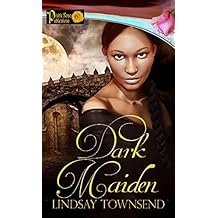


In my "Dark Maiden" we learn what revenants are, plus the dangers of being a black, female exorcist in a time of suspicion and plague.


Excerpt.

“Revenants are spirits who will not rest,” Geraint said before the reeve’s wife had another objection. “They are departed souls who will not leave, because they wish to have revenge, or justice.”

“Or they cling to a place they loved in life, or to their beloved,” added Yolande quietly.

In an echo of the large-breasted goodwife, the reeve’s wife folded her arms across her middle. “Is this not a matter for our priest?”

“But Godith, Father William is so old, and consider what he says concerning the rest,” Michael pleaded.

“That all trouble is the girls’ own sins.” Godith crossed herself, while Yolande sighed and stared into the fire.

“One of those priests,” she remarked softly in Welsh.

“Now we know why he did not summon you, or come out of his house or church to welcome you,” Geraint answered in the same tongue. “A black female exorcist will be a great evil to him.”

“And Father William has often taken to his bed this past ten days.” Michael shrugged his drooping shoulders in a gesture of hopelessness.

“No priest here, and at the darkest time of the year, when spirits and the dead gather,” Yolande said in Welsh. Geraint wished he could tip the priest out of this village and drag in another. The Archbishop of York should be able to help her and would do very well.

“What are you saying? Are you talking about me?” demanded Godith’s youngest daughter.

“No, my lovely.” Geraint snapped his fingers. The girl drew a new blue ribbon from her hair and exclaimed with delight.

Yolande cast him a look. “Still up to your old tricks?”

“You will not wear the ribbons I bought for you, so why should I not give them to these girls?” The three lasses, chattering like magpies, tugged more new ribbons from their hair.

“How do you do it?” Yolande inquired as the tension in the hut vanished like a burst soap bubble.

“You have the secrets of your trade and I have mine.” He wanted to give her more, of course—bright ribbons, bright tunics to suit her sultry looks—but so far she had smiled at him very prettily for his ribbons but not worn them. And as for tunics…she had told him, quietly, that an envious spirit or demon would be tempted to tear such clothes off her and he could not argue with that. She was the exorcist.

Their eyes met, she still in drab sage-and-mud-colored  clothes, he in his tattered motley. What would it be like to kiss her again, really kiss her? He need only lean forward to find out…

His fragile dream was shattered by the reeve, who pushed himself up from the family’s low sleeping platform and said to Yolande, “I have something to show you in the lean-to.”

Geraint gave the rest of his bowl of porry to the twins and leapt to his feet. “I will come too.”

If Michael Steward was about to confess anything, he wanted to hear it. And he was not about to let Yolande out of his protection, whatever her skills.

She may be the exorcist but by the pricking at the base of my neck I would say there is danger here, a practical, knife blade kind of risk. My kind of danger.

* * * * *

She knew she and Geraint had been betrayed, even before Michael Steward broke into a ragtag run outside the lean-to, galloping and gasping into the night. She knew even before the torches bloomed into fire and a stink of anxious, stale bodies crowded into her nostrils. She knew by instinct as Geraint knew. She could feel the tension in his body as he stepped straight behind her, shielding her as so often in these past few months.

Yolande had her bow, her sacred bow of Saint Sebastian, but no room to draw it. And she could do better by far than make these fearful people her unrelenting enemies.

The instant before the torches were lit in the dying garden plot of the reeve’s house, she had made her plan and acted on it.

She raised her fist and called out, “I have a mandrake here and the seven herbs of Christ. If you do me or mine harm, the herbs will change into spears. The mandrake will turn into a man and you will die.”

She paused, allowing her pity for the villagers’ fear to drain away. “You will die badly, believe me.”

“Believe her,” hissed Geraint out of the gloom, keeping out of range of the flickering torchlight. “I have seen the mandrake-man and it is terrible.”

“That proves you are a witch!” shouted a woman, and one of the torches swayed as she lost her footing on the damp ground.

“No witch may touch the seven herbs of Christ and live,” said Yolande calmly. Glimpsing a flash of white as another villager moved an arm, she stooped, plucked a pebble from the earth and threw it all in a single movement. The woman howled and dropped her dagger, where it lay gleaming.

“You are black as Satan!” called another woman, and others in the circle echoed her cry.

“Or  Saint Maurice or the Magi,” Yolande replied.

Godith came to the door. “How do we know you came in answer to the reeve’s call?”

“I came, Godith, because that is my Christian duty. You need my help here.”

“But you are black,” mumbled Godith. Encouraged by shouts of agreement, she joined the crowd.

Mother of God, I grow weary of this complaint. For so many, I am either a luck-charm or an evil. And Geraint is blacker-hued than me, at least in the summer. “I have touched relics of the saints that are darker.” She grinned, knowing her teeth and eyes would show very white and bright against the torches. “Come, shall we say the creed together?”

“But Godith  is right. How do we know you are not sent by them?” protested a third voice, high as a shrilling bat.

“By Christ, they are all women here,” muttered Geraint, and Yolande caught the strain in his voice. He would fight any man but females he revered.

“Fear not, honeyman,” she whispered. “Not one is possessed, and I can deal with the rest.”

To Godith and her cohorts she made the sign of the cross and recited the first line of the Lord’s Prayer in Latin. In English she said, “No demon can do that, believe me.”

“And believe me, my heart, when I say you should convert these women quickly,” said Geraint beside her. “Before we are burned to a cinder or torn limb from limb would be best.” He switched to Welsh. “You have never used mandrake in your life.”

“You are not the only one who can make a feint,” she replied in the same tongue.

“Take care you do not do so with me, cariad, is all I ask.”

She chuckled, keeping her laugh fat and easy while she scanned the big eyes and fluttering fingers that hovered round the crackling torches. 


#DiverseRomance #Romance DARK MAIDEN http://amzn.to/2qEuKcL

UK http://amzn.to/2q33Auf

ChapterOne http://bit.ly/2sEydfW

Ghosts, revenants, incubi , vampires and demons haunt medieval England, as Yolande and Geraint must use their love to survive.

Lindsay Townsend

Monday, February 21, 2022

Settings and how writers can create and use them. Lindsay Townsend


Function of setting.

1.  A well-drawn setting stops any story from taking place in a void. It gives a place, a view, a time.

2. Setting throws more light on characters by showing how a particular character reacts to a particular setting.

3. Setting can inform and illuminate a story’s character. An African may react differently or see different things in a setting, landscape or situation than an alien from out of space. Keep in mind your characters’ age, sex and culture when they react in a setting or are brought up in that setting.

4. Setting can suggest or heighten mood and atmosphere. It can add a contrast to your character’s inner or outer conflict or mood. It can symbolise a state of mind—so, for example, a man wrung out with guilt plodding through a stormy, bleak landscape. It can add poignancy to a moment by either addition or contrast. (Your hero/heroine feels like death and a butterfly has just landed on their hand and then fluttered off. A mother who has just lost a child watches other toddlers and mothers playing happily in a park.)


5. Setting can drive the action, adding conflict. A character can be stuck on a hillside with an avalanche underway or a lightning storm brewing or a big snow coming. Your hero/heroine may be being chased and the landscape itself is a problem— there is no clear track, it’s dark, dank and slippery underfoot, the terrain is relentlessly flat or severely  steep, while moonlight helps to show your people up like Christmas trees. The setting can add to their difficulties and at times become almost a character in its own right.


Use all senses to evoke setting and spirit of place, that is sight, sounds, smells and taste. Remember always to describe a setting through the viewpoint of one of your characters and to describe it in the way that your person would view it. For example, a wildlife photographer will notice the different creatures and plants in a setting and know their names. A small child may not understand the potential dangers in a landscape. A man who has already dragged himself through scrub and thorns may be vividly aware of his thirst and pain and little else. Keeping in mind your character’s interaction with the setting  will make the scene more alive to your reader and your character either more sympathetic or hateful. (If you have a noble watching a thin, ragged child tiredly washing clothes in a stream or tub and the noble is obsessed with how clean his lace is going to be when the child is finished.) 

Don’t have too many changes of setting or scene in a short novella or you run the risk of confusing your reader. Think about setting in stages. It might be useful to jot a few images down first and then feed these through the story as your viewpoint character feels and hears and reacts within the setting in which you’ve placed them. 


Points to think about when drawing up a setting.

1. What can your character see on the skyline? What’s in the distance? What are the distant sounds? Is there any wind? Do sounds or smells float on the wind? 

2. What time of day is it? If at night is there a moon or stars? What kind of weather is it? What season of the year? Are there any seasonal animals or flowers or any seasonal activities evident? 

3. What can character detect from middle-distance? Are there sounds? Sights? Both should be more distinct, firmer, perhaps more of a threat if the setting is adding to conflict.

4. Close-up sights, particularly colour and movement. Blaring sounds - or soft but thrilling sounds. Taste. Scent. Cold. Rain. Wind. Scorching sun. Frost.  Remember, as I’ve mentioned before, it’s people and living things that make a setting, not buildings. Go easy on the socio-political comment even in a political short story. Comment by symbolism and suggestion - show how characters are deprived or empowered. How they speak and react and dress will all show and add to setting. They too are part of a landscape.

When describing a setting, it’s not usually a good idea to blurt it all out in a big spill on the first page. (In ‘The Return of the Native,’ Thomas Hardy does it with Egdon Heath, where that landscape is a symbol and character in its own right, so a writer can do so, but it’s unusual in genre fiction.)  Thread it through the story, odd touches and gleams here and there, like a carving in a wood panel. Use adjectives and verbs that heighten the scene and mood and unless it’s a deliberate device, be consistent. So if you’re describing a tranquil setting, keep it tranquil till you want to grab the reader with a shock. 

Have your character doing something within that setting, something pertinent and interesting. Readers are charmed by ‘insider’ knowledge and by skill, so if your character can weave or smithy or line-dance or flower arrange or stargaze or gut fish or carve or shovel or knead and plait bread - any task that’s a bit different to filling a kettle and settling down for a cuppa or crossing a room for that ubiquitous sherry or whisky - will grab their attention and keep them engaged. Once ‘hooked’ you can guide them through the setting via your viewpoint character, pointing out whatever is relevant by way of plot or contrast or mood.


In this excerpt from my "The Snow Bride" I have my main female character, Elfrida, trying to use her witch-craft to recover her missing sister Christina. In this setting the harsh winter echoes Elfrida's bleak and desperate mood.


She is Beauty, but is he the Beast?

THE SNOW BRIDE (THE KNIGHT AND THE WITCH 1) https://amzn.to/2MZZan0

UK  https://amzn.to/2H1tYzY 

EXCERPT https://bit.ly/2yV95Cb 

REVIEW https://bit.ly/38ynFzh


Excerpt.


“She is the third!” Walter had cried out, beating his fists against the walls of their empty hut. “The third in her wedding garb, and the most beautiful: one black-haired, one brown, and my Christina!”

He had refused to say more, even when Elfrida had threatened to curse him, but his outburst told her what he and the elders had been hiding from the village women. The brute who had carried off Christina had kidnapped other pretty young girls, also dressed in their wedding gowns. He stole brides.

I will dress myself as a bride and return here with my own wedding feast, with food and drink in abundance. Let him think me a bridal sacrifice, his red-haired bride, left for him by the village. And, by Christ and all his saints, this time I will be ready for him!

It is a blessing I am a healer and have so many potions ready prepared. If I put sleeping draughts in the wine, food, and sweets, surely I can tempt the beast to take some? I can smear tinctures of poppy on my skin and clothes, so any taste will induce sleep.

Sleep, not death, for she had to know where he had taken Christina.

I will coax the truth from the groggy monster, and then the village men can have him.

Part of her knew she was being wild, unreasonable, that she should talk to Walter, tell the villagers, but she did not care. Talk would waste more precious hours, and they might even try to stop her. For her sister she would do anything, risk anything. But she must hurry, she must do something, and she had little time.

It was full dark before Elfrida was finished, midnight on the day after the start of Advent, two days after Christina should have been married. She shivered in the glinting snow, her breath suspended between the frosted, white ground and the black, star-clad sky.

She glanced over the long boulder she had used as an offering table for her wine and food, not allowing herself to think too closely about what she had done. She had lit a small fire and banked it so that it would burn until morning, to stop her freezing and to keep wolves at bay, and now by its tumbling flames she saw her own small, tethered shadow writhing on the forest floor.

She would not dwell on what could go wrong, and she fought down her night terrors over Christina, lest they become real through her thoughts. She lifted up her head and stared above the webbing of treetops to the bright stars beyond, reciting a praise chant to herself. She was a warrior of magic, ready to ensnare and defeat the beast.

“I have loosened my hair as a virgin. I am dressed in a green gown, unworn before today. My shoes are made of the softest fur, my veil and sleeves are edged with gold, and my waist is belted in silver. There is mutton for my feast, and dates and ginger, wine and mead and honey. I am a willing sacrifice. I am the forest bride, waiting for my lord—” 

Her voice broke. Advent was meant to be a time of fasting, and she had no lord. None of the menfolk of Yarr would dare to take Elfrida the wisewoman and witch to be his wife. She knew the rumors—men always gossiped more than women—and all were depressing in their petty spitefulness. They called her a scold because she answered back.

“I need no man,” she said aloud, but the hurt remained. Was she not young enough, fertile enough, pretty enough?

Keep to your task, Elfrida reminded herself. You are the forest bride, a willing virgin sacrifice.

She had tied herself between two tall lime trees, sometimes struggling against her loose bonds as if she could not break free. She could, of course, but any approaching monster would not know that, and she wanted to bait the creature to come close—close enough to drink her drugged flask of wine and eat her drugged “wedding” cakes. Let him come near so she could prick him with her knife and tell him, in exquisite detail, how she could bewitch him. He would fear her, oh yes, he would...

She heard a blackbird caroling alarms and knew that something was coming, closing steadily, with the stealth of a hunter. She strained on her false bonds, peering into the semidarkness, aware that the fire would keep wild creatures away. Her back chilled as she sensed an approach from downwind, behind her, and as she listened to a tumble of snow from a nearby birch tree, she heard a second fall of snow from a pine closer by. Whoever, whatever, was creeping up was somehow shaking the trees, using the snowfalls as cover to disguise its own movement.

A cunning brute, then, but she was bold. In one hand she clutched her small dagger, ready. In her other, she had the tiny packet of inflammables that she now hurled into the fire.

“Come, husband!” she challenged, as the fire erupted into white-hot dragon tongues of leaping flame, illuminating half the clearing like a noonday sun. “Come now!” 

She thrust her breasts and then her hips forward, aping the actions that wives had sometimes described to her when they visited her to ask for a love philter. She shook her long, red hair and kissed the sooty, icy air. “Come to me!”

She saw it at the very edge of her sight—black, huge, a shadow against the flames, off to her side, and now a real form, swooping around from the tree line to her left to face her directly. She stared across the crackling fire at the shape and bit down on the shriek rising up her throat.

The beast stepped through the fire, and she saw its claw reaching for her. She heard a click, off to her right, but still kept watching the claw, even as the fire was suddenly gutted and dead, all light extinguished.

Darkness, absolute and terrifying, smothered her, and she was lost.


Lindsay Townsend 

Sunday, December 30, 2018

Gold, Gold, Gold - plus excerpts from "Sir Conrad and the Christmas Treasure" by Lindsay Townsend

I am fascinated by gold. People in the past were also inspired by it and made many beautiful objects with the metal. One of these ancient treasures is a torc and in my latest historical romance, "Sir Conrad and the Christmas Treasure" I have a torc as a precious relic at a northern church.

I had in mind the magnificent Snettisham gold torc as my relic. Here it is.

From the British Museum


Here's an excerpt from my sweet Christmas romance, "Sir Conrad and the Christmas Treasure" where we see Sir Conrad and Maggie together.


Chapter 2

                                             
A gathering of horses, war-chargers, palfreys and spare mounts, a hasty bringing together of men, weapons and supplies, and they were off. They pounded out of the bailey, through the village and onto the track to the old Roman road. Sunrise to sunset they rode and then on through the night, sunset to sunrise. Riding in front of Conrad, his thick arms braced on her either side, Maggie felt her world shrink down to her heartbeat, the scalding ache of her thighs, the glare of snow and the relentless drum of the galloping horses.
Had she ever imagined the recovery of Michael would be an adventure? Wishing she could clasp her aching head but not daring to relinquish her grip on the horse’s mane, Maggie longed to stop.
   “You awake there?” Conrad growled, his lips close to her ear. She shook her head as if he was a bothersome fly and forced her wind-chapped lips to reply.
  “Doing well,” she said, determined her teeth would not chatter. In truth she was not so frozen. Sir Conrad had supplied her with a thick cloak and a woollen cap, cloths to wrap round her boots and rags to bind her hair. If I could only have some eastern cushions for my hips, perched on this bony nagWho knew horses had such a spine? Glancing sidelong she caught a knowing gleam in her companion’s deep eyes, as if he expected her to complain. But I shall not.
“Yourself?” She tried a smile, the cold light of the coming dawn piercing her cheeks.
 “We make camp soon, rest the horses.”
“Naturally. The horses. And the pack mules,” she added, wondering why she was teasing him as she might have done Michael. The truth was, she had ridden with this man for hours, her back snug against his chest, her legs pressed against his long shanks. It was hard not to feel a kind of closeness to him.
Now, she felt rather than heard Conrad’s rumble of a chuckle and knew a fleeting lightness in her soul as his arms tightened briefly about her.
“You will not be outdone, will you?” He guided their mount onto an unpaved section of road that did not jolt her bones, which was overall a blessed relief.         
“Is this a contest?” she replied, catching her wind-sore mouth in a yawn before she could stop it.
He smiled against her woollen cap and Maggie closed her eyes. The great horse moved beneath her, smooth now as a sailing ship on a calm river, the beat of its hooves strangely soothing, like a lullaby. I wonder how Michael is faring, she thought as she slid slowly, inexorably into sleep.
                                                                   ****                                        
Conrad gently lowered the sleeping girl onto the rough pallet of bracken and hay that he had set before the new fire. She had done well, he decided, nodding to Davie, a silent reminder that the man guard her, before he checked on the horses and men. A palfrey had picked up a gorse or bramble tear on her flank. Conrad was conferring with a groomsman how to treat the wound when the weary peace of the camp shattered.
Lurching out of the darkness, Maggie staggered back to the fire, plucked out a burning branch and brandished it at the figure coming after her.
“Back!” she cried, stabbing the flaming brand at her would-be attacker, “You will get none of what you want from me!”
Conrad thrust the salve at the nearest groom and began striding back, to hear the farrier, Brian, say, without shame or apology,
“Come on, goldie, I can give you a sweet time—”
“What is happening here?” Conrad pushed between the pair, scenting the mead on the farrier’s breath.
“A bit of sport.” Brian swayed on his feet, squinting past the taller man as he gave the girl a wave.  Has this fool been drinking all night? Supping while on horseback?
“I do not expect to be set upon when I slip into the hazels to pass water!”
“You take on so, goldie, not fair—”
She took a deep breath that would have fit a dragon, clearly ready to light into the fellow afresh, when Sir David with his uncanny ill-luck, stepped out of the trees where he had been setting guards and said drily, “Women following soldiers are usually bed-mates.”
“I am not following anyone!” snapped Maggie, as red-faced as a dragon’s fiery breath, “I am seeking my brother and your lord is meant to be aiding me! Or do such courtesies only count for knights and ladies?”
Conrad sensed the camp about them stiffen and knew his men were leaning in to listen.
“Ladies do not bawl like market criers,” he drawled.
The bright stare cut towards him. “How else am I supposed to be heard?”
“Enough!” He made a cutting motion with his arm, tired of the whole squabble, and addressed his men. “The girl is with me, mine, and you all know it. Brian, get yourself a pail of water and dunk your head. We move on in two hours, when the sun tops that pine tree. Get on!”
He caught the girl’s arm and led her, none too gently, back to the pallet by the fire. “You stay,” he ordered, ignoring her look of utter betrayal.
He turned to leave, go back to the horses, when a narrow wiry hand grabbed his cloak. Looking back, he almost flinched at the flinty glare which stabbed him.
“You need the farrier, yes? But mark this, my lord, you also need me.”
His temper bridled at her insolence. He leaned down into her face, part of him amazed at how very blue her eyes were, in her anger. “I just saved you from a mauling or worse. Why did you not wait for me to escort you? Are you so naive?”
If she could, she would have shot poison like a snake, he guessed, though her words were pin sharp. “I did not know such courtesy was required in your own camp.”
Not even a gesture of thanks, the ungrateful little wench. Did she think they were equals? “You do not tell me how to govern,” he began afresh, but she interrupted,
“Then rule yourself first. I thought you, sir, were different.”
With the I was wrong hanging between them, she stepped aside and flounced down on the pallet with such force that a puff of hay-dust rose in the air between them. Sensing he had made a mistake, loathing that feeling, Conrad stamped back to the horse lines.
Later, too brief a time to be truly rested, they rode on, into the forest of Galtres. The girl sat before him, silent as a stone. I thought you were different. “What happened to you?” he growled, too low for her to hear. He disliked her being so stiff, that was all.
I do need my farrier. She had no right to complain. As for Brian approaching her, it is the way of the world. In a war-band, everyone expects it.

So why did these reasonable justifications seem hollow?

Here's another excerpt, where we see the golden treasure of Ormingham church.

Inside the church Conrad noted that his brother and the earl were most keen to see the treasures within its crypt. In contrast, Maggie—or Margaret—was intent on the stout door of the underground chamber, the narrow stone steps leading down to it and the huge key the priest produced from his surplice to unlock the sanctuary.
“No one has ventured here for a while, thank our holy mother,” she observed, as the priest shouldered open the thick door and Richard and Earl John jammed together in the small opening in their haste to be first into the crypt.
Would be funny, I vow, were my girl’s plight not so serious.              
“Why do you say that?” Conrad asked aloud, interested in her and her reasons rather than the costly trinkets stashed within.
Maggie smiled, her eyes less strained than he had seen them for two days, and pointed down. “Dust and cobwebs on the steps, before the holy father walked down,” she answered, “which means no thieves, either, so we can set a trap for them here.”
“Snares have no places in the house of God!” protested the priest, while Conrad could only think she said we. She is glad we work together. In that instant his joy burned as fierce as the newly-lit torches.
“By all the saints, look at this!” Richard’s loud excitement over-rode the cleric’s disgust and the earl rocked back and forth on the heels of his two-tone coloured shoes, murmuring, “My, my, such handsome works.”
Curious where he had not been greatly intrigued before, merely staying with Maggie to ensure she was safe, Conrad waited for the smoke of the priest’s spitting, damp torch to settle, and then looked for himself.
So much bright gold, was his first thought, while Richard, naturally stretched out sticky fingers to paw at the pieces and Earl John intoned, “Roman, or earlier, and fit for a king.”
“This is the holy moon torc of Saint Oswald!” snapped the priest, keen to put the church’s ownership beyond doubt, “Discovered in a pond near here by my great-grandfather!”
“I have heard tell of such sacred wonders before,” said Conrad, hoping to prevent the priest and earl from saying more in anger or gold-greed that they could not take back.
“It was a woman’s,” said Maggie softly beside him, glancing once at him to share her thought.
“Why do you say that?” asked Conrad.
She pointed. “Because of the safety chain.”

Here's a picture of the gold torc with safety chain that inspired me.
From YouTube

My sweet medieval historical romance, SIR CONRAD AND THE CHRISTMAS TREASURE, is now out. You can read it for free with Kindle Unlimited.

On Amazon. Com here
And Amazon UK here