Search This Blog

Showing posts with label A Summer Bewitchment. Show all posts

Monday, April 22, 2024

Much the Miller's Son. A Merry Man?

 Much The Miller’s Son. A Merry Man?


Picture from Medieval Occupations https://medievalbritain.com/type/medieval-life/occupations/medieval-miller/


Much, or Moche, or Midge, or even Nick, in various ballads of Robin Hood, is described as the Miller’s son and one of Robin’s company of Merry Men. ‘Midge’ suggests he was small and possibly harmless, but in one early  ballard (Robin Hood and the Monk) he is shown as being a killer, murdering a page boy and then taking the boy’s place in disguise.


This ambivalent attitude to Much also reflects medieval attitudes to millers. Because millers were responsible for turning people’s wheat, barley and other grains, even dried peas, into flour, they were often suspected of stealing part of the flour and giving light weight. Mills were often controlled by local land owners, and peasants resented having to use a mill where the gentry demanded a cut. Peasants were even forbidden from grinding their own wheat – although the discovery of quern stones at medieval sites shows that this law was frequently ignored. Chaucer, in his Canterbury Tales, portrays a miller as a bully and a show-off, Simpkin the Swagger. In medieval France, too, millers were seen as cheats, as the widespread saying calling millers, tailors, weavers and tax collectors thieves shows.


I have a water mill in my novel, “A Summer Bewitchment,” and show the hero Magnus and heroines Elfrida entering the mill in their quest to recover seven missing girls.

Excerpt

Dispirited, she slid off the bony bay and opened the mill door to a blistering fog of flour, a tumult of grinding mill-stones. She flung up an arm, clapping her hands over her ears as the ground shuddered under her feet. Magnus scowled, shouting something before hooking her up and carrying her through the mill into a narrow side chamber.

In this room she could hear again and the dusty flour was a little less thick, but it still formed a billowing cloud within the room. Dropped onto the dirt floor by her husband with no more ceremony than he might have released a bag of wheat, she coughed like a cat with a fur ball. Magnus smeared chaff from his eyes, cursing beneath his breath.

“How the miller stands this I do not know,” he said at length.       

“The money is good.” Mark detached himself from leaning against a beam and approached. “A fresh horse is tethered for you, sir, my lady.”

I am no lady. Elfrida bit down hard on that. She glanced at Magnus. “A message through Father Luke?”

“It seemed the easiest way. Have you brought the clothes?” he asked Mark.

Mark handed him a parcel. “Sir, I have two horses—”

“Go back, welcome Peter to the manor and tell him how things are when you get the chance. Keep a watch on Father Jerome and Tancred, especially Father Jerome. I do not want that priest getting word to the Lady Astrid.”

“Do you think he would try to or even want to?” Elfrida asked, thinking at once of Father Jerome’s pale, sunken look when he realized his lady had gone off without him.

Magnus shrugged. “Why should I care? Mark, I will take both your horses. We shall go faster with two, riding and guiding.”

Mark tugged on his red nose. “I ride Star?” He sounded horrified.

“He is smooth enough and steady.”

“And slow. What do I tell our reluctant guests?”

“Tell Tancred and that priest as little as possible. Let them think we have gone to my wife’s village.”


Short Blurb for “A Summer Bewitchment.”

Can a knight and his witch save seven kidnapped maidens? Sir Magnus and Elfrida strive to find the girls, but at what cost to their marriage?

A SUMMER BEWITCHMENT ( THE KNIGHT AND THE WITCH 2)
https://www.amazon.com/dp/B07ZTMNWZ9/ref=sr_1_1?keywords=lindsay+townsend&qid=1572605630&rs=154606011&s=digital-text&sr=1-1
Amazon Co Uk
https://www.amazon.co.uk/dp/B07ZTMNWZ9/ref=sr_1_1?keywords=a+summer+bewitchment&qid=1572606494&s=digital-text&sr=1-1

Lindsay Townsend 

Monday, April 25, 2022

My Romance Writing - the Hows and Whys.

This blog explains a bit about my love of romance, particularly historical romance, plus how and why I write it. 


How does my work differ from others of its genre?

I write about tender, realistic, developing relationships, set in the past. People in past times did fall in love and that's what I like to show. I also strive to show the non-noble, non-royal sides of history - how it felt to be a spear carrier, a slave, a medieval house-wife, a medieval hedge-witch or a serf. I like to explore the vital  role women played in history and how ancient and medieval women are different from people today because of the demands of biology (no reliable birth control) custom and religion. 


I write romance and adventure as do other writers in the historical romance genre, but these points: the celebration and evocation of the non-royal, the revelation of the true role of women, the way beliefs impacted on relationships, are, I think, what makes my work different.


 Why do I write what I do?

I have always been fascinated by the medieval and ancient worlds. I like the 'epic' scope of the history and the great differences in beliefs between then and now. I enjoy transporting my readers back into the past with me and to take them on an exotic, exciting journey.

How does my writing process work?

 I tend to start with a picture or scene in my head and often a snippet of conversation. That’s where my latest, “A Summer Bewitchment”, came from—a scrap of dialogue, “I am the troll king of this land and you owe me a forfeit” and the picture that gave me.


For another romance novel, “Dark Maiden,” I had a mental picture of a tall dark woman with a bow and the idea of scent—that my heroine Yolande could smell the restless dead. That seemed apt, too, because of the medieval idea of the odor of sanctity—that the bodies of saints could give off a sweet perfume. I took that belief and developed it in a different way, so Yolande could also smell less saintly souls.

From those initial ideas I usually work to a rough outline. I jot down the stakes of the story and the romantic themes , conflicts and arcs I want to explore. Sometimes before I begin a scene I note down the time of day, weather, mood, what I want the scene to do in terms of moving the plot and the relationships forward.


I don’t tend to work to a detailed plan. For my historical romances I often find that the research will give me ideas that are relevant to the story. In “Dark Maiden” the threat of the Black Death, with the natural fears that people had during that time that the end of the world was surely coming, gave me a powerful driver for the final conflict and climax of the novel. In “A Summer Bewitchment” I use medieval beliefs of magic and witchcraft to shape my story.

My romantic suspense and historical mystery books are a little different in that I do plan those out in detail. They are whodunits, so I need to have clues and mystery and suspects, and  some way of keeping track of them all.


I find with all my writing that I can often use aspects that I put into the story earlier and thread these  through and out later.

Sometimes the setting itself can give me wonderful plot ideas. I have used the city of Bath twice in my stories—once as the ancient Romano-British city with its shrine of Aquae Sulis in my historical romance “Flavia’s Secret” and once as the medieval spa town  in my historical mystery “A Widow of Bath.” I used the idea of the bleak landscape of marshes and fens in “Dark Maiden”—there’s something about the mix of water and big skies that I find intriguing and appealing.

What do you look for in romances? If you write, what do you find compelling?

To see my ideas in action, please see "Dark Maiden" and "A Summer Bewitchment." Both are free to read with kindleunlimited.


Lindsay

Monday, January 25, 2021

Love & Magic in the Middle Ages

Love and magic in the Middle Ages

The Beguiling of Merlin (1874), by Edward Burne-Jones. Sourced from Wikimedia Commons.Imagine you're a young medieval lady and a young man creeps up, whacks you three times over the head with a hazel stick inscribed with the magical incantation pax+pix+abyra+syth+samasic and tries to kiss you. It sounds a touch desperate these days, but in the Middle Ages this was seriously suggested as a way for a man to get a woman to fall in love with him.

Medieval lovers tried subtler ways, too - spells, charms, amulets and potions - to win the affections of those they desired, all in defiance of the church, which objected to magical interference with a man's or woman's free will.

Love magic was practised and feared by all sections of medieval society, including royal courts. This is reflected in the stories of the time. In the romance of Tristram and Iseult, the couple fall in love because they accidentally drink a love potion intended for Iseult and her betrothed, King Mark. In the story The Two Lovers, composed in the late 12th century by Marie of France, a suitor must carry his beloved up a high mountain before he can marry her. Too proud to drink the magic potion that will give him strength, he completes his quest by the power of love - even though he dies of exhaustion afterwards!

A possibly Viking love spell that has passed into folklore in northern England is a custom where on certain nights unmarried girls chant: 'Hoping this night my true love to see,/I place my shoes in the form of a T'. T surely stands for Thor, the Norse god for storms and also for marriage, the idea being that the girl would then dream of her future husband.

Men and women in the Middle Ages also believed in a multitude of herbs and spices to bring them luck in love. Caraway was used in love potions, as were cloves, coriander and mallows. Garlic and ginger were believed to inspire lust and so good sex. Valerian mixed with wine was claimed to make even the most pure woman lustful. And in Italy, women would wash their eyes with the diluted juice of the deadly nightshade to increase the size of their eye pupils and appear more beautiful (which is why nightshade is known as belladonna.)

In medieval England guests to a wedding would bring small cakes and pile them into the middle of the table. The bride and groom would try to kiss over the cakes for good luck.

In northern Europe, it was the custom to supply a newly married couple with enough mead for a month, to ensure their happiness and fertility - hence our term 'honeymoon'. If a man had problems with virility in bed, it was often assumed he was bewitched and the couple was advised to remove any evil charms that might be placed under or near the bed, such as the testicles of a rooster. Once these were removed, the man should be free of the curse. To drive a woman wild with desire, it was believed that mixing ants' eggs into her bath would do the trick. Hmm.

You can see and read about more medieval magic and beliefs in my novels, TheSnow Bride and A Summer Bewitchment, where the heroine Elfrida is a witch and hero Magnus a warrior. You can see more Viking magic in my novel The Viking and the Pictish Princess and read romances inspired by medieval ideas of midsummer magic in the anthology One Midsummer's Knight.

The Snow Bride 
A Summer Bewitchment
The Viking and the Pictish Princess 
One Midsummer's Knight 


Lindsay Townsend

Monday, October 26, 2020

Medieval People and their Pets.


In the Middle Ages women and men often doted on their pets. In York Minster, there is a portrait of the lap dog of Lady Margaret Roos, rendered in stained glass. The dog looks happy and sleek, with a belled collar. In the picture here of Tobias and Sara, a window of about 1520 from Cologne, the couple's pet dog is a sleepy symbol of wedded tranquillity. 


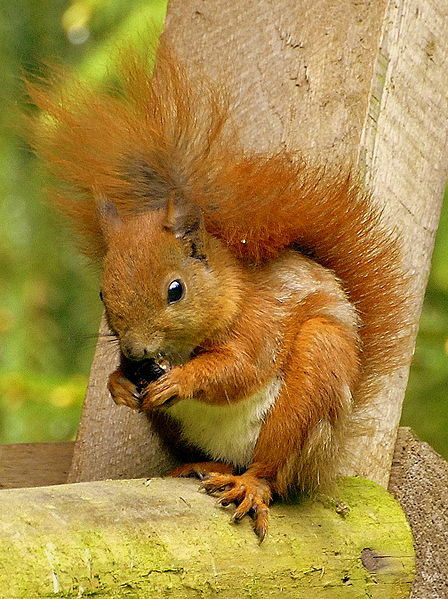
In other drawings of medieval pets, the British Library has a manuscript showing a woman with a pet squirrel while the Luttrell Psalter shows a collared pet squirrel as a sign of status. 

Birds were also popular. Jays and magpies - called 'pies' - were kept in cages and taught to copy speech. Larks and nightingales were kept for their sweet songs. 

Red squirrel photograph by Pawel Ryszawa (Wikimedia Commons)Cats in the Middle Ages were kept mainly as mousers, and also, more grimly, for their fur and skins. Yet cats were also treasured. Exeter Cathedral lists in its accounts from 1305 to 1467 the sum of a penny a week to feed the cathedral cats if the animals did not catch many mice in the main church. 

Dogs remained a favourite - so much so that nunneries tried and failed to ban the keeping of dogs as pets in various convents. Nuns were warned not to bring their pets into church and the pets included dogs, hunting dogs, rabbits, squirrels, birds and even monkeys. 

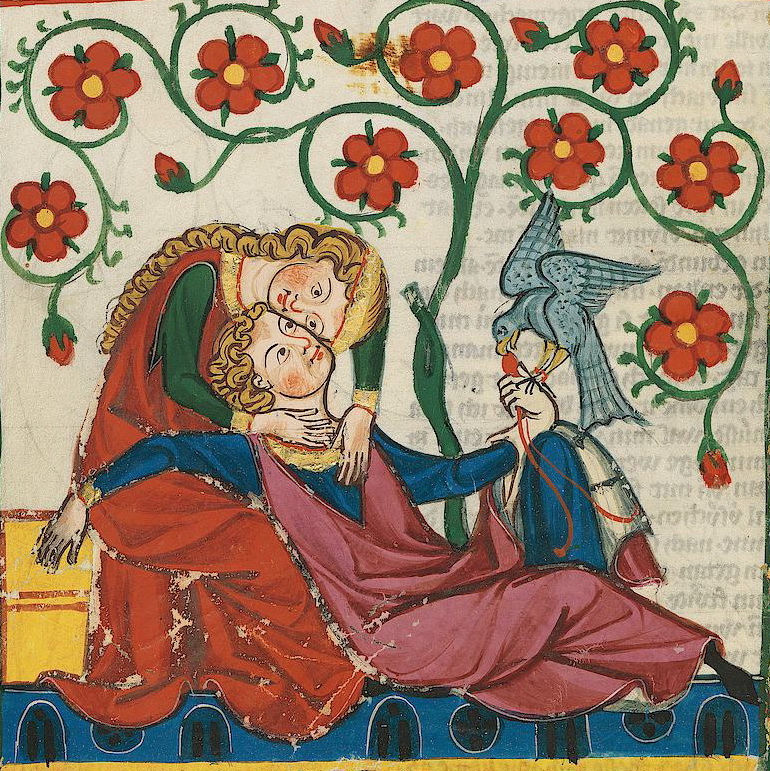
Hunting dogs and hawks were not officially pets, being used to hunt and bring extra food for the table and to provide sport and entertainment to their lords and ladies. However, hawks were also massive status symbols, given as kingly gifts and well-known as signs of wealth and power. As such they were pampered and displayed - so much so that perches were even brought indoors to their owners could have their falcons with them. In 1368 the Abbot of Westminster, Nicholas de Litlington, bought a wax image of a falcon to offer at the altar to help a sick falcon recover. Lay men and women often brought their pets into church - the men with hawks on their wrists and women with lap-dogs. 

From the Codex Manesse, Heidelberg, c.1304-1350Breeds of pets changed over time and some are unknown to us now. Medieval man in particular had a passion for hunting and bred horses and dogs for that activity. There were horses bred for stamina and long chases through woodland after quarry, sturdy beasts called coursers (chasers) And as a hunting dog, the big, deep-chested, long-legged alaunt was much prized. 

Pets could also be used as messengers, or as signals. This is what one of my younger characters does in my novel, "A Summer Bewitchment" (sequel to "The Snow Bride.")


Excerpt.

“My name is Tancred Olafsson.”

Part Norman, part Viking, like her Magnus, Elfrida thought, smiling as the boy thanked her for a carrot and leek pie. Tancred flushed, possibly because of her smile, then steadied himself by addressing her husband.

“Rowena is my kin and we were brought up together. We are not close kin, not a cousin or any kind of consan–consan—”

“Consanguinity,” Magnus supplied helpfully. He bit into a pie himself and the two chewed companionably, although they looked very different. Tancred was short where Magnus was tall, a sturdy boy where Magnus was muscled and strapping. Fair, smooth-skinned and amiable, Tancred was very much a page in a great house, with the manners and fine clothes to match. His black cloak alone was worth one or two heavy bags of gold. Seated cross-legged beside him in his grass-stained tunic, Magnus appeared like a dark demon with a youthful charge.

“How old are you, Tancred?” she asked.

The lad’s apple-blossom skin took on a ruddy shade again. “Old enough to ride and follow tracks. When Rowena sent me her pet finch I knew I had to act.”

“So you were not sick?” Elfrida asked, and received a stare from the boy.

“I am never sick.”

“Your age, lad,” grunted Magnus.

“Twelve.” Tancred kicked the grass, then stopped when Magnus glanced at his leg.

“So the finch was a pre-arranged signal. Your parents and kin, will they not be missing you?” Elfrida persisted.

Tancred shrugged. “I can send them word,” he mumbled.

“We shall do that tomorrow,” Magnus said, “when I send a herald back with you to return you to your people.”

“Not so, my lord!” The boy surged to his feet, indignant as a ruffled cockerel. “I came to rescue Rowena! She needs me!”

“You know where she is?” Elfrida could scarcely believe their good fortune. Was it going to be this easy?

Tancred thrust out his chest and put his thumbs in his belt, perhaps imitating an older relative. “I know where she is not and where she never wants to be.”

“The nunnery?” Elfrida prompted.

Tancred blushed afresh and said nothing.

“Are you also Lady Astrid’s ward?” Magnus asked.

“No.”

“Have you searched for Rowena?” Magnus went on.

“Yes! Everywhere I can think of and more.”

Elfrida hesitated then chose to be direct. “Do you think she ran away?”

“Why send me the finch, then? As you guessed, that was her signal for me to help.”

“And before you could give it, she vanishes,” Magnus observed. “Lady Astrid tells us Rowena was stolen away.”


Lindsay Townsend

Monday, August 24, 2020

Flowers and Romance and how I use them in my writing.

Flowers and Romance – Excerpts. Plus how I use them in my writing.

THE SNOW BRIDE (THE KNIGHT AND THE WITCH 1) https://amzn.to/2MZZan0    
UK  https://amzn.to/2H1tYzY                    


I often use flowers and seasons, and the folklore and symbols attached to these, as ways to point out contrasts in my stories. So in “The Snow Bride” I have the harshness of winter set against my heroine and hero’s dreams of summer – a clue to their developing feelings and relationship. The Green Man, too, is an old figure in folk lore and a powerful symbol of rebirth and renewal - a sign of Magnus' own changing circumstances.


Excerpt
                                                               
They plodded another mile, then Magnus admitted they should stop. Even on the old west road, which they had stumbled onto at midnight, going was onerous. The horses were weary, heads down, stumbling, their hooves covered in snow. When the snow turned to a biting sleet, everyone had endured enough.
          Before him Elfrida was silent, uncomplaining, though God knew she must be chilled and weary. It was she who noticed the forester's hut, set back from the road behind a holly tree. She tapped his arm to alert him and he called orders to the others, his voice cracking in the cold.
          The forester, whoever he had been, had abandoned the hut, but it was just big enough for them all. Magnus knocked out a panel of wattle to enlarge the door and they brought the horses in.
          While he made a fire just inside the doorway Elfrida slipped off into the darkness. When she returned the men had bedded down and were chewing whatever rations they had with them. Magnus patted a lump in the floor beside him, close to the fire, and she lay down without a sound.
          Magnus rose and put what remained of the door back across the threshold as a barrier and wind-break. Checking it was secure, he knocked the snow off his cloak and stretched out again beside Elfrida. As soon as he closed his eyes he slept, and dreamed.

          It was summer and he was in a pleasure garden. Protected by a stout stone wall, it was bordered by fruit trees and ripening vines and filled with small sparkling fountains, the like of which he had not seen since his return from Outremer. One fountain played over a turf seat studded with marigolds and daises. Magnus ran his fingers through the damp flowers and he heard a woman sigh with contentment, a welcome sound.

          Elfrida always knew when she was dreaming and this time was no different. It was midsummer and she strolled in an orchard filled with fragrant apple blossom. She carried a twig of mistletoe, its waxy berries still in impossibly fresh bloom. Above her head finches darted and sang and bees buzzed in lazy contentment, dusky with pollen. There was a hay stack beneath an oak tree and a green man smiling at her though the heavy white-green pomanders of a guelder rose. 

          "You have a gentle, courteous touch, Sir Magnus."
          Elfrida sighed again and stretched out on the turf seat. Where she lay down roses sprouted and burst into flower, their petals as soft and flawless as her skin. She smiled, and in the wonder of the moment Magnus could not tell if she was clothed or not. From a blower of white and pink rose petals, she held out her hands to him and smiled a second time, trusting and warm, her bright eyes filled with admiration. "Come."

          The green man sprang down from the branches of the guelder rose and became Magnus. He bowed to her, a warm breeze ruffling his black hair curls. "My Lady."

THE SNOW BRIDE (THE KNIGHT AND THE WITCH 1) https://amzn.to/2MZZan0    

In the sequel to "The Snow Bride", I use medieval beliefs to explore how flowers could be used in magic and for more sinister purposes than courtship. 

A SUMMER BEWITCHMENT ( THE KNIGHT AND THE WITCH 2) https://amzn.to/2SxGj5L Amazon Co Uk  https://amzn.to/352aAfD
In"A Summer Bewitchment", Elfrida explains to Magnus about valerian.

Excerpt
Outside in the warm, still evening they walked arm in arm, both carrying panniers, and Elfrida shared what she knew of the stranger with Magnus. He in turn told her what he had learned of Rowena from the priest. It was, she thought, strangely companionable, but she wished they were speaking of less dark, mysterious matters.
“Valerian is a magic plant,” she explained, skirting carefully around a flowering elder bush. “It has many uses. One is as a lure. To seduce.”
“And the hare’s foot?” Magnus nodded to the elder bush as he stalked by, a grudging acknowledgement. “The rosemary I know from you is a guardian against evil spirits, so is that good?”
“Because he protects himself from demons and the like does not mean he is not evil himself.”
“Well spoken! The stranger’s mention of a Holy Mother?”
“The hare protects him from all danger. It is a creature of magic. The mother he reveres may be the Virgin, but he worships her in older ways.”
Magnus raised his black brows in silent inquiry.                              

“The wreath he leaves in thanks and sacrifice, of valerian and elder blossom, marigold, wild thyme and daisy, is made of flowers pleasing to the older gods. I have seen such posies left at ancient standing stones and statues, at rock carvings of the horned god.”

As flowers are often seen as decorative and signs of peace, healing, love and respect, I wished to show a scene where my heroine Elfrida also uses them as instruments of revenge. She and Magnus have been deliberately insulted at a noble's house by Elfrida being offered a gown to dress in that is little more than a rag. She uses flowers gathered from the common land to transform it.

Excerpt  

“These are beautiful.” Elfrida meanwhile was lifting up stems of corncockle, of oxeye daisies, of lilies and white roses. She gave him a look warm with gratitude. “Truly beautiful living jewels.”
He smiled, to prove he was not aggrieved with her, and watched in burning indulgence. Flowers flashed under and through her nimble fingers, a cascade of whites and purples, shot through with gold. Elfrida was charming them, using her magic to pin and fasten the blooms to the dull brown gown. In moments, as he leaned against the door, ignoring another careful knock, she threaded flowers into sleeves and made a belt of lilies worthy of Solomon. Her face glittering with concentration, she stripped the roses of their thorns and fashioned them into a crown.
“My lord.” A plea beyond the door.
“Hold!” Magnus ordered, his cheek against the wood.
When he twisted round again Elfrida was robed in her gown and plaiting her long hair. “Splendor
Wild Rose
 in…” The oath died on his lips. At times his wife’s beauty was almost unearthly, utterly peerless. How? He wanted to ask, but it was Elfrida herself and what she could do.
The brown dress was transformed, enchanted by the woman wearing it and her flowers. She was a living tapestry, her face that of an angel’s, her unveiled hair brighter than a dragon’s flame and crowned by white and pink roses. Sleeved with oxeye daisies and corncockle, belted by lilies and garlanded with golden marigolds, the sweet fragrance as she moved was rich as the summer itself.
There were even flowers for him, Magnus realized, as she secured a spray of oxeye daisies across his chest.
“Hey!” he half-protested, but she wagged a busy finger. “Today, you are my lord of flowers. These are your banner.”

A SUMMER BEWITCHMENT ( THE KNIGHT AND THE WITCH 2) https://amzn.to/2SxGj5L Amazon Co Uk  https://amzn.to/352aAfD


 Lindsay Townsend 

Tuesday, February 25, 2020

Inspired by Fairy Tales

I’ve always loved fairy tales: African fairy stories, Old Peter’s Russian tales, Grimm’s fairy tales and the western classics – Cinderella, Sleeping Beauty, Beauty and the Beast, The Goose Girl, The Frog Prince. The themes of love, sacrifice, keeping promises (the theme of the Frog prince) transformation (in The Goose Girl and Cinderella) justice (again in Cinderella) are epic to me and timeless, worthy of exploration in romances and modern stories.

Cinderella, the story of selfless devotion rewarded, is a popular theme for many romance stories, with the ‘prince’ often an Italian or Arab billionaire who sweeps in to transform the heroine’s drab, oppressed life. I’m sure there are romances to be written about the ugly sisters, too – positive stories where they grow from their petty spitefulness and obsession over balls and dances into generous, complete women, who also find love. That element of the happily ever after and the unexpected is strong in both fairy tales and in romance and both appeal to me greatly.

Fairy tales can also be epic, dealing with issues of life and death. Look at Gerda and her determination to win her brother out of enchantment in The Snow Queen. Look at Sleeping Beauty, where the prince rescues the princess from the ‘death’ of endless sleep.


Recently I did my own ‘take’ on Cinderella in my ‘Mistress Angel’. I made it a story of transformation for both my heroine, Isabella, and the handsome armorer Stephen, who starts as a man haunted by loss. Although Isabella has little power, trapped in widowhood with a dreadful family,I didn’t want her to be passive, simply waiting to be rescued from her situation, so she is active in the story, scouring the streets of medieval London, determined to find and recover her son Matthew. I also added more urgency by making it a ticking clock story – Stephen and Isabella must find her son before her vile in-laws can keep him from his mother forever.

The story of Beauty and the Beast has thrilled me since I was a child, with its dark and menacing beginning, the terrifying beast and Beauty’s courage and love for her father and ultimately for the beast. I was inspired by these basic tenets to write my own medieval version of Beauty and the Beast in my ‘The Snow Bride’ and its sequel 'A Summer Bewitchment'. Magnus, the hero, has been hideously scarred by war and looks like a beast. He considers himself unworthy of love. Elfrida, my heroine, is also an outsider since she is a white witch, but she willingly sacrifices herself (as Beauty does in the fairy story) because of love, in her case her love for her younger sister, Christina, for whom she feels responsible. When she and Magnus encounter each other, I made it that they could not understand each other at first, to add to the mystery and dread – is Magnus as ugly in soul as in body? They must learn to trust each other, despite appearances, and come to love (just as in the original fairy tale).


I also added other fairy tale elements to ‘The Snow Bride’: magic, darkness, the idea of three (a common motif in fairy tales) spirits in the forest and more. Perhaps in the darker elements of my forest I was inspired by that other old fairy story – Red Riding Hood.

How about you? What inspires you in your reading or writing?

Lindsay Townsend

Thursday, November 14, 2019

New Release — A Summer Bewitchment (The Knight and the Witch Book 2) by Lindsay Townsend


When a shadowy piper kidnaps seven beautiful girls, can a wounded knight and his witch-wife save them? Will Sir Magnus and Elfrida find them in time—and at what cost?
Magnus, the fearless, battered crusader knight, and his fey wife, Elfrida, are happily married, but each of them carries a secret. Elfrida believes that being peasant-born will one day undermine her husband’s love for her. Wounded and scarred, Magnus fears nothing—except, perhaps, that he will not be able to give Elfrida her greatest wish—children.
Their fears are sharpened when high-born Lady Astrid appears at their manor and demands their help to find the seven missing girls. Though the lady clearly regards low-born Elfrida beneath her, why has she truly sought out Magnus, a ruthless knight? Which one of the kidnapped girls does she really want to recover so badly—and to what hidden purpose?
In the scorching summer heat, Magnus and Elfrida search together for the missing girls. Will they be able to rescue them in time? And can their own marriage survive?

EXCERPT

     Before Magnus could move away from the shadows, Elfrida seized his arm. “I must come with you, sir. You and I alone, I think, until we are sure we have found Silvester’s lair.”     “Indeed?”
     She did not quail under his frown though it was a near thing. “Please,” she almost said, but she was done with beg­ging.
     “I have a plan,” she began as he shifted. When he strode into the sunlight, the rest of her words withered inside her mouth.     He hooked his hand into his belt. “I will not have you as bait.”
     He understood part of her idea, then. This would be only gos­sip-bait, she wanted to say, but Magnus’s growl stopped her.
     “So small you are,” he said. “So slender, still. If I were only more a man, this caper of yours would be impossible.” His fingers whitened on his belt and he fell silent.
     “What?” Magnus’s frustration raked through Elfrida’s mind like claws. As she stared at him, horrified, he jerked his head aside, checking no one was close. Her own feelings now raging, and even with all her magic she could not sense the rest of his thought. That was always the difficulty with magic and  thought sensing. She needed a cool, calm head to do such things and at present her thoughts and feelings were in tumult, with fear uppermost.
      “My lord?” What does he mean? “Please, Magnus.”
     They marched across the yard in the same arrow-straight diagonal that Tancred had taken toward the steps of the great hall. Magnus snatched her hand and veered left to the stables, acknowledging the smith coming the other way.
     “Are we leaving?” she ventured.
     “Let me think.”