Search This Blog

Monday, April 24, 2023

Brewsters - The Medieval Women who made Ale.


Brewsters – The Medieval Women who made Ale.


“Brewster” used to mean a female brewer of ale. In the early 1300s brewsters were common. As water was rarely safe to drink, ale, created by a barley or oat mash, boiling water, yeast and herbs, was a staple. Everyone, men, women and children, drank it. Larger medieval houses made their own, so in 1333 Elizabeth de Burgh, Lady Clare, brewed 8 quarters each week, around 60 gallons of ale. Since a household of 5 might drink 1 ¼ gallons a day, this output needed to be ongoing, especially as ale soured quickly, within a few days. The plus side was that once made, ale was quickly ready to drink, within a day.

Brewing of ale was done at home, using everyday tools – a large tub, a brush, a ladle, forks. Women did it in tandem with other household tasks. Any excess a brewster might sell to her neighbours. Locals would be alerted that ale was available by the sign of a branch or bush pinned over the household door. Neighbour sold to neighbour and customers brought their own pails to collect the fresh ale. Another way womenfolk were employed were as Tipplers, who carried the freshly brewed ale in vessels on their backs to various household clients. Overall it was a small-scale business, with modest profits. Married women, widows and unmarried spinsters all brewed and it was a means of independence. In 1379, in Howden, 9 single women supported themselves by brewing. In Norwich, women of the chief families all brewed ale and sold it to their friends.

Barley water could be made by boiling a small quantity of fresh barley in a volume of water and then the liquid strained off. Herbs used in the ale included briar, rosemary, coltsfoot and balm. Water from different wells produced different flavours of ale. “Dredge”, a mix of oats and barley, was in as common use in the production of ale as it was of bread.

Ale was sweeter in taste than beer, since the hops in beer preserve the drink for longer but also make it more bitter.  Modern beers in the “Gruit” style, where hops are not used and herbs are used as flavouring, give an idea what such ales tasted like. An ale called “Mycria”, flavoured with sweet gale, used to be produced by Hanlons in Devon.

Hops, introduced from Europe, was used to brew beer. Beer lasts longer than ale and so can be transported greater distances and made in larger batches. After the Black Death, beer began to be drunk and produced in England as well as ale, though female brewers were gradually pushed out of the trade by men, who had greater access to capital. The Brewers’ Guild was closed to women. The laws favoured men over women in brewing, although women often had more practical experience. Brewsters began to be seen as sinful, wanton and unclean. In 1413 brewster Christine Colmere in Canterbury lost her trade when Simon Daniel falsely told her neighbours that she was leprous.

See “Ale, Beer and Brewsters In England” by Judith Bennett for more details.


For myself, I am sorry the more bitter beer took over from ale, and sorry that women were thrust out of a business where they had thrived for many years. One day, I may write a story where a brewster is my heroine, but in the meantime, if you are interested in learning a bit about medieval feasts, medieval sweets, cooks and menus, please see my novel “The Master Cook and the Maiden” and my novella, “Amice and the Mercenary.” Both are published by Prairie Rose Publications and both are free to read with Kindle Unlimited.


The Master Cook and the Maiden.


Amice and the Mercenary


Lindsay Townsend 

Wednesday, April 12, 2023

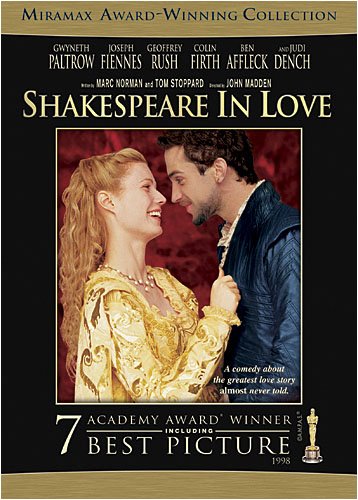
Dance Scenes in Historically-Set Movies – April – Shakespeare in Love #prairierosepubs #moviedancescenes

Join me here for a year of movie trivia fun as I post dance scenes from movies set in historical time periods. I will give a brief summary of the movie’s plot and an equally brief set-up to the scene.

Each month on the second Wednesday, I will post a movie clip and link back to previous movie scene articles here on the blog.

 This is the criteria by which I'm choosing movie scenes:

  • In a non-musical movie, the dance scene is important to the storyline and not just visual and auditory filler.
  • In a musical drama, the characters in the dance scene don’t sing to each other.
  • In a musical drama, the dance scene is important to the storyline and not just visual and auditory filler.
  • The historical cut-off is 1960, because that date works for me. ;-)

Side note:  The article “Classic Literature is Not Necessarily Historical Fiction” on the BookRiot website offers an interesting explanation on what constitutes historical fiction and where various historical date lines are drawn. https://bookriot.com/what-makes-a-book-historical-fiction/

Onward to the April movie scene.

It is altogether fitting and proper that I highlight a movie with a Shakespearean theme for April, since William Shakespeare was baptized on April 26 (likely born on April 23), 156, and he died on April 23, 1616.


Name of Movie: Shakespeare in Love

Historical Time Period: c. 1593
Location: London, England
Occasion: Formal dance at Sir Robert de Lessep’s estate
Type of Dance: Renaissance

Background

Shakespeare in Love is a period romantic comedy-drama (1998). The story is a fictional love affair between William Shakespeare and Viola de Lesseps. During this intense, short-lived affair, Shakespeare is inspired to write Romeo and Juliet , which closely mirrors their star-crossed, and doomed-from-the-beginning relationship. This movie is a play-within-a-play.

Dance Scene Set-up

William Shakespeare sneaks into a ball at the de Lesseps estate. During the ball, Viola’s father arranges her betrothal to a nearly bankrupt Lord Wessex. Viola is passingly familiar with who Lord Wessex is, but she has no interest in him as a person, let alone as a husband. She also doesn’t know a marriage pact is being made for her. Viola is enamored with all things theatrical, and she has a secret admiration for William Shakespeare, although they’ve never met.

Don’t look to this movie for historical accuracy. It is Hollywood-generated, not a documentary. This includes this dance scene. Keep in mind that movie dance scenes are created for optimum cinematography and choreography. As such, there is often have a conglomeration of dance movements to achieve those goals. This is the case here.

The purpose of this dance scene is to get Will and Viola together, just as Romeo meets Juliet at the party at her house. Shakespeare and Viola are from different social classes, and they would not have had opportunity to interact any other way than within this dance.

I’m iffy on dances of the Elizabethan era, but I’m fairly confident in saying that this dance is a combination of the Almain, which is a processional dance in which you do some specific movements with your partner and a Volta, which is a ‘toss the ladies” movement. It’s also a ‘mixer dance’ in that people can enter and leave the dance sort of like someone tapping your partner on the shoulder and taking their place as your new partner.

The dance scene…

Sir Robert de Lesseps and Lord Wessex have evidently sealed the deal on the marriage agreement. Will Shakespeare is hanging out with the musicians, just watching the dancing. Viola de Lesseps is in the midst of the dancers.

Will’s disinterested perusal of the dance is suddenly interrupted when he sees Viola from across the crowded room.

 0:29 – Will is instantly awe struck, and he asks one of the musicians who she is. He’s told, “Dream on, Will.”

The camera cuts back to Viola dancing. You’ll notice she has a new dance-partners-in-passing in the Almain.

1:00 – We see the Volta (toss the ladies). Will is on the move. He’s got his eye on Viola as he’s crashed the dance, so to speak.

1:18 – Viola looks directly into Will’s face, and she gasps. She is visibly stunned to see him. “Master Shakespeare,” she breathes.

Viola and Will separate as they move around the dance circle. Viola encounters Lord Wessex again, but her gaze is locked on Will as he dances away from her. She and Lord Wessex exchange a few words in which she flippantly, and naively, disregards his meaning.

1:42 – Will and Viola come together again. They twirl to the side of the circle, where they stop and talk. This is an instance of the the world revolving around them, while they have eyes only for each other. You can see the blurred figures of people in the background.

Viola speaks, but Will is struck speechless, ‘a poet of no words’, she says. Wessex drags Will off the dance floor. Will utters words of admiration for Viola, which prompt Wessex to put a knife to Will’s throat. Viola watches, also too enamored with Will to think of anything but how she feels right then.

Wessex (aka a combination of Paris and Tybalt from Romeo and Juliet), turns back to Viola with an expression that foreshadows the confrontation between Viola and himself that will happen later in the movie.

While this dance scene is brief, the ‘meaningful looks’, words spoken haltingly, make it clear to us that Viola and Will have fallen in love at first sight. It’s one of those sigh-worthy romantic scenes for those of us who are hopelessly, hopeful romantics, despite knowing how it turned out for Romeo and Juliet…and Will and Viola.

January Movie Dance Scene: Cat Ballou

February Movie Dance Scene: The King and I - Shall we Dance?

March Movie Dance Scene: Easy Virtue

Until next time,
Kaye Spencer
writing through history one romance upon a time 


Tuesday, April 4, 2023

April Flowers and Showers

 April Flowers and Showers

By C. A. Asbrey


"The sun was warm but the wind was chill. 
You know how it is with an April day. 
When the sun is out and the wind is still, 
You're one month on in the middle of May. 
But if you so much as dare to speak, a cloud come over the sunlit arch, 
And wind comes off a frozen peak, 
And you're two months back in the middle of March." 
Robert Frost, Two Tramps in Mud Time, 1926 

April is the beginning of spring. Even its name reflects the change of season. In Latin aperio means 'I open' referring to the buds and sprigs burgeoning with life in the northern hemisphere at this time of year. As people were historically so dependent on a good crop, it was a time of year that was very important to our ancestors. The spring season is rife with superstitions and folklore.

The birth flower for the month of April is the common daisy, Bellis Perennis. It's commonly thought that the name comes from a corruption of an older name 'Day's Eye' due to the fact that it closed in the evening and opened in the morning. Chaucer was known to call it 'the eye of the day'. In medieval times it was called 'Mary's Rose' or the 'Bone Flower.' In Scotland and the North of England it is also known as gowan. It grows all over the old world, needing little or no care, and has one of the longest blooming seasons in the plant calendar. Ancient daisy decorations on pottery and ornaments have been found in excavations in Crete, Egypt, and all over the Middle East going back at least 4,000 years. The Bellis part of the name is thought to mean pretty, but it could also relate to the Latin for war - bellum. This theory is supported by the medicinal use for the plant in treating injuries. Also known as bruisewort, and occasionally woundwort, it was used for healing wounds and treating bruising. Other medicinal uses suggest that a strong solution had anti-spasmodic properties that helped menstruation, bowel problems, and a decoction of the roots can treat eczema.     

The heads are edible can be scattered over a salad to make it pretty, along with other edible flowers.

Freya Bringing the Daisies

In Norse mythology Freya, goddess of love, beauty and fertility, declared the flower to be sacred. Also linked to Venus, the Roman goddess of love and beauty. It led to simple rituals, still carried out today where the petals are plucked off one-by-one by young women across the whole of Europe repeating "he loves me, he loves me not". Other fortune-telling games relating to the daisy has girls trying to predict the occupation of her future husband as the petals are removed. The verse takes many forms, but one of the oldest was, "Tinker, tailor, soldier, sailor, rich man, poor man, beggar man, thief, doctor, lawyer, merchant, chief."

Daisies in Ophelia's Death Scene

Goethe had a pregnant Margherita plucking a daisy to tell her how Faust felt about her, but he wasn't the only artist to weave the flower into their work. Shakespeare used it in Ophelia's death scene, and in Love’s Labour’s Lost said that ‘daisies… do paint the meadows with delight’. Wordsworth wrote 'To the Daisy', and Keats and Emily Dickinson also mentioned the flower.    

In Celtic legend, when babies died, daisies were said to be sprinkled over the child's grave by the gods to ease the suffering of the parents. The perennial nature of the plant meant it grew everywhere, and certainly on graves. It lead to the euphemism 'pushing up the daisies.' Linked to the spring equinox, the appearance of the daisy showed that the land was fertile, but in the triple deities of the Celts it related to the maiden, not the mother or the crone form, and as such, it was linked to innocence. It was also a sign of resilience, returning after being trampled and surviving throughout the summer. A daisy chain was said to protect a child from being abducted by the fairies.        

A horse that didn't lift its hooves high enough was nicknamed a daisy-cutter, and this term spread also to sports. In 1889 an English newspaper used the term for a low fast ball running along the ground. It wasn't long before that term was used in Baseball for the same thing.  

A 19th century slang term that's gone out of fashion is 'it's daisy'. Meaningless to us, but to Victorian Brits it meant it was superb.     

It it very well might be superb. Modern studies on the plant has found that a strong scientific basis for its reputation for healing wounds. Dried daisy flowers, powdered and extracted in n-butanol, accelerated wound-healing and decreased scarring on skin wounds. A later study found seven new saponins that promote collagen synthesis (constituents that have soap-like attributes and lower surface tension) in daisy flowers. Collagen is the main structural constituent of skin, which would explain how they contribute to  wound healing. One type of saponin in Daisy flowers has also been found to inhibit tumours, so maybe it's time to look at the humble daisy in a new light?  


Excerpt

“That’s my drink,” said Tibby. 

The stranger turned a smug sneer on Tibby. “It can’t be. It’s in my hand.” “It’s mine.” 

Tibby appealed to the barman for help. “He’s got my drink.”

The server rolled his eyes. “Have you seen how busy it is in here? I ain’t got time to watch everyone’s stuff. Look after your own drink.” 

“I’m trying to. Give me that.” Tibby reached up but the taller man held the glass up high, way out of the reach of the tiny man. “You know that’s mine.” 

Tibby jumped and stretched, huffing in his exertion in a game of alcoholic-keep-away much to the amusement of the ring of bullies who sniggered and jeered. “Look at the size of him. He’s a midget.” 

“I am not.” Tibby jumped once more. “Midgets are medically four-foot-ten. I’m five-foot-one.” 

“Five-one,” guffawed a vacant-looking goon. “You is a giant midget.”

 “Please, I’ve had a terrible day. Just let me have a drink in peace. Give me my glass.” 

“Yeah, give ’im his glass, Fred,” scoffed the large one with greasy hair sticking out from under a tatty cap. 

“Sure.” The stranger swilled back the contents before he held out the empty glass. “Here.” 

Tibby pulled back his reaching hand, his bottom lip growing and trembling beneath great blue globes which glistened with tears. “You drank it?” 

The men threw back their heads and guffawed, slapping one another on the backs and seeking support for their helpless mirth at this unexpected reaction. It was beyond anything they’d hoped for. 

“Yeah, get yourself another.” The bully snickered.

Tears streamed down Tibby’s face. “I don’t want another drink. I wanted that one. It was special.” 

Fred leaned forward, leering into Tibby’s face. 

“Well, you can’t have that one. I drank it.” 

“He’s cryin’. Can you believe this?” asked the smallest bully. “A grown man sobbin’ like a baby.” 

“I don’t believe this.” Tibby leaned over the bar, his shoulders heaving with deep sobs. “First of all, I get taken to jail for a crime I didn’t commit. Then I get fired, and to top it off, my wife told me she’s leaving me.” He backhanded away glistening tears as the band of bullies fell quiet. “This has been the worst day of my entire life. I come in here for a quiet drink and now, I meet you. Why do you want to stop me from committing suicide? It’s too cruel.”

 “Suicide?” a small voice murmured from the gaggle of miscreants. “

Yeah.” Tibby turned on the bully, pointing an accusing finger. “He drank my poison. A man can’t even kill himself in peace anymore.” 

Tibby kept right in character and watched Fred grasp his throat. “Poison?” 

“I tried to tell you, but you kept pulling it away from me. I came in here to kill myself, but now you even took that from me.” 

“He’s bluffin’,” cried one of the crowd. 

“Ya think?” demanded another. “How often d’ya see a grown man cry in public?” 

“He ain’t exactly a grown man,” answered his friend. It wasn’t helping though, Fred’s eyes bulged and he doubled over thrusting his fingers down his gullet.

Fred’s friend grabbed Tibby by the lapels and shook him violently. “What kinda poison was it?” The journalist wailed and whimpered as Fred buckled at the knees. “What kind?” 

“Strychnine,” Tibby sniveled. “What have I got left to live for?” 

“Strychnine?” “Yeah, that’s why I had with whiskey. It kills the taste.” Tibby paused. “Along with the crushing pain of my pointless existence. I guess your existence has been rendered meaningless, now.” 

“I need a doc,” Fred bellowed, running for the door. 

“A doctor won’t be able to help,” Tibby called after the departing crowd. His tears had dried up and his smile returned with suspicious alacrity. “But get your stomach pumped, just in case.”

The barman wiped the bar with a grubby cloth and eyed Tibby with caution. “I ain’t gonna have no trouble in here.” 

“Hey, if you’d adopted that stance a minute ago, I wouldn’t have been driven to subterfuge.” 

The barman frowned. “There ain’t nowhere around here called Subterfuge. This is the Flying Horse.”

Tibby sighed. “Two more whiskeys, please.” His face lit up at the sight of Jake returning from the latrines. “Ah, you’re back. I just ordered some more drinks.” 

Jake’s brow met, picking up on the undercurrents and sideways glances going on around them. “What’s goin’ on?” 

“Nothing.” Tibby smiled his most innocent smile. “Some bullies took my whiskey but I told them how tough my day had been and they left.” He lifted the shot glass replete with amber liquid. “I ordered us some more. Now, about Callie. I’ve had a few thoughts.”


Sunday, April 2, 2023

Audie Murphy - Whispering Smith - TV Western

 Post by Doris McCraw aka Angela Raines

Photo (c) Doris McCraw

I'm continuing my journey through some of the old, lesser-known, Western TV shows. This month I'm looking at Audie Murphy and his starring role in the TV show "Whispering Smith" a Denver Police Detective in the 1870s or close to that time.

The show ran for one season from 1961 to 1962. However, the show was filmed in 1959 but did not premiere until 1961. One of the stories I read was that Guy Mitchell, Murphy's costar, had broken his shoulder. They delayed production so that scripts could be rewritten to adjust Mitchell's screen time, and even after that you will notice him in a cast. One of the other stars, Sam Buffington, who while looking older was actually only 26 at the time they started filming the series, committed suicide after only sixteen episodes.

A couple of other things of note are: there was a novel, written in 1906 by Frank H Spearman, that was said to be an adaptation of the true life adventures of the Union Pacific railroad detective by the name of James "Whispering" Smith. That novel was the inspiration for four different silent movies and four different "sound" movies. The movie I remember seeing was "Whispering Smith", the 1948 movie with Alan Ladd and Robert Preston. Second: Murphy, in talking about the TV show, called the show, "Dragnet on horseback". And in watching this series you will hear Murphy narrating much like Jack Webb did on the Dragnet series. Third: Only 20 of the 26 episodes aired after the Senate investigated the show as being too violent with Senator John Carroll stating, "Not only bad for children, it's bad for adults."

Guy Mitchell - Left, Audie Murphy - Right
From Wikipedia

As for the stars of the show, Audie Murphy as many may remember was the most decorated American soldier in World War II. He saw combat service for three years, was in nine major campaigns, was wounded three times, and earned 33 awards and decorations for his service. What makes this even more interesting is he had joined at the age of 16 which means by the time he left the service in 1945 he was still under 21 years of age. (I have listened to the audiobook of his memoir, "To Hell and Back", and have seen the film in which he starred as himself. It did more to help me understand World War II that a lot of the other reading I had done.)

Murphy's costar, Guy Mitchell, was known as a singer and this was one of his early roles. Mitchell was also in the service during World War II, having served in the Navy. After serving Mitchell was a singer with the bandleader Carmen Cavallaro. This may explain why you periodically will hear him break out into song in the police station that is part of the show.

The show can be streamed on YouTube or like me you can purchase the series. I confess, I enjoy the show and haven't found it to be as 'violent' as some say. Perhaps I'm a bit more tolerant of the depiction of the West. I would leave it to others to make their own decision.


Links to previous TV show posts:


If anyone is interested you can also read or sign up for my weekly Thoughts and Tips newsletter: Thursday's Thoughts and Tips


Until Next Time: Stay safe, Stay happy, and Stay healthy.

Doris


Monday, March 27, 2023

An Affection for Tumblers


An Affection for Tumblers.


When I was nine years old, travelling with my parents on a long car journey, my mother entertained us with stories. One story in particular stayed with me.

She told of a monastery in the middle ages where the monks offered prayers to a statue of the Virgin Mary. One monk had been a tumbler and juggler and to honour the Virgin he tumbled and juggled before the statue. The Virgin showed her pleasure by coming down from her niche and embracing the monk.

This is a famous medieval story, “Our Lady’s Tumbler,”. The tale is here: https://mednar.org/2012/06/13/our-ladys-tumbler/

The story was depicted in a stone carving in Exeter Cathedral. A replica of this carving can be seen here: https://www.fabriziositzia.com/portfolio/our-ladys-tumbler-exeter-cathedral-replica/

Clearly the Virgin Mary in medieval times had an affection for tumblers, an affection that other medieval people also held. In 1306 an acrobat, Matilda Makejoy, was paid by the royal household. Such dancers could be athletic and graceful or tumble in a jesting manner, playing for laughter. They could also be well paid and respected - Richard II paid John Katerine, a dancer from Venice, over £6 for playing and dancing before him, a sum not far short of £3,000 today.

The character of that juggling monk intrigued me. As a tumbler and juggler he would have probably been a performing player. Someone independent, not tied to land or manor or place. Someone lithe and acrobatic, used to surviving by his own skills and wits.

Later I took that germ of a character and created Geraint, the brash, cunning juggler who becomes an ally to my medieval female exorcist Yolande. Geraint is suspicious of all authority and stands up to everyone- a vital skill in helping my heroine.


Here’s an excerpt with Geraint at his determined, stubborn best.


“You know this man?” Michael Steward forgot the plight of his three daughters in his doughty disapproval of her companion, who grinned and clapped his bare feet together like a pair of hands.

“Geraint Welshman is my servant.”

That was the lie she and Geraint had decided upon yesterday evening so that she could spend last night at the reeve’s house, and Geraint would spend it watching the graveyard and church for any sign of revenants.

So what is he doing in the stocks? Look at him, winking at me and juggling pebbles for the crowd. He may be a strolling player, but does he have to turn every occasion into a show? He can be out of those stocks in a moment. Why isn’t he?

A buxom matron pushed to the front of the tightly knit group. “He stole a loaf of my bread and put his hand up my dress!”

Geraint answered roundly, “I paid for the bread, goodwife, with my tumbling, and kept my hands to myself.” Iron bit into his next words. “This I swear, especially the last.”

“You call me a liar to my face?”

“I say you are mistaken. No more, no less.”

Yolande knew he was aggrieved. Geraint might filch a king’s deer or a lord’s trout but he did not thieve from the people and he never made free with his fingers. Glancing at the blush on the older woman’s neck, she understood the desire—did she not feel it herself, every day?—but even so, matters had gone far enough.

“I have two good silver pennies here to see my servant set free, before his feet rot off,” she intervened, hoping she sounded tart and disinterested.

Sprawling in the stocks as if on the most comfortable of thrones, Geraint rolled her another bow. “Lady, you are all grace, but I wish to prove my innocence.”


To see what happens next, please see my novel “Dark Maiden”.

 Link here:


Lindsay Townsend

Wednesday, March 8, 2023

Dance Scenes in Historically-Set Movies – March - Easy Virtue tango #prairierosepubs #moviedancescenes

Thank you for joining me for the third installment of dance scenes from movies set in historical time periods. I will give a brief summary of the movie’s plot and an equally brief set-up to the scene.

Each month on the second Wednesday, I will post a movie clip and link back to previous movie scene articles here on the blog.

 This is the criteria by which I'm choosing movie scenes:

  • In a non-musical movie, the dance scene is important to the storyline and not just visual and auditory filler.
  • In a musical drama, the characters in the dance scene don’t sing to each other.
  • In a musical drama, the dance scene is important to the storyline and not just visual and auditory filler.
  • The historical cut-off is 1960, because that date works for me. ;-)

Side note:  The article “Classic Literature is Not Necessarily Historical Fiction” on the BookRiot website offers an interesting explanation on what constitutes historical fiction and where various historical date lines are drawn. https://bookriot.com/what-makes-a-book-historical-fiction/

Onward to the March movie scene.

Name of Movie: Easy Virtue
Historical Time Period: 1930s
Location: England
Occasion: Formal ball at the Whittaker’s estate
Type of Dance: Argentine Tango

 Background

 Easy Virtue is a 2008 British romantic comedy film starring Colin Firth and Jessica Biel. The movie is based on Noël Coward's play of the same name. The play was previously made into the 1928 silent movie Easy Virtue by Alfred Hitchcock.

 It is a dark, social comedy set in the early 1930s England in which a world-wise American widow, Larita, meets and impetuously marries a young Englishman, John Whittaker, at the Monaco Grand Prix. When they return to England, John's mother, Veronica, takes an immediate and strong dislike to Larita, while his father, Jim, finds a kindred spirit in her. Larita also meets John's former girlfriend, Sarah Hurst, who is gracious, but hurt, about the marriage, because all her life, it was understood she and John would eventually marry. The Whittaker family is ‘old money’, but they have fallen upon hard times, and the family fortune is all but gone.


Warning – Spoilers ahead

Scene Set-Up

It is important to know while viewing this dance scene, that Larita and Jim have a platonic and respectable father-in-law/daughter-in-law relationship all through the movie. He admires her for her spunk, intelligence, and free spirit. She admires him or his wit, intelligence, and compassion. They have found a friendship built on mutual loneliness. They are both out of place within the family dynamics. Larita has been devoted and faithful to a fault with her husband, John, but they have reached incompatibility for several reasons, not the least of which is Veronica's refusal to accept Larita into the family.

The song Jim and Larita dance to is an Argentine tango—Easy Virtue Tango—performed by the Easy Virtue Orchestra.

What you don't see just before this clip begins is John dancing with Sarah. It is clear he realizes he should have married her instead of impulsively marrying Larita.

Larita and John have had words over his unwillingness to leave the family home, so they can build a life together away from his controlling mother's influence. Larita initially says she’s not coming to the party, which is all right with John and Veronica. But Larita ‘crashes’ the party, and finds herself in a near-hostile environment of people looking down their noses at her in judgment.

On to the tango:

0:01 to 0:46 Larita accepts a glass of champagne, surveys the crowd to assess their collective attitude toward her presence, and asks the orchestra to play a tango. She approaches her husband.

0:47 In a last ditch plea that says we can save our marriage if we can find common ground, Larita asks John to dance with her. He doesn’t want to be seen with her, so he turns her down in a completely ungentlemanly, and cowardly, manner. This signals the end of their marriage.

1:08 Veronica and daughters Hilda and Marion watch with disdain.

1:16 Larita, now flaunting and taunting, gives the on-lookers her heel, which is a satisfying go to hell gesture.

1:25 Sarah's brother, Philip, approaches Larita in what, at first glance, seems to be a kind offer to dance with her in this awkward situation. Through her facial expression and body language, Larita shows her appreciation. He spurns her, though, because he thinks he's cool and considers himself her superior in class and breeding. He isn't. He's a jerk. His wink is a sanctimonious put-down.

1:41 Larita scans the crowd for a friendly face.

1:43 And there he is. Like the cavalry riding in at the last moment, Jim is there for Larita. 

And they tango. Oh, how they tango. 

2:17 The close-up of John peering from (hiding?  lurking?) the shadows reveals his backboneless nature.

By dancing with Larita, Jim is telling his wife and, everyone there, to also go to hell. He's done with his marriage. He knows it. His wife knows it. Dancing with Larita clinches it, since the dance is not only scandalous, it is sexy.

2:35 Veronica says to one of the daughters that she won't stop this scandalous spectacle.

2:57 There’s John again. Creepy.

3:14 The song fades. Jim and Larita share The Look that means they were meant for each other, and they’ve just realized it.

3:17 Veronica applauds and gushes Marvelous. Marvelous. She reeks of insincerity. It’s all a show for the crowd. She wants Jim gone, but she can’t be the one to end the marriage. Everyone will see she isn't at fault. Jim and Larita are to blame. This way she can continue to suffer in dignified silence with her stiff upper lip properly stiff. 

(Aside: We get a hint there is a family friend (widower) who is ready to step up and console Veronica once Jim is gone, and Veronica is more than willing to accept his money and his status.


Much was accomplished during this dance scene that was more effective than merely using dialogue.

January Movie Dance Scene: Cat Ballou

February Movie Dance Scene: The King and I

Until next time,
Kaye Spencer
writing through history one romance upon a time


Tuesday, March 7, 2023

Hazzard by Name, Hazzard by Nature

Hazzard by Name, Hazzard by Nature

By C. A. Asbrey 

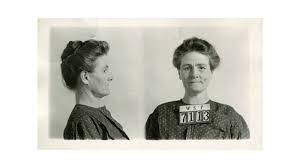
Linda Hazzard's Mug Shots 
Dr. Linda Hazzard was born Linda Laura Burfield in Carver, Minnesota on Dec 18th 1867, as one of eight children. She grew up to be a quack, a fraudster, and a killer,  who sold fake starvation cures to the unwary. A legal loophole in Washington State allowed her to be registered as a medical practitioner despite having no qualifications. In her book, The Science of Fasting, she claimed to have studied under Edward Hooker Dewey, a properly qualified doctor, and a proponent of fasting cures.

Edward Hooker Dewey
He advocated two meals a day and no breakfast, and for some other ailments, a fasting cure. Whilst this was popular during the late nineteenth and early twentieth centuries, it was not a universally accepted regime. The British Medical Journal noted errors in Dewey's published work and called it a 'foolish delusion'. Another doctor noted that fasting should only be conducted under medical supervision and that Dewey took things to extremes. Linda Hazzard was way more extreme than Dewey. it's doubtful that Hazzard ever actually met Dewey, and possible that she only read his work. 

Linda Hazzard self-published books give us some insight into her rigorous regimes. She gave patients only small amounts of vegetable broth, numerous enemas, and 'rested their systems' with days of almost total fasting. Massages were so vigorous that nurses reported that they sounded like beatings.

She left her first husband to start a sanatorium in Minneapolis, and that's where the first death happened. Bizarrely, she was not held accountable for the death as she was not medically qualified, but was evasive when questioned about the victim's missing jewellery. She managed to slip out of charges and carry on with her life. That's when she met her second husband, Samuel Christman Hazzard. He had a reputation as a drunk, a lecher, a swindler and a thief who had been thrown out of West Point for stealing. On top of all that, he had been married twice before, and didn't even bother to divorce the last one before marrying Linda. That resulted in a two year sentence for bigamy.

Samuel Christman Hazzard

After his release in 1906, the family uprooted and moved to Seattle where Linda opened a sanatorium in Olalla called Wilderness Heights. It was about forty miles from the city, and it wasn't long before the new establishment claimed its first victim. Daisey Maud Haglund was thirty-eight, and left behind a boy of three, Ivar. Ivar Haglund grew up to make millions with a chain of seafood restaurants, despite the irony of his mother dying of starvation. In 1908 Ida Wilcox  succumbed, followed by Blanche B. Tindall and Viola Heaton in 1909. Mrs. Maude Whitney died in 1910. When civil engineer Earl Edward Erdman took the cure in 1911 and died of starvation three weeks later. Yet the patients kept coming, despite newspaper coverage of the death toll. The cures were dressed up as more than just dietary, as this picture from Linda Hazzard's book Fasting for the cure of disease shows a claim to both physical and moral transformation.

And it was a considerable total: 1908 Lenora (Mrs. Elgin) Wilcox, Daisey Maud Haglund. The official cause of her death was stomach cancer. Her inability to eat would have caused her to starve to death even without Hazzard's assistance. Ida Wilcox 1909, Blanche B. Tindall, Viola Heaton, Eugene Stanley Wakelin died from a bullet in the head on Hazzard's property. There was speculation that this was murder but was unproven. 1910 Maude Whitney, Earl Edward Erdman, L. E. Rader, 1911 Frank Southard, C.A. Harrison, Ivan Flux, Claire Williamson, 1912 Mary Bailey, Ida Anderson, Robert Gramm, Fred Ebson – Supervised by another fast enthusiast. 

And the crimes were not driven only by dogma. You may remember that Hazzard was accused over missing valuables from Mrs. Wilcox, but nothing was proven. She was also under suspicion over property owned by C.A. Harrison. During his fast, Hazzard gained control of some of his cash and property, and his family was told he died with no more than seventy dollars left. This was a man of means. A publisher and was looking to buy a ranch before he encountered Linda Hazzard. 

Claire and Dorothea Williamson were wealthy young women from England with a deep interest in alternative medicine. They were of independent means, and didn't tell their family that they were admitting themselves into the sanatorium, as they had already met disapproval for their hypochondria.

In Better Times - Claire Williamson (centre) and Dorothea Williamson (left)

Despite other people having already been treated at Olalla, Hazzard told the sisters that the building wasn't ready, and admitted them to the Buena Vista apartments in Seattle. They were placed on a harsh regime under the care of a nurse, and Mrs. Hazzard offered to care for their diamond rings and property deeds in her safe. By April the women were emaciated and delirious, but were transferred by ambulance to Olalla. Claire also signed a codicil to her will stating that she would leave twenty-five pounds a month to the Hazzard Institute, and that in the event of her death she was to be cremated.

Dorothea Williamson after rescue 

On the 30th of April, Margaret Conway, the Williamson's former nanny in Australia received a strange message that caused her to sail to Seattle. She arrived on June 1st and Conway was met by Samuel Hazzard. He told her was told that Claire was dead and Dorothea was insane. They went to E. R. Butterworth & Sons mortuary, where she was shown an unrecognisable embalmed corpse of a woman. Dorothea was living in a rough shack, totally emaciated. A horrified Conway fed her. Dorothea initially begged to be removed, but changed her mind overnight. She was also approached by other starving patients who claimed they were prisoners, and begged for help. Hazzard was wearing clothing Conway recognized as belonging to Claire Williamson.

When Conway discovered that Dorothea had signed over power of attorney to the Hazzards, and they refused to allow Dorothea to leave. They had also been taking money form Dorothea's account. The Hazzards gained a legal guardianship on Dorothea to stop Conway removing her from Olalla, and announced that Dorothea was going to be spending the rest of her life with them. Conway was having none of it, and reached out to the women's uncle for help. When he arrived, Dorothea weighed only sixty pounds, and the Hazzards insisted that she could not leave until their $2,000 bill was paid. He negotiated less than half that amount and took Dorothea to a real hospital.

As the women were British citizens, the British vice consul put pressure on politicians at a higher level to ensure local authorities acted. Even then, the prosecutors tried to evade action by pleading poverty, but Dorothea insisted that she would cover the costs of the prosecution. Their bluff called, Linda Hazzard was arrested in August. She claimed persecution by other doctors, but The Tacoma Daily News headline read: “Officials Expect to Expose Starvation Atrocities: Dr. Hazzard Depicted as Fiend.” Hazzard insisted that a cabal of doctors were trying to undermine her successful therapies. She said, “I intend to get on the stand and show up that bunch. They’ve been playing checkers but it’s my move. I’ll show them a thing or two when I get on the stand.”

She never took the stand, as her lawyer considered it detrimental to her case. She was admonished for signalling to witnesses during the trial, and evidence was produced of her criminality, including forged diaries allegedly from Claire Williamson, in which the diamond rings were supposedly passed on to Linda Hazzard. The forgery was crude and not credible, and numerous patients were found to have handed over money and property to the Hazzards. There were even rumours that Claire Williamson's body had been switched with a healthier-looking one to try to hide the levels of abuse the victim received. Collusion with the authorities was inferred when it was found that an important state legislature, Lewis E. Radar, was one of her patients. He also handed over money and property and was moved to prevent him from being questioned in the case. He died in 1911.

Ex-patients and staff defended her. Even the husband of her first victim, John Ivar Haglund, stated that he was still a devotee and brought his son to her for treatment three times a week. Despite the cult-like devotion of some of her followers, people were appalled, and Linda Hazzard was found guilty of manslaughter. Newspapers speculated that she had got off lightly due to her sex, and that she'd have been hanged for murder if she'd been a man. She was sentenced to the penitentiary in Walla Walla, and released after two years. The governor pardoned her, but her medical licence was never reinstated, and she left to start a new practice in New Zealand.

She resumed starving people to death, and made enough money to return to the USA in 1921. She expanded and rebuilt her sanatorium, which the locals dubbed 'Starvation Heights'. A lack of a medical licence meant she had to market it as a 'school for health'. It burned down in 1935, and Linda Hazzard succumbed to one of her own starvation diets in 1938 at the age of seventy.

 At least twelve people died at her hands, but there's a good chance that a number of people were removed to other locations and their deaths put down to other conditions. Moving patients to confound investigation was part of her modus operandi. 

It's clear that there was a financial motive to her crimes, but her own devotion to the diet shows that she clearly had a deep root in the movement. But there's little doubt that she played on a belief system prevalent at the time. Her followers were variously adherents to alternative health movements gaining popularity, Theosophists, and other free-thinkers. The nineteenth century was a petri dish of alternative societies trying to find new, and idealistic, ways to live. Hazzard was also said to dabble in spiritualism and the occult, and Margaret Conway was amongst a number of people who stated that Hazzard seemed to have a hypnotic power over her victims.

Fasting has been around since ancient times, and as it's been reinvented in multiple forms as low calorie diets, juice fasts, cleanses, and even breatharians (who claim to live on air and light alone). It's not a concept that's going anywhere soon. However, Hazzard clearly played on people's fears, suggestibility, and understood the psychology of belief perseverance before it became a study in modern times. People tend to hang on to beliefs even when new information contradicts them. Delusions can be such a powerful hurt to a person's ego that to abandon them causes a psychological injury - and people have been seen to hang on to notions that kill them all over the world for a very long time.

Whatever the reason, Linda Hazzard did more than just believe. She stole from her victims. Such crimes were a new phenomenon at the turn of the twentieth century, and it was hard for a male establishment to believe that a mere woman could hold such sway over wealthy and educated men. Nowadays, she'd have been seen as the criminal cultist she was and prosecuted to the full extent of the law.    

Starvation Heights

Excerpt

“That’s my drink,” said Tibby. 

The stranger turned a smug sneer on Tibby. “It can’t be. It’s in my hand.” “It’s mine.” 

Tibby appealed to the barman for help. “He’s got my drink.”

The server rolled his eyes. “Have you seen how busy it is in here? I ain’t got time to watch everyone’s stuff. Look after your own drink.” 

“I’m trying to. Give me that.” Tibby reached up but the taller man held the glass up high, way out of the reach of the tiny man. “You know that’s mine.” 

Tibby jumped and stretched, huffing in his exertion in a game of alcoholic-keep-away much to the amusement of the ring of bullies who sniggered and jeered. “Look at the size of him. He’s a midget.” 

“I am not.” Tibby jumped once more. “Midgets are medically four-foot-ten. I’m five-foot-one.” 

“Five-one,” guffawed a vacant-looking goon. “You is a giant midget.”

 “Please, I’ve had a terrible day. Just let me have a drink in peace. Give me my glass.” 

“Yeah, give ’im his glass, Fred,” scoffed the large one with greasy hair sticking out from under a tatty cap. 

“Sure.” The stranger swilled back the contents before he held out the empty glass. “Here.” 

Tibby pulled back his reaching hand, his bottom lip growing and trembling beneath great blue globes which glistened with tears. “You drank it?” 

The men threw back their heads and guffawed, slapping one another on the backs and seeking support for their helpless mirth at this unexpected reaction. It was beyond anything they’d hoped for. 

“Yeah, get yourself another.” The bully snickered.

Tears streamed down Tibby’s face. “I don’t want another drink. I wanted that one. It was special.” 

Fred leaned forward, leering into Tibby’s face. 

“Well, you can’t have that one. I drank it.” 

“He’s cryin’. Can you believe this?” asked the smallest bully. “A grown man sobbin’ like a baby.” 

“I don’t believe this.” Tibby leaned over the bar, his shoulders heaving with deep sobs. “First of all, I get taken to jail for a crime I didn’t commit. Then I get fired, and to top it off, my wife told me she’s leaving me.” He backhanded away glistening tears as the band of bullies fell quiet. “This has been the worst day of my entire life. I come in here for a quiet drink and now, I meet you. Why do you want to stop me from committing suicide? It’s too cruel.”

 “Suicide?” a small voice murmured from the gaggle of miscreants. “

Yeah.” Tibby turned on the bully, pointing an accusing finger. “He drank my poison. A man can’t even kill himself in peace anymore.” 

Tibby kept right in character and watched Fred grasp his throat. “Poison?” 

“I tried to tell you, but you kept pulling it away from me. I came in here to kill myself, but now you even took that from me.” 

“He’s bluffin’,” cried one of the crowd. 

“Ya think?” demanded another. “How often d’ya see a grown man cry in public?” 

“He ain’t exactly a grown man,” answered his friend. It wasn’t helping though, Fred’s eyes bulged and he doubled over thrusting his fingers down his gullet.

Fred’s friend grabbed Tibby by the lapels and shook him violently. “What kinda poison was it?” The journalist wailed and whimpered as Fred buckled at the knees. “What kind?” 

“Strychnine,” Tibby sniveled. “What have I got left to live for?” 

“Strychnine?” “Yeah, that’s why I had with whiskey. It kills the taste.” Tibby paused. “Along with the crushing pain of my pointless existence. I guess your existence has been rendered meaningless, now.” 

“I need a doc,” Fred bellowed, running for the door. 

“A doctor won’t be able to help,” Tibby called after the departing crowd. His tears had dried up and his smile returned with suspicious alacrity. “But get your stomach pumped, just in case.”

The barman wiped the bar with a grubby cloth and eyed Tibby with caution. “I ain’t gonna have no trouble in here.” 

“Hey, if you’d adopted that stance a minute ago, I wouldn’t have been driven to subterfuge.” 

The barman frowned. “There ain’t nowhere around here called Subterfuge. This is the Flying Horse.”

Tibby sighed. “Two more whiskeys, please.” His face lit up at the sight of Jake returning from the latrines. “Ah, you’re back. I just ordered some more drinks.” 

Jake’s brow met, picking up on the undercurrents and sideways glances going on around them. “What’s goin’ on?” 

“Nothing.” Tibby smiled his most innocent smile. “Some bullies took my whiskey but I told them how tough my day had been and they left.” He lifted the shot glass replete with amber liquid. “I ordered us some more. Now, about Callie. I’ve had a few thoughts.”