Search This Blog

Monday, March 13, 2017

A FAST RIDE INTO HISTORY--THE PONY EXPRESS


"Wanted, young skinny, wiry fellows not over eighteen, must be expert riders willing to risk death daily, orphans preferred. Wages $25 a week.”

On April 3, 1860, the citizens of St. Joseph, Missouri, knowing something big was about to happen, gathered just after dark to witness an event never before attempted.

Major M. Jeff Thompson, who would soon leave St. Joseph to make a name for himself as a Confederate General, initiated the Pony Express with the following words:

"This is a great day in the history of St. Joseph. For more than a decade she has been the portal through which passed the wagon trains for the great west… Now she is to become the connecting link between the extremes of the continents… For the first time in the history of America, mail will go by an overland route from east to west… Citizens of St. Joseph, I bid you three cheers for the Pony Express - three cheers for the first overland passage of the United States Mail."

With that, the first rider, either Johnny Fry or Billie Richardson--historians can’t agree on which--galloped out of the barn and into history.

The first westbound trip was made in 9 days and 23 hours. A rider left simultaneously from Sacramento, California, and made the eastbound journey in 11 days and 12 hours. On average, the pony riders covered 250 miles in a 24-hour day.

The route of the Pony Express was 1840 miles of brutal riding: west out of St. Joseph, following the Oregon Trail through Kansas, up the Little Blue River to Fort Kearney, Nebraska, along the Platte River to Fort Laramie, Wyoming; then the Sweetwater River to Fort Caspar, Wyoming, through South Pass to Fort Bridger, Wyoming, on to Salt Lake City; across the Great Basin and Utah-Nevada Desert, skirting Lake Tahoe; then over the Sierra Nevada mountains into Sacramento, California.

Riding day and night, the Pony Express delivered the mail in less than 10 days. [The westbound trip took 11 ½ days-don’t ask me why.]

But that wasn’t the end of the line. Upon arrival in Sacramento, the mail was placed on a steamer and continued down the Sacramento River to San Francisco. In all, the mail traveled 1966 miles.

Delivery of the print version of Lincoln's inaugural address set a new record for delivery, crossing the west in slightly less than eight days.

The Pony Express service lasted only 18 months, ending on October 24, 1861, when the completion of the Pacific Telegraph line ended the need for its existence. But in that time, the less than 100 riders covered 650,000 miles on horseback and rode into a permanent place in the history of the American West. Though the route was extremely hazardous, only one carrier was killed and one bag of mail lost.

Exciting as it was, the Pony Express was a financial bust. And it was never a part of the U.S. Postal service, although the galloping Pony Express rider was the official symbol on every letter carrier's shoulder until the invention of Mr. Zip.

The most significant accomplishment of the Pony Express, besides keeping families in touch, was helping hold California - and its gold - for the Union at the start of the Civil War.

The Express was started by businessmen William H. Russell, William Bradford Waddell, and Alexander Majors, who were already in the freighting business and held government contracts for delivering army supplies in the West. Russell envisioned a similar contract for fast mail delivery. That contract never came about.

According to the Pony Express Museum website [ponyexpress.org], Russell, Majors and Waddell lost $500,000 on the Pony Express. Eventually, entrepreneur Ben Holladay bought what remained of the Pony Express and merged it with his Central Overland Stage Lines.

If you’re ever in St. Joseph, Missouri, just a few minutes north of Kansas City, be sure to stop in at the Pony Express Museum. St. Joseph was the terminus for the westbound trains, and the launching point of the Pony Express. The original structure used by The Pony Express, Pikes Peak Stables, still stands at 9th & Penn.

Within its walls you can hear a recreation of the countdown and release of the very first rider, complete with the cheers of the assembled crowd. You can wander through exhibits showing the gear a rider carried and the route they took. They have several original saddles on display, and even a typical Pony Express “station” - which was nothing more than a 10-foot by 8-foot log cabin with an open fireplace.

The museum also houses displays of period settlers’ wagons and other historical memorabilia. All in all, a nice way to spend an afternoon.
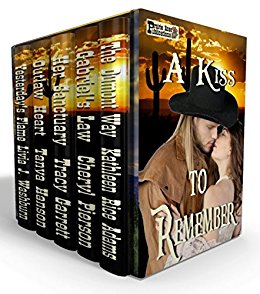
https://www.amazon.com/Kiss-Remember-Western-Historical-Romance-ebook/dp/B01IM37OAA/ref=sr_1_2?ie=UTF8&qid=1489411123&sr=8-2&keywords=A+Kiss+to+Remember

Tracy

Friday, March 10, 2017

CALL OUTS FOR OUR NEW MEN IN UNIFORM LINE!


MEN IN UNIFORM—FSP
Do you have a contemporary love story about a super hot officer of the law or a macho military man? If so, we’d love to see it here at Fire Star Press, an imprint of Prairie Rose Publications!

Stories about hot servicemen from our Navy, Army, Air Force, Marines and Coast Guard are just what we’re looking for…

But wait, there’s more! What about local sheriffs and police officers, highway patrolmen, Federal Marshals, DEA and ATF agents, and yes—even those undercover law enforcement officers—make heroes for wonderful contemporary romantic suspense tales only you can tell.

We’re looking for stories from 40K-60K in length. Stories with realistic action…hot heroes…beautiful, confident women—and sizzle in the air!

If you “have a situation” and the characters to see it through, we’d love to take a look at your submission to the latest addition to our Fire Star Press line—MEN IN UNIFORM.

No erotica, please.

Send submissions to: fabkat_edit@yahoo.com
Visit our website at: www.prairierosepublications.com

Thursday, March 9, 2017

New Release -- GAMBLING WITH LOVE by Kaye Spencer -- Giveaway!

When beautiful lady gambler Lainie Conrad’s husband, Seaton, is murdered, she sets out for revenge. Lainie is certain that cardsharp Rutherford Tolliver is guilty, but she has to find a way to prove it—and when she does, she’s not about to let her own little ol’ arrest get in the way! 

U.S. Deputy Marshal Nick Foster catches up with her, determined to get to the bottom of why she walked out on him months earlier. There’s a high bounty on Lainie’s head for a murder she didn’t commit, so Nick has no choice but to arrest her for her own protection—and to keep his heart safe, as well. 

But Lainie has bought in to a high stakes poker tournament in Denver, Colorado, and nothing will keep her from facing the scheming Tolliver across the poker table in a final showdown that pits skill against skill and trickery against vengeance. She escapes from Nick once more and runs to Denver. She must keep her vow to her murdered husband, for only then will she be free to find love again.

The ghosts of the past are no match for The Lady of the Cards when her future is at stake. She can’t afford to lose when she’s GAMBLING WITH LOVE…

EXCERPT:


     The fiery spark in Lainie’s eyes was the only outward indication the man had ruffled her impassive composure.
     “Yes, I will be a player in that game, and it will be my pleasure to finally take all of your money. Perhaps I’ll feel generous after I win to front you a little something so you can leave town.” Lainie nodded to the cowboys. “Again. Gentlemen, goodnight.”
     With the fluid movement of a striking snake, the cardsharp snatched hold of Lainie’s hand and halted her exit. She neither struggled nor spoke a word. To anyone who didn’t know her, she might have seemed indifferent, but Nick recognized the unreserved loathing in the steady, steely gaze she fixed upon the gambler’s face. There was a history between them that Nick wanted to know more about.
     “Stay awhile, Mrs. Conrad. We’ve known each other long enough to put aside formal pretenses. Let’s dispense with this ongoing façade. It’s tiresome. There’s no reason for either of us to spend the rest of this night, or any night in the future, alone.” The gambler raked his gaze over Lainie’s body, his lips curled in a leer that said he was a man accustomed to getting what he wanted.

     Nick’s temper rose, but he held back, watching. If he knew nothing else about Lainie Conrad, he knew she was capable of handling herself with any man in any situation. Still, he pushed back the side of his duster and flipped the leather thong off the hammer of the short-barreled .44 at his hip.

Be sure and leave a comment for a chance to win a free ebook.


Wednesday, March 8, 2017

'Gambling with Love' - How this story came about by Kaye Spencer


Long about 2007, I entered an on-line writing contest sponsored by The Romance Studio. It was a 3-Round competition. The first two stages of the contest were writing the first 1000 words of a story based on a pre-determined story prompt. The third stage was to create a newsletter. At each stage, you posted your entry and readers logged-in and voted. If you 'finaled', you went on to the next level. (FYI: I made it to the newsletter level, but I didn't win. I think I placed third or fourth.)

Anyway, Gambling with Love, my latest release with Prairie Rose Publications (tomorrow, March 9th) evolved from one of the story prompts of that contest. Here's the prompt:

Character A is in law enforcement and must find and arrest Character B. These characters have a romantic history that went sour. Character A's feelings are still strong for Character B. Write their reunion scene with the arrest in mind.


Gambling with Love is set in 1883 in Denver, Colorado against the backdrop of a high-stakes poker tournament. The heroine, Lainie Conrad (Character B) is a professional poker player seeking revenge against the gambler responsible for her husband's murder. Her plans for revenge are compromised when U.S. Deputy Marshal Nick Foster (Character A) shows up to arrest and escort her back east to stand trial for suspected murder.

While I grew up in a card-playing family, I've never played much poker, although I'm comfortable with a "friendly" game now and then. So, in order to write the poker scene in Gambling with Love with historical accuracy, I needed to refresh my memory with the basic rules and etiquette and also  research the history of cards and poker to put it into historical context. I was not disappointed in the plethora of websites, blogs, and books on both topics.**

Here's where I started:

  • Playing cards date historically from as early as 10th century Asia;
  • 14th century Europe saw a variety of playing card designs develop;
  • By the late 15th century, the 52-card deck was popular as the standard preferred deck even though many card games only called for 20-32 cards, which limited the number of players in a game;
  • 15th century England and France saw the evolution of  the four suits of Spades, Hearts, Diamonds, and Clubs; and
  • Court Cards—King, Queen, Jack—were influenced by English and French royalty.
  • Another interesting aspect of cards is the Joker, also called the Jack of Trumps, Imperial Trump, and Wild Card. This card may have evolved from an Americanized version of the European card game, Euchre, which required an extra card (called the trump card or Jack of Trumps). Consequently, in keeping with the royal court cards, the Joker came to represent the Court Jester or Fool.
Example of a trump or wild card
https://commons.wikimedia.org/wiki/File:Imperial_Bower.png

The Joker has a paradoxical appeal because it carries special properties as the Imperial Trump or Wild Card and, in that role, can resolve problems and win “tricks”. The Joker is as powerful as it is insignificant. It can represent any card and yet it represents nothing without a purposeful designation.

Taking the trivia-history of poker a bit farther...

Poker’s hazy origins are of some debate among those who study this sort of thing. There are arguments supporting its creation in the ancient Orient to the game evolving as a pirate’s pastime. However, there is some agreement that poker’s historical roots reach back to a French card game of vying, bluffing, and betting called “Poque” in which one said Je poque to open the betting.

In America, Poque dates back to the French settlers of early 1800s New Orleans. As the game of poker spread northwards along the Mississippi River, it followed the expansion of the American frontier with the rush to the California gold fields in 1849 and later with the further opening of the west after the Civil War. “Brag”, a three-card British betting card game with a drawing component, influenced the rules of Poque and the “draw” was incorporated into the game. By the mid-1800s, the game was known by its American name, Poker, and was increasingly played with all 52 cards to allow for more players. The term “Draw Poker” was first recorded c. 1850.

Kaye's 48th Edition copy of
The Official Rules of Card Games by Hoyle
According to the Hoyle 1854 edition, these were the accepted hands:

  • one pair
  • two pairs
  • straight sequence or rotation
  • triplets
  • flush
  • full house
  • fours
Apparently, Draw and Stud Poker rules appeared for the first time in the card games rule book, The American Hoyle, in the 1875 edition. The 1887 edition noted that four of a kind was the best hand when straights were not played. Interestingly enough, for many years, straights were not generally accepted poker hands.

Hoyle’s rules stated that when a straight and a flush came together, it outranked a full house, but not fours. Until the 1890s, the highest possible hand was four Aces or four Kings with an Ace kicker (a.k.a. wild card, imperial trump or “cuter”). Not only was this hand unbeatable, it could not be tied.

Obviously, the player holding four kings and an ace couldn’t be beaten, however, a ‘cuter’ was a specific type of wild card in that it often bore a dangerously close resemblance to the ace of spades. More than one old west legend sprang up about gamblers losing high stakes pots to this clever imposter when they erroneously thought they held all four aces.

I incorporated a ‘cuter’, aka imperial trump, into the big poker game as a devious little plot twist in Gambling with Love to keep the players on their toes.

Gambling with Love is a re-release that underwent significant plot changes to become the story it is now.


Available March 9, 2017
On Amazon.com

Now, for the extra fun part.

I'm giving away sticky note holders. If you'd like one...
  • Send me an email at kayespencer @ live.com (omit extra spaces) with your physical mailing address and include the words STICKY NOTES in the subject line so I don't overlook your email. [Protect your privacy. Please don't post your contact information in the comments.]

Then I will send you this sticky note holder through the U.S. postal service. Sister Prairie Roses, you're included in this giveaway, and I will also mail internationally. So, Win-Win for everyone.

(Your email and physical addresses are safe with me. I will only use them to send this complimentary gift to you.)

Until next time,

Kaye
Writing the West one romance upon a time

Website/Blog
Twitter - @kayespencer
Newsletter
Pinterest
Facebook
Amazon
YouTube Channel

**To read more about the history poker in the American Old West, refer to the Time-Life Books series on The Old West, specifically the volume devoted to “The Gamblers”, or visit the internet sources devoted to the game of poker, which are too numerous to list here.


Monday, March 6, 2017

THE BRONTE SISTERS.....Out of Tragedy Great Literature...By Gail L. Jenner


It is probably safe to say that very few writers have not read Jane Eyre or Wuthering Heights.  Most writers are also aware that the three noted literary Bronte sisters suffered through their lives and died relatively young. But their combined story is even more stirring. Out of such tragedy arose such great and revered literature.

Born in 1816, Charlotte Bronte was one of six children born to Patrick Bronte, an Anglican preacher. 

When Charlotte was five, the family moved to Hawthorne, a small remote village located in the grim and gloomy marshy moors. That year Charlotte's mother also died, leaving Pastor Bronte with six children (five girls and one boy) to raise alone.

Charlotte, along with her two older sisters and younger sister Emily, were sent off to a school for the not-so-wealthy daughters of the clergy—but the institution was cold, the food was insufficient and poor and the discipline was harsh. 

Maria, Charlotte’s oldest sister (and thought, by Charlotte, to have been highly intelligent, lively and sensitive) fell ill and died from tuberculosis in May 1825. She was only eleven. Less than a month later, in June of 1825, Elizabeth, the second oldest of the siblings, also died from privation and illness--very likely tuberculosis. She was only ten years old.

At this point, Charlotte and Emily were brought home. There is no doubt that Patrick Bronte was devastated by the loss, especially since he had been advised that the school—although a charity school—was adequate, but, without money or prestige, he had few choices for educating his daughters. For Emily and Charlotte, the loss was traumatic. Most scholars assert that life at the Cowan Bridge School became a major inspiration for Jane Eyre’s story.

Back at home, Charlotte, Emily, Anne (the youngest Bronte), and Branwell, their only brother, spent much of their time fantasizing and creating stories. When Patrick Bronte brought home some toy soldiers to Branwell, it inspired the four children to create worlds of fantasy and stories, many of which they spent days composing. Some even turned into major stories as they grew older. The creative children gathered their stories into little books, the size of matchboxes, each one intricately woven together with colored thread, illustrated and lavishly embellished.

As they grew older, Charlotte took a position at a girls’ school and also worked as a governess for several families. Anne became a governess. Meanwhile, Charlotte and Emily began dreaming of opening their own girls’ school and in 1842, traveled to Brussels with their father where they studied languages and school administration. Emily learned to play the piano and also learned German; additionally, the two sisters learned to write essays in an advanced level of French. While in Brussels, however, young Charlotte fell in love with the married headmaster—Constantin Heger; this heartbreaking experience also found its way into Charlotte’s later writing, and letters she sent to him later on (to which he did not respond in kind) were later found.

 
Wuthering Heights

All three of the girls’ most famous novels—Charlotte's Jane Eyre, Emily's Wuthering Heights, and Anne’s Agnes Grey appeared in 1847 under psuedonyms. Jane Eyre was published by Smith, Elder & Co in London and soon became what we now call a bestseller. The stories by Emily and Anne were given to Thomas Cautley Newby. Both Wuthering Heights and Agnes Grey garnered critical acclaim, although Wuthering Heights was criticized for its violence and immorality. Some critics maintained that it had to be the work of a man with a depraved mind.

Charlotte returned to Hawthorne and helped care for her ailing father; it was at this time, she began working on Jane Eyre. Sadly, Branwell, who was also a talented writer and artist, began drinking and using opium. He declined rapidly as he went in and out of delirium and drunkenness. He died at the age of 31 in September 1848. Only three months later, in December 1848, Emily Bronte died. She was 30 years old. And five months later, Anne, the youngest of the Bronte clan, died on May 28, 1849, at the age of 29.

Alone, Charlotte continued to care for her father. She also married Arthur Bell Nicholls in 1854. Within the year, she became pregnant then contracted pneumonia and died on March 31, 1855. She was 38. Some have suggested that as heartbroken as she no doubt was through her life, that she "allowed" herself to die.

Incredibly, this family of gifted, talented writers and creative minds, appeared to have been stricken--or cursed--by illness and grief. Such tragedy--and yet, out of it or because of it--such brilliance. 

---------------------------------------------------------------------------------------------------------------
Gail L. Jenner is grateful for being able to work with Prairie Rose Publishing, and her collection of stories published by PRP has grown since "joining the gang" in Dec. 2013 with the re-release of her WILLA Award-winning Across the Sweet Grass Hills.
For more about Gail, check out: www.gailjenner.com or http://www.amazon.com/Gail-Fiorini-Jenner/e/B005GHR47O

Sunday, March 5, 2017

COLORADO'S EARLY WOMEN DOCTORS - Pikes Peak Region 1870s

Post (c) Doris McCraw


Cheyenne Mounain,just west of Pikes Pike Colorado at sunrise
Last months post was about Dr. Alida Avery, one of Colorado's early female physicians, who had her practice in Denver, Colorado. But what of the women in the Pikes Peak region, which included Colorado Springs, Manitou Springs and Colorado City. Here is the story of four of the very early women who came to the Pikes Peak region to practice their profession.


As previously noted there were women physicians who moved to and made Colorado their home during the 1870s. In Colorado Springs, a new town which began in 1871, was home to Dr. Julia E. Loomis. Family stories have her living there as early as 1876. Documents, such as ads in the local Gazette newspaper, show she definitely was living there by 1878. Dr. Loomis was an 1870 graduate of the Cleveland Women’s Homeopathic College. This institution was one of the women medical colleges that started up to offer education to women who wanted to pursue medicine. This and other women medical colleges is a result of Dr. Elizabeth Blackwood, her sister, Dr. Emily Blackwell, and Dr. Maria E. Zackrzewka who began a hospital in 1856-1857 in New York, and offered hands-on education and experience to women in a practical setting Although Dr. Loomis may have been practicing medicine prior to her two years at Cleveland’s college, that she went to school after the death of her only daughter at the age of 52, shows a desire to be more, to also be one of the women who could and would practice medicine as the men did.

Headstone for Dr. Julia E. Loomis- Evergreen Cemetery, Colorado Springs, CO

Manitou Springs, a near neighbor and also new town, had Dr. Harriet Leonard. Like Dr. Loomis, family histories place her in the region in 1876. Dr. Leonard graduated from the Keokuk School of Physicians and Surgeons in Keokuk, Iowa. This school was the first co-ed schools in the nation. Originally located in LaPorte, Indiana, in 1849, the school moved to Keokuk and began classes in November 1850. The school was the Medical Department of the State University of Iowa, located in Iowa City, Iowa. As a result of this association, when the University became the first publicly supported university to be co-educational in 1870, the school in Keokuk, by mandate had to accept female students into the medical program.

Headstone for Dr. Harriet Leonard, Evergreen Cemetery, Colorado Springs, CO
These two women were shortly joined by Dr. Esther B, Holmes, 1878 and Dr. Clarabel Rowe, 1879. Dr. Holmes was born in 1844 in Rhode Island. Dr. Rowe around 1833 in Massachusetts. Dr. Rowe received her license in 1881 and Dr. Holmes 1882, shortly after Colorado started its licensing process. Dr. Rowe was also active in the Women’s Christian Temperance Union, giving talks and traveling on behalf of the organization. Dr. Holmes, who remained in Colorado Springs, was fondly known as 'the baby doctor'. Were these women and Dr. Loomis friends? Quite possibly. The death card for Dr. Loomis was signed by E. B. Holmes. In 1888 Dr. Rowe and Dr. Holmes traveled together on a trip through Southern California.

While Dr. Loomis was building her practice and taking care of her extended family, Dr. Leonard was working as the proprietor at the Manitou Spa. As far as records of any other female physician preceeding Dr. Loomis or Dr. Leonard in the Pikes Peak region, none have been found. Of the four women who were pioneers in the Pikes Peak region, only Dr. Rowe moved away. After the death of her husband, Dr. Rowe, moved to California. 


Doris McCraw, pen name Angela Raines is an Author, Speaker, Historian-specializing in
Colorado and Women's History

For a list of Angela Raines Books: Here 

Photo and Poem: Click Here 
Angela Raines FaceBook: Click Here
.


Friday, March 3, 2017

CALL OUTS FOR HOLIDAY STORIES FOR BOXED SETS!


SWEET TEXAS CHRISTMAS—PRP
Do you have a sweet Christmas story that takes place in Texas? If so, we’re looking for you! This wonderful Prairie Rose Publications boxed set will contain stories (and recipes!) for the sweetest, most joyful time of the year. Tales of lost love found and new love discovered—along with mention of some delectable treats—will be included for our readers’ holiday pleasure.

We’re looking for stories from 10K-17K in length of the “sweet to sensual” heat level for this set. Be sure to mention your sweet Christmas treat in your story, and send the recipe along for inclusion at the back of the collection!

We want our readers to be able to enjoy these holiday treats along with your characters. Mention of your special treat can be part of the main focus of your love story—or nothing more than a passing comment when it’s served to a hungry Texan!
We hope you enjoy incorporating a dessert specialty in the tale you weave for this collection!

Deadline is July 1, 2017
Send submissions to fabkat_edit@yahoo.com
Visit our website at www.prairierosepublications.com


ONE YULETIDE KNIGHT--PRP
Do you have a medieval holiday tale of romance to submit to our ONE YULETIDE KNIGHT boxed set here at Prairie Rose Publications? The medieval time period is rich with knights and their ladies, kings and queens—and, of course, villains! Love is always in the air at this most joyous time of year, and we would love to see what you and your characters have in store for this exciting Christmas boxed set to entertain our readers.

These romantic tales can be sweet, sensual, or spicy stories of newfound love or past love rediscovered. What will you come up with? We eagerly await your submissions!

Deadline is July 1, 2017
Send submissions to: fabkat_edit@yahoo.com
Visit our website at: www.prairierosepublications.com