Search This Blog

Showing posts with label reading. Show all posts

Wednesday, March 11, 2020

Why I write in the historical romance genre by Kaye Spencer #prairierosepubs #amwriting #historicalromance


Image - Morguefile.com

As an author, a question I occasionally encounter is, “Why do you write stories with historical settings instead of contemporary stories?”

My superficial answer is I’m drawn to the Old West, Roaring Twenties, and 1950s, because I'm a history nerd with a particular interest in these time periods, and also because writing stories in any historical setting feeds my nerdiness.


The serious reasons are these.

Reason 1—Research

Every historical I write allows me to tumble down research rabbit holes. I’ve discovered the most intriguing and amazing tidbits of history in my research Wonderland. It’s important to me to have the details in my stories as historically accurate, but I temper the accuracy with the need to tell a good story. I am, after all, writing fiction as entertainment, not creating a historical documentary.
Image Fotolia.com

Reason 2—Living vicariously in the past

While I’m writing a story set in the past, I get to travel to a different place and time and live in someone else’s shoes and view the world through their eyes and perspectives. I’m like Anthony Marston in Quigley Down Under: “…Some men [women] are born in the wrong century.” I’m on an adventure that can take me anywhere I want to go.

Alan Rickman | Anthony Marston - Image courtesy IMDb

Reason 3—Challenge of overcoming inconveniences

I like writing stories that lack modern day conveniences. Without the amenities we’re accustomed to nowadays, there are so many juicy complications for the characters to face, deal with, and overcome that otherwise could be written away with a call on the cell phone or by hopping an airplane.

I get a little giddy imagining the possibilities...

*Contraception: Without our modern-day contraceptives, the possibility of pregnancy looms in historical stories as an ever-present consequence of a romantic dalliance. This is a great plot device for building the emotional tension between the hero and heroine. Fear of out-of-wedlock pregnancy and the real threat of dying in childbirth both add another layer of anxiety to the romantic relationship.

*Communication: When the hero and heroine have to depend upon letter writing and telegraph messages, both of which were slow (relatively speaking) and could more easily be intercepted or even lost, the villain has the opportunity to weasel his way into the heroine’s life and console her. Perhaps the heroine thinks the hero jilted her at the altar when he doesn’t show up for their wedding when actually the villain intercepted the telegram, which explains the legitimate reason for the hero’s delay.

Morse Key and Sounder image courtesy Wikipedia HERE

*Transportation: Transportation wasn’t necessarily convenient or terribly comfortable. Horseback riding was functional, but for long periods of time over great distances is exhausting and full of plot-enhancing dangers and challenges. Stagecoach travel was cramped, dirty/dusty, really hot/really cold, and could be dangerous. It lacked privacy that women need. Obtaining a decent meal could be an on-going problem. Generally, stage travel was a grueling test of endurance. Traveling by train was limited to where the tracks were laid, and it shared many of the same drawbacks as stage travel, plus the additional discomfort of soot and cinders coming into the passenger cars. After all, the heroine might be kidnapped by a drop-dead handsome train robber or find herself stranded on the Texas prairie with nothing but a scoundrel of a gambler as her companion along with the one surviving horse from the stagecoach team after the Comanche attack.
Image - Fotolia.com
*Medicine: Sophisticated antibiotics as we know them were virtually nonexistent back in the ‘olden days’, which makes the recovery difficult and, sometimes, the character’s very survival tenuous given the physical torture/wounds/injuries we, as authors, inflict upon them. Lack of modern day pain killers and antibiotics makes the situation all that more dire for the hero when the female doctor extracts the arrow from his thigh.


My questions to you...

Authors of historical romances: What would you add? What draws you to your historical writing?
Readers of historical romances: What is it about historical romances appeals to you?


Until next time, 
Kaye Spencer

www.kayespencer.com


Stay in contact with Kaye


Sunday, December 3, 2017

THOUGHTS, QUOTES and SONGS


2017 was a year of challenges, successes and so much more. Taking a look back is part of what I do as I prepare for the next phase or year. Many of you know, I love quotes. I find them a concise way of seeing things in few words. Many times the quotes are more applicable than others, but are always a way to focus on the present as it moves from the past to the future. As the year is coming to an end, some thoughts, written and sung, I find useful.

Little Wonders

The gift of books and reading:

Reading is a basic tool in the living of a good life. 
Joseph Addison

Reading is a means of thinking with another person's mind; it forces you to stretch your own. 
Charles Scribner, Jr.

The world is a book, and those who do not travel read only a page. 
Saint Augustine

You cannot open a book without learning something.
Confucius

Hallelujah

The joys of research and learning:

Research is to see what everybody else has seen, and to think what nobody else has thought. 
Albert Szent-Gyorgyi

Research is formalized curiosity. It is poking and prying with a purpose.
Zora Neale Hurston

Success is no accident. It is hard work, perseverance, learning, studying, sacrifice and most of all, love of what you are doing or learning to do. 
Pele

Live as if you were to die tomorrow. Learn as if you were to live forever. 
Mahatma Gandhi

Try Everything

The Past and the Future:

For the past 33 years, I have looked in the mirror every morning and asked myself: 'If today were the last day of my life, would I want to do what I am about to do today?' And whenever the answer has been 'No' for too many days in a row, I know I need to change something.
Steve Jobs

The past, like the future, is indefinite and exists only as a spectrum of possibilities. 
Stephen Hawking

The future belongs to those who believe in the beauty of their dreams. 
Eleanor Roosevelt

Let us make our future now, and let us make our dreams tomorrow's reality. 
Malala Yousafzai

We'll Sing in the Sunshine

I will leave you with two quotes from a writer from my neck of the woods:

The secret of getting ahead is getting started. 
Mark Twain

Good friends, good books and a sleepy conscience: this is the ideal life. 
Mark Twain

Time in a Bottle

Wishing everyone a beautiful, fruitful and peaceful December.

Children Go Where I Send Thee

Doris Gardner-McCraw -
Author, Speaker, Historian-specializing in
Colorado and Women's History

Angela Raines - author: Where Love & History Meet
For a list of Angela Raines Books: Here 
Photo and Poem: Click Here 
Angela Raines FaceBook: Click Here

Every step you take should be a prayer.
And if every step you take is a prayer then you will always be walking in a sacred manner. 
Oglala Lakota Holyman.


Wednesday, August 9, 2017

Prologues and Epilogues by Kaye Spencer


I love a book or a movie that has a prologue and an epilogue. It's like getting mini-stories within the larger story. Prologues set me up right at the get-go with background information that kick-starts the story and gives a mind-set for what's to come. Epilogues wrap-up the story in a nice tidy package with information about what happened later.

I like that. I really, really do.

In the prologue, I love to read what happened to the heroine that brought her to the doorstep of Chapter One or about the terrible angst in the hero's childhood or teenage years that molded him into the gunfighter or drifter he is when I meet him in the story.

Prologues that foreshadow or are the ending of the book as a way to begin the book (hope that made a sort of weird sense) are my favorite. This preference probably stems from the way I read books and watch movies. I read the end of the book or watch the end of the movie BEFORE I decide to read and/or watch. I don't like surprises. I want to know how it all turns out before I start, so I know whether to invest my time or not.

A famous example of prologue and epilogue is found in William Shakespeare's play, Romeo and Juliet.

Two households, both alike in dignity,  In fair Verona, where we lay our scene...
A pair of star-cross'd lovers take their life...


We know how this ends right up front, but we still go along with the story any to its epilogue finale.

A glooming peace this morning with it brings...
For never was a story with more woe
Than this of Juliet and her Romeo.

Clive Cussler writes great prologues, sometimes two in one story, and they're stuffed full of historical background necessary to the contemporary plot. A prologue within a prologue. It makes me just a bit giddy when he does that. (example: Cyclops, Sahara)

Michael Crichton wrote great prologues, too. (example: Congo)

The Killer Angels, by Michael Shaara, caught my attention in the prologue with the way he introduced the Battle of Gettysburg's commanders and officers, and how he brought the bigger picture of the American Civil War full circle with a brief "and this is what happened to each of them after the war" in the epilogue.

My favorite book, The Mists of Avalon, by Marion Zimmer Bradley, begins with a prologue and the words, Morgaine speaks... It ends 876 wonderful pages later with an epilogue and a last sentence: Her work was done.


Even western author Louis L'Amour, who disdained the use of prologue and/or epilogue, did squeeze in a form of epilogue in a few of his books. You'll recognize is by the scene break followed by a few paragraphs to tidy-up the story. An example is in Dark Canyon.

If you should come, after the passing of years, across the sagebrush levels where the lupine grows, and if by winding trails you should come to the slopes of aspen and pine, you might draw rein for a while among the columbine and mariposa lilies and listen to the wind. Do not look there, at the foot of the Sweet Alice Hills, for the house of Riley, for it is gone... Rimrock is gone... Gaylord Riley and Marie moved to California when the children were old enough to attend school...

Pretty slick way to sneak in an epilogue if you ask me. *wink*


Randomly, here are other books with notable prologues and epilogues:
  • K-PAX and On a Beam of Light by Gene Brewer
  • The Alchemist by Paulo Coelho
  • The Pianist by Wladyslaw Szpilman
  • The Phantom of the Opera by Gason Leroux
  • Lost Horizon by James Hilton
  • Stranger in a Strange Land by Robert Heinlein
  • Dan Brown's Robert Langdon thrillers/mysteries/drama (pick your genre) :-)
  • Several of Don Coldsmith's historical fiction novels (The Spanish Bit Series and related, extended novels)
  • Anne McCaffrey's fantasies
  • J.R.R. Tolkien's The Hobbit is, in a fashion, a novel-length prologue
As for a few movie prologues...
  • The Fellowship of the Ring (J.R.R. Tolkien) opens with a lengthy expository prologue
  • Disney's Beauty and the Beast - we know right away how the beast was cursed
  • Star Wars. In a galaxy far, far away... Those words rolling away on the big screen to give the history... Brilliant
  • Opening minutes of National Treasure when we find out how the "Charlotte" message was handed down through the Gates family
  • James Bond movies
  • Phantom of the Opera
  • Terminator - opening shows Los Angeles in 2029 then the story returns to the present
  • Citizen Kane

So, why are prologue and epilogue on my mind? I'm glad you asked.

I have a completed historical family saga that I am caught in a cycle of edit/rewrite/repeat. However, the one thing that hasn't changed over the years of working on this story is its prologue, which is a flashback to the events at the end of the book, and the epilogue, which is the aftermath of those events. When I publish this book, and even though I know many readers will skip the prologue and epilogue, I'm going to keep them in the story anyway.

Why?

Because I love them. I really, really do.

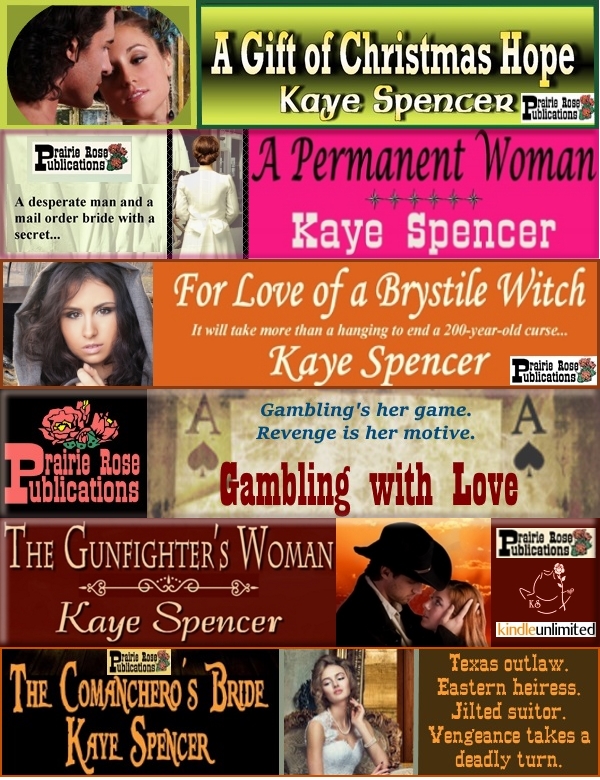
My stories are available on Amazon.com.
Kindle - KindleUnlimited - Print

Until next time,

Kaye Spencer
Writing through history one romance upon a time

Website/Blog- https://www.kayespencer.com
Instagram - kayespencer
Twitter - http://www.twitter.com/kayespencer
Pinterest - http://www.pinterest.com/kayespencer
Facebook - https://www.facebook.com/kayespencer23
Amazon - http://www.amazon.com/author/kayespencer
LinkedIn - https://www.linkedin.com/in/kayespence
Prairie Rose Publications - http://prairierosepublications.com/
YouTube Channel - http://www.youtube.com/user/kayespencer?feature=mhee

Friday, March 31, 2017

Chewing the Cud - Tips for First Draft ... by Meg Mims


The terror of the blank page… ah, yes. All that white space.

Who else has heard advice like, "just vomit it out," or "get it down fast, you can fix it later," or what have you. Uh huh. If that works for you. Doesn't for me. I get stuck. Often. And I'm not a "pantser" anyway, never have been. I need at the very least Michael Hauge's 5-point outline, with the inciting incident, first and second turning points, point of no return, and climax. After writing ten plus books and novellas, I need more before I sit down to write something new.

Sure, we’ve seen quotes from famous authors about first drafts. “The first draft of anything is sh**.” (Ernest Hemingway) “I’m simply shoveling sand into a box so that later I can build sand castles.” (Shannon Hale) “The first draft is just you telling yourself the story.” (Terry Pratchett)


I like the last one best, but even in telling myself the story, I falter. Um… hmm. Hoo boy. I know A-B-C-D, but what about the points in between? The gaps in my outline. The little details about my characters that never made it into my sketches when I first started preparations. And I spend a good month preparing before every book, especially now that I’m writing a series. Ever hear of a "book bible"? Yeah, you need one. Don’t let anyone tell you otherwise, or you'll find characters with the same first or last name, or switching identities faster than models on a runway. If you don't know your characters, readers will get confused. So will you. "Uh, who's Bill? Oh, wait... he's Jim."

You also need to know your characters' backgrounds, from birthdate to family to home life to education to friends, married or single, kids or not wanting them, attitudes toward parents, religion, morals, etc., etc., etc. There are lots of charts you can fill out, or make up your own. Protagonists, minor characters, and don't forget your villains. They need motives for what they do. If you don’t know your characters well enough, they may end up worse than flat soda.

They’ll also stop talking to you. Like wayward, snotty kids holding back secrets. Yeah. They’re brutal that way. You're typing along, feeling smug, pushing to the halfway point, and then WHAM. Your hero or heroine does something stupid. And you're sitting there, wondering why.

Ooooh, man.

Or like a bad actor, they go hide in their trailer and refuse to come out. Until you beg them, bribe them, or figure out what is going on. And you'd better, or that deadline's gonna hit you right in the nose.

That's why I stop, take stock of who these people are and why they do what they do instead of what I want them to do - and what's odd, sometimes they're right.

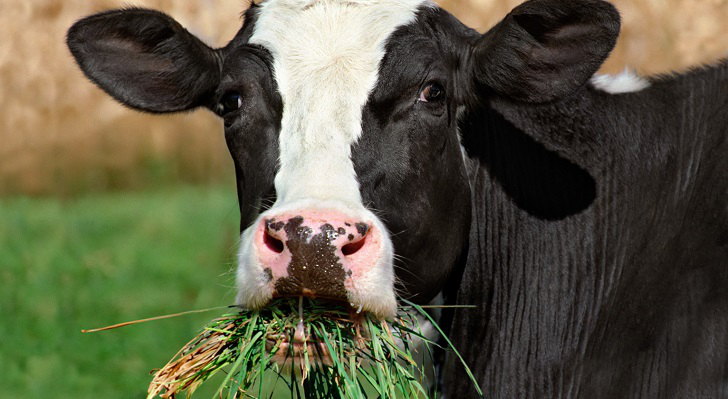
SO I'm finally getting around to the point. What does work (for me) is a process I call “chewing the cud.” Sounds gross, doesn’t it. The humble cow, or goat, alpaca, sheep, and antelope, cannot digest one time through, so they repeat the process. Rumination: “chewing the cud.” Also, “a deep or considered thought about something.”

So when I sit with my laptop, taking snippets of my outline and pasting them into the next chapter, pushing out the words, halting every so often until they run out... Sound familiar? I take a break. Get up, walk around, do the dishes (Agatha Christie swore by such chores), vacuum (you'd be surprised how the noise helps your brain ponder, almost as good as listening to music), take a shower, a walk, a box of cookies out of the fridge – er, no, I can’t do that anymore. Dang. Who can stop at one anyway...

Maybe those cattle ponder things while chewing. They do look fairly peaceful out in the pastures.


I’m flummoxed by writers who can churn out thousands of words day after day. Yeah, everyone has a different process. Mine is more of an “ocean wave” where the tide comes in and goes out, a little farther each time… but dang. Some days the tide stops. So I give my brain (and subconscious) a little break, time to ruminate, swallow, chew again. Taking a break (like right now, writing this blog post) can refresh the well, fill the cistern, drink from the stream of ... well, you get the idea. Every writer needs a few breaks to prevent burnout. Take a nap. Do yoga. READ A BOOK.

Reading is especially good, especially if it's something outside of the genre you're writing. Anything but, in fact, as far from normal as possible, like a zombie horror, or a biography (I'm tackling the one about Alexander Hamilton), a classic, whatever strikes your fancy. And read like a writer while you're at it. Nuances of character, a fresh descriptive phrase, or a vocabulary word the author uses in a unique way. File it in the back of your mind.

Thibodeau Photography
I almost always come up with something to plug in that works earlier in the draft, or where I stopped. Often what comes is something important that I’d never planned on – a happy accident, as the painter Bob Ross would call it. Sometimes it’s just a small detail. Whatever, I welcome it.

Chew on that. It might help your first draft.


Meg Mims is currently writing the "Shamelessly Adorable" teddy bear cozy mystery series - Bearly Departed will debut in June for Kensington, and she's working on Bear Witness to Murder now. Meg won a 2012 Best First Novel Spur Award for Double Crossing, a western mystery, and is also one half of the writing team D.E. Ireland for the Eliza Doolittle & Henry Higgins mysteries - with two finalist berths in 2014 and 2016 for the Agatha Award Best Historical Mystery. Meg is chafing to write another western, if she can squeeze more calendar days into the year.

Wednesday, February 8, 2017

A Horse for Henry — Kaye Spencer’s memories of a favorite childhood book

When I was eight or nine years old, my parents gave me a hardback book called A Horse for Henry. I identified with Henry, because he wanted his own horse, and so did I. What my parents wanted me to take away from this story was the theme of responsibility and that you could earn certain privileges by demonstrating responsible behaviors.

Somewhere in the years of growing up, I not only forgot about the book, but as Kris Kristofferson wrote, I lost it somewhere, somehow along the way. So, a couple of years ago, I decided to search for the book. It took patience and time, but I located three paperback copies, which I have tucked away as treasured keepsakes.

You’ll notice the author’s name is not on the book's cover nor is it identified anywhere within the book, which makes me sad. On the bottom left in the next illustration, you’ll see the publisher is Whitman, and the Roman numerals translate to a 1952 copyright date.


The illustrations certainly pigeonhole the book as classic 1950s/early 1960s style. They also bring up fond reading memories, since I am of the generation who learned to read with Dick, Jane, and Sally and “See Spot run.”

A Horse for Henry goes like this…

What Henry wants most is a black colt named Shine, but he hasn’t shown that he’s dependable enough to take care of a horse. He leaves a saddle out in the rain. He forgets to load the salt in the chuck wagon. He leaves the corral gate open, and the horses get out. His dad tells him, “Son, when you can do a man’s work and do it right, you can have a horse.”

Just when it looks like Henry will always have to ride the family’s pet mule and never get a horse of his own, through some quick thinking on his part, he saves his little brother (and himself) from a cougar.


The next morning, Henry wakes to find Shine tied outside his window, and his dad says, “You’re a man now, Henry, and a man can’t get along very well without a horse of his own.”


Now, from my adult’s perspective, I look back on the popularity of the traditional western novels, television show, movies, and perhaps even some of the country music during the era when A Horse for Henry was published, and I see this story as a post-WWII children’s slant on the Old West theme of “what makes a man a man”.

This story, and its message, has stayed with me all these years and, every time I reread it, I remember why love it so much.

When I was ten, I got my first horse. The picture on the left is me with my Welsh pony named Corky. I was riding in the Howdy Days Parade in Fort Morgan, Colorado in August 1964.  The picture on the right was at the Morgan County Fair in Brush, Colorado in August 1965 (4-H).


What is a favorite childhood book of yours?

Until next time,

Kaye

Writing the West one romance upon a time

Coming March 9th
Surprise giveaway...stay tuned for more


Website/Blog: http://www.kayespencer.com
Twitter: http://www.twitter.com/kayespencer
Newsletter Sign-up: http://tinyurl.com/ouu4o5c
Pinterest: http://www.pinterest.com/kayespencer
LinkedIn: http://www.linkedin.com/in/kayespencer/
Facebook: https://www.facebook.com/kayespencer23
Amazon: http://www.amazon.com/author/kayespencer
YouTube Channel: http://www.youtube.com/user/kayespencer?feature=mhee

Wednesday, May 11, 2016

Favorite authors and books and why I return to the same stories by Kaye Spencer

I recently came across an interview I did some years ago in which I was asked to list authors who have influenced me as a writer and to explain why I chose those authors. This was a challenging endeavor. It was a simple task to come up with a list of my favorite authors and to attach a particularly significant work to each author, but it was a different matter to explain in just a few words why I chose the works that I did.

This list is the result of digging to the essence of why I return again and again to these particular stories. I’ve included a "key" of sorts below my signature.


  • William Shakespeare because the play’s the thing
  • Marion Zimmer Bradley for a female perspective of the once and future king
  • Clive Cussler for Dirk Pitt—a man's man
  • Louis L’Amour  for defining what it means to be a man who wants a woman to walk beside him, not behind him

  • Homer for the ultimate journey back home
  • Thomas Jefferson, Alexander Hamilton, James Madison, John Jay, and Thomas Paine for heralding the common sense of independence
  • Sir Arthur Conan Doyle for creating a brilliant mind
  • Harper Lee for a story that showed me the meaning of integrity, empathy, and that doing the right thing is not always the popular thing
  • Charles Dickens for the best of times, the worst of times, and for a second chance at life
  • Margaret Mitchell for showing me that even in my darkest hour, the sun will still rise, because tomorrow is another day
  • Don Coldsmith for showing me the ways of the Elk Dog People
  • Edgar Allen Poe because he understood how fragile reality is in the mind of the writer and the reader

  • Dorothy M. Johnson for the reminder that there is a price to pay for law and order
  • Robert Heinlein for citizens of a future galaxy
  • Oscar Wilde for the importance of being earnest
  • Mario Puzo for an offer I can’t refuse
  • J.R.R. Tolkien for Samwise Gamgee's devotion and loyalty
  • Thomas Keneally because one person can indeed make a difference
  • Agatha Christie for creating an eccentric Belgian of Herculean proportions
  • Alexandre Dumas for the vengeance of Edmund Dantes
  • Victor Hugo because I railed against injustice and wept at the sacrifice of redemption
  • Gaston Leroux for showing me the tragic face of loneliness

  • Boris Pasternak for a love that could have been, but could never be
  • Bram Stoker for opening the door to a genre that has no boundaries or constraints of time
  • Thomas Harris for making me root for Hannibal Lecter
  • Wladyslaw Szpilman because sometimes music is all we have
  • Jack Schaeffer for a story of unspoken love and the true meaning of friendship 
  • John Steinbeck for the ultimate sacrifice in the name of love
  • But most of all, William Goldman, for the perfect story of fencing, fighting, torture, revenge, giants, monsters, chases, escapes, true love, and miracles


Until next time,

Kaye

Writing the West one romance upon a time
http://www.kayespencer.com


Hamlet
Mists of Avalon
Dirt Pitt books
Louis L'Amour westerns
Odyssey
Common Sense
Sherlock Holmes
To Kill a Mockingbird
Tale of Two Cities and A Christmas Carol
Gone with the Wind
Spanish Bit Series
The Raven (and others)
The Man Who Shot Liberty Valance
Citizen of the Galaxy
Importance of Being Earnest
The Godfather
Lord of the Rings trilogy
Schindler's List
Hercule Poirot mysteries
Count of Monte Cristo
Les Misérables
Phantom of the Opera
Dr. Zhivago
Dracula
Silence of the Lambs and Hannibal
The Pianist
Shane
Of Mice and Men
The Princess Bride

Wednesday, August 12, 2015

Book Dedications - Yes? No? Indifferent? by Kaye Spencer

I’ve written dedications for each of my books (not short stories), and nary a dedication is particularly memorable, witty, or clever. Each one falls into the standard dedication category of:

To So and So, because...


This is perfectly fine, and I'm satisfied. It's meaningful to me and to So-and-So. But way led on to way the more I thought about this, and curiosity set in until I found myself tumbling down a Google-search rabbit hole for book dedications in the hope I’d discover ideas for crafting my own wildly witty efforts. Furthermore, I rationalized going on this procrastination-from-writing-adventure was preparation for my *date-to-be-determined* release with Prairie Rose Publications.

Here are a few book dedication examples:
 

  • To all those who lead monotonous lives, in the hope that they may experience at second hand the delights and dangers of adventure. (The Secret Adversary - Agatha Christie)

  • To my wife Marganit and my children Ella Rose and Daniel Adam without whom this book would have been completed two years earlier. (An Introduction to Algebraic Topology - Joseph J. Rotman)
  • To Grandma, for being my first editor and giving me the best writing advice I've ever received: "Christoper, I think you should wait until you're done with elementary school before worrying about being a failed writer." (The Land of Stories - Chris Colfer)
  • To my wonderful readers: Sorry about that last cliff-hanger. Well, no, not really. HAHAHAHA. But seriously, I love you guys. (The House of Hades - Rick Riordan)
  • Let me note, finally, that most of the research for this book was done in the libraries of Harvard University, the size of whose holdings is matched only by the school’s determination to restrict access to them. I am delighted to have been able to use these resources, and it hardly matters that I was afforded this privilege only because the school thought I was someone else. (No Contest: The Case against Competition - Alfie Kohn)
  • Persons attempting to find a motive in this narrative will be prosecuted; persons attempting to find a moral in it will be banished; persons attempting to find a plot in it will be shot. BY ORDER OF THE AUTHOR. (Adventures of Huckleberry Finn - Mark Twain)
  • For all the storytellers and tale spinners who entertained the public and kept themselves alive, for Alexandre Dumas and Charles Dickens, for Mark Twain and Baroness Orczy and the rest, and most of all, for Scheherazade, who was the storyteller and the story told. (Stories - Neil Gaiman, Al Sarrantonio)
  • So long as there shall exist, by reason of law and custom, a social condemnation which, in the midst of civilization, artificially creates a hell on earth, and complicates with human fatality a destiny that is divine; so long as the three problems of the century–the degradation of man by the exploitation of his labor, the ruin of woman by starvation, and the atrophy of childhood by physical and spiritual night–are not solved; so long as, in certain regions, social asphyxia shall be possible; in other words, and from a still broader point of view, so long as ignorance and misery remain on earth, there should be a need for books such as this. –1862 (Les Misérables - Victor Hugo)
  • To my creditors, who remain a permanent source of inspiration. (The Steel Tsar - Michael Moorcock)
  • To caffeine and sugar, my companions through many a long night of writing. (Ship of Magic - Robb Hobb)
  • To Mom, Who took me to the library. (The Particle at the End of the Universe - Sean Carroll)
  • What can I say about a man who knows how I think and still sleeps next to me with the lights off? (Dark Places - Gillian Flynn)
So, what's your stand on book dedications as a reader reading them and/or as a writer writing them? Yes? No? Indifferent?

And a shameless plug for my upcoming release...

The Comanchero's Bride
A fiesta. A threat. A wedding. A deadly lie.
What Fate brings together, another man's greed rips apart.

Until next time,

Kaye


Wednesday, June 11, 2014

The lure of writing historical romances by Kaye Spencer

As an author, have you ever been asked why you 'write what you write'? If you're drawn to a particular genre over all others, have you ever considered why? Over the years, I've encountered variations of these questions in author interviews. I have three general points—with examples—for why I tend to write historicals and particularly stories set in the American Old West.


Reason 1—Research

Every historical I write allows me to follow fluffy white rabbits down research rabbit holes. I've discovered the most intriguing and amazing tidbits of history in my historical research Wonderland. Losing myself in research is one of my ‘happy places’. It’s important to me to have the details in my stories as historically accurate as possible. I’m not perfect in this endeavor, nor am I a ‘professional’ researcher, but I conscientiously work at achieving accuracy, so it’s my hope that upon the rare occasion my history, geography, or dialogue is off, readers will forgive the faux pas.

Reason 2—Living vicariously in the past

While I’m writing a story set in the past, I get to travel to a different place and time and live in someone else's shoes, so-to-speak. I’m like Anthony Marston in Quigley Down Under: “…Some men [women] are born in the wrong century.” All my life I’ve felt out-of-place living in our ‘modern’ world. So when I transport myself to the time in which my characters are living, I’m in another one of my ‘happy places’.

Reason 3—Challenge of overcoming inconveniences

I like writing stories that lack modern day conveniences. Without the amenities we’re accustomed to nowadays, there are so many juicy complications for the characters to face, deal with, and overcome that otherwise could be written away with a call on the cell phone or by hopping an airplane to get where they're going in a jiffy. Just imagine the possibilities…

Communication: When the hero and heroine have to depend upon letter writing and telegraph messages, both of which were slow (relatively speaking) and could more easily be intercepted or even lost, the villain has the opportunity to weasel his way into the heroine’s life and console her because she thinks the hero has jilted her at the altar when he doesn’t show up for their wedding when actually the villain has intercepted the telegram that explains the legitimate reason for the hero’s delay.

Transportation: Transportation wasn’t necessarily convenient or terribly comfortable. Horseback riding was functional, but for long periods of time over great distances is exhausting and full of plot-enhancing dangers and challenges. Stagecoach travel was cramped, dirty/dusty, really hot/really cold, and could be dangerous. It lacked privacy that women need. Obtaining a decent meal could be an on-going problem. Generally, stage travel was a grueling test of endurance. Traveling by train was limited to where the tracks were laid, and it shared many of the same drawbacks as stage travel, plus it had the additional discomfort of soot and cinders coming into the passenger cars. Any or all of these situations make for interesting reading.
 
When the heroine is traveling--by herself, of course--she might be kidnapped by a drop-dead handsome train robber or (egads!) find herself stranded on the Texas prairie with nothing but a scoundrel of a gambler as her companion and the one surviving horse from the stagecoach team after the Comanche attack.

Contraception: Without our modern-day contraceptives, the possibility of pregnancy looms in historical stories as an ever-present consequence of a romantic dalliance. This is a great plot device for building the sexual tension between the hero and heroine. Fear of out-of-wedlock pregnancy and the real threat of dying in childbirth both add another layer of anxiety to the romantic relationship that isn’t as much of an issue in contemporary stories.

Medicine: Sophisticated antibiotics as we know them were virtually nonexistent back in the ‘olden days’, which makes the recovery difficult and, sometimes, the character’s very survival tenuous given the physical torture/wounds/injuries we, as authors, inflict upon them. Lack of antibiotics makes the situation all that more dire for the hero when the lady doctor extracts the arrow from his thigh.

The scenarios are endless, and I'm sure you've either read them or written them. 

So, with that, here’s a teaser from my newest story, A Permanent Bride, which is one of the stories in the Lassoing a Mail-Order Bride anthology.

The hero has ninety days in which to find a wife or he’ll lose the opportunity to gain custody of his grandchildren. By the time he places an advertisement in the Matrimony Courier for a mail-order bride, he’s squandered thirty days. There’s no time for courtship. The heroine needs a new identity and a place out west in which to hide and, since she has no time to be choosy about how that happens, becoming a mail-order bride is as good of a solution as any. They don’t know it yet, but they’re a perfect match made in a mail-order magazine heaven.

Isn’t this a deliciously convoluted plot? ;-) And it works because it’s set over 100 years in the past.


 Lassoing a Mail-Order Bride is available in print and digital format at these online booksellers:


Until next time,

Kaye

Fall in love…faster, harder, deeper with Kaye Spencer romances


Twitter - @kayespencer