Search This Blog

Showing posts with label arizona. Show all posts

Tuesday, December 12, 2017

The Wave

By Kristy McCaffrey

The Wave
On a chilly December day I embarked on a hike with my dad to see The Wave. While you may envision us searching for an ocean overlook, this swell of nature exists along the Arizona/Utah border among the bottom of Utah’s Grand Staircase-Escalante National Monument and the upper section of Arizona’s Paria Canyon-Vermillion Cliffs Wilderness Area. And after that mouthful, all you really need to know is that it’s a really cool-looking sandstone alcove.

To enter the North Coyote Butte Special Management Area, where The Wave is located, you must have a permit. Only 20 people per day are allowed—10 through a lottery system and 10 for walk-in permits submitted the previous day. It took my dad two tries to gain two permits and to my great fortune he invited me along. To understand this you must know that my younger sister is a ski patroller, nurse, gun-toting park ranger, and well-versed in search and rescue. I, however, am a writer. Who would you choose to take into the wilderness? Exactly, not me. So I was thrilled by the invite. I might not be able to save my dad should he fall from a cliff, but I’d be able to inscribe my thoughts about it later.

We arrive the day before in Page, Arizona, and stay the night in a hotel. We arise early the next morning, find a Denny’s open at 6 a.m., and eat a hearty breakfast since our day packs aren’t filled with anything hot and tasty. The drive to the Wire Pass parking lot—the start of the trail head—is about 43 miles from Page. The last 8 miles are on a dirt road that is impassable when wet, the red clay turning into a slippery muck. With the day overcast and the air a bit misty, the fact that we threw a few sleeping bags into the back of my dad’s truck at the last minute suddenly seems like a good idea.

You are required to sign the roster before hiking into
the wilderness. Unfortunately people have died here during
the summer months. It's important to carry enough water.
The parking lot houses a restroom and a sign-in, likely to find those who enter and never return. But this wouldn’t be us since we feel well-equipped with a very detailed map provided by the Bureau of Land Management, a compass, and a GPS. But the start of the trail head soon leads to a non-trail. We don’t pay close enough attention to the landmarks provided on the map and manage to spend the first hour in the wrong direction. Of course the GPS indicated we were moving farther away from our target rather than closer, but in my defense it was the first time I’d used the GPS app on my smartphone. I figured we were taking a circuitous route that would eventually bring us to where we needed to be. Our detour did lead to an awesome slot canyon, however. And after backtracking we were soon headed in the right direction. We made certain we nailed every landmark thereafter.

The view as you hike to The Wave.
The 5.5 mile hike scrambling over sandy hills and red rock takes us about 2 hours, the terrain offering sweeping views of sandstone pillars, red rock buttes, tiny cacti growing in crevices, and giant juniper trees standing vigil. It’s a desolate and quiet place, far from civilization.

At last we climb a hill just below a prominent landmark called “the Black Crack” and enter the alcove known as The Wave. The undulating swells of sandstone greet us and we’re awed, but admittedly slightly confused. Is this all there is? I think we both thought it would be more like a bowl viewed from above. Another hiker arrives and having been here before explains the layout. We must climb to above the alcove to find the picture-perfect spot, the one that he stakes out with his tripod and camera for the next several hours. I’m using my small handheld camera until my dad drops and jams it, then I switch to my phone camera. Even with our less technical approach to photo-taking we still get awesome and surreal pictures. The rock flows like water around us and the eye can hardly believe it’s authentic. We find the Second Wave and Hamburger Rock (per the hiker’s directions) and snap more photos. My dad wants to climb ever higher, but I’m beginning to feel tired and cold so I hang back. I begin to worry that he might come rolling off that cliff after all but he soon returns in one piece.


Hamburger Rock
The Second Wave


There are dinosaur tracks in the area but we decide the GPS coordinates will likely send us on a wild goose chase clinging to the sides of the cliffs, and we can’t muster enough enthusiasm to warrant the search. Instead we drop into the small canyon below, exploring the narrowing curves of the walls as they close in on us. We eat lunch here, somewhat sheltered from the wind, and decide to begin our return hike.

The way back isn’t difficult but the landmarks are not easily discernible, blending into one another in a blur of red rock upon red rock. We reference the map and GPS frequently. My dad attempts a few compass readings but the simple device is deceptive. In our weary state we realize neither of us really knows how to use a compass. Luckily my phone battery is still above fifty percent. We’re soon sitting in a warm car.

My dad and I at The Wave
All day I faced my own insecurity about entering the wilderness, a nagging worry carried forward from childhood that I’m not the adventurous daughter, that my dad would be better off here with my sister, whose entire life is an ode to Mother Nature herself. But I’m pleased that I was able to put these doubts aside. I embrace the challenges instead of complaining at their presence. The day unfolds in the only way it can, from one moment to the next, and within that is a happiness that sits with me now and into the days that follow. My dad and I had an immensely good time. And to honor his choice to invite me along, I now do what I do best—I write.


To all my lovely readers and writer friends, I wish you all the merriest of holidays and a bright 2018!! See you in January ~
Kristy


Connect with Kristy


Tuesday, November 14, 2017

Bill Kirkland: An Arizona Pioneer

By Kristy McCaffrey

Bill Kirkland
Born in Virginia, Bill Kirkland came west in 1850 at the age of eighteen to the gold fields of California. After five years of successful prospecting, he decided to visit home via a steamer to Panama, traveling overland then taking another ship to the eastern United States. But when the fare became too high, he decided on a southern route instead through Arizona and New Mexico.

He arrived in Tucson on January 17, 1856, just as the Mexican troops were preparing to depart. The land now belonged to the United States via the Gadsden Purchase. (The Gadsden Purchase was ratified in 1854, but the U.S. flag wasn’t displayed in Tucson until March 10, 1856.)

With little military protection, men began arriving to expand mining operations in the mineral-laden mountains near the Santa Cruz River. The area became lawless, but finally U.S. troops were dispatched. Kirkland decided to remain to provide timber and dry goods to the building boom that was just beginning in Tucson, as well as to the mines around Tubac and to the military.

During the 1850s, Tucson became the center for trade in the southern Arizona Territory. By 1860, there were 650 residents. Tucson sat along the banks of the Santa Cruz and was described as a sleepy, one-story adobe town with narrow, dusty streets. People and animals intermingled freely.

In 1857, Kirkland started a ranch near Tubac. He grew barley for a nearby army post. Three times he purchased cattle in Sonora, only to have them stolen by Apache. On the fourth try, he finally managed to obtain and keep 200 head. His was the first American ranching enterprise in what would one day become Arizona. He lived under the constant threat of an Apache attack. One day, Kirkland met Cochise, who wanted to feed his braves. Kirkland quickly prepared a meal for them, after which they left.

In 1859, Kirkland married Missouri Ann Bacon, whom he met when her family stopped in Tucson on their way to California. The Bacons settled in Tucson by opening a restaurant, and Kirkland frequented it. Pretty girls garnered much interest, since there were so few of them. But Missouri chose Kirkland, a tall man with rugged good looks and a reputation as a fearless frontiersman. When their daughter, Elizabeth, was born, she was the first Anglo-American child born in the Arizona Territory.

Kirkland built the first graded road in the area, which led to his lumber camp in Madera Canyon. He supplied the mines, military, and the village of Tucson until the outbreak of the Civil War in 1861. At that time, military posts in Arizona Territory were abandoned. The Apache, under the direction of Cochise, saw this as an opportunity to drive the Anglos out. Kirkland served as a captain of volunteers in Tucson, but finally decided to take his family to California until troops returned to Arizona. He had lost much of his ranching and lumber business due to the Apache.

When Kirkland returned to Arizona, he successfully prospected gold north of Wickenburg, near present-day Phoenix. He then moved his family to an area now known as Kirkland Valley. The first year, he raised barley. He also built four arrastras to crush ore and eventually had thirty men working for him. But, again, he was besieged by Apache. They stole his barley at night and rustled his livestock during the day. So, Kirkland packed up and went back to southern Arizona. He established a ranch on Sonoita creek, but Apache swiftly stole a dozen mules and a horse.

Phoenix 1880s
Throughout his life, Kirkland preferred to move elsewhere when Apache problems occurred. In 1871, he moved his family to the Salt River Valley to a small community people were beginning to call Phoenix. A few entrepreneurs had cleaned out old Hohokam canals and were irrigating crops, which they sold to Fort McDowell and the mining camps up north in the Bradshaw Mountains. Missouri Ann was one of the first women to take up residence in Phoenix. Their home was a small adobe house. That year, Kirkland’s third child was born. Ella was the first Anglo child born in Phoenix.

In late 1871, Kirkland moved his family again to nearby Tempe. He was elected a justice of the peace and for the remainder of his life he was known as Judge Kirkland. But Kirkland was restless. He moved his family to Silver City, New Mexico, and then to Texas before returning to Arizona in 1876. He took the job of deputy sheriff in a wild cowtown called Willcox. But the Apache weren’t done with the area. When Geronimo and his band went on the warpath in the 1880s, Kirkland once again moved his family to the new gold mining town of Congress.

Bill Kirkland was one of the first Anglo-Americans to arrive in the Arizona Territory. While he wasn’t a violent man by nature, he nevertheless never backed down when forced to fight. But when he could, he avoided confrontation with the Apache. Oddly enough, the Apache came to respect him.


Bill Kirkland passed away in 1910.


Connect with Kristy


Tuesday, June 13, 2017

La Posada Hotel in Winslow, Arizona

By Kristy McCaffrey

Mary Jane Colter
Long before Flagstaff and Sedona became popular vacation towns in Arizona, everyone visited Winslow and the La Posada Hotel for special occasions. Built in 1929 by the Santa Fe Railway, it was the work of esteemed architect Mary Jane Colter, known for the design of many structures at the Grand Canyon. La Posada, however, was her masterpiece and favorite project.

La Posada is one of the last of a series of hotel-depot complexes built across the Southwestern United States in a collaboration between Fred Harvey and the Atchison, Topeka and Santa Fe Railway. Designed for a railroad traveling public, the original front door faced the tracks to the south. It was thought that most guests would arrive by train and stay for several days, so day tours to the Petrified Forest and Indian sites were made available. For a fee you could get a driver, a guide, a picnic, and a custom Packard or Cadillac touring car.

Colter chose two patron saints for La Posada—San Pasqual, Patron Saint of Feasts, and San Ysidro, Patron of Farmers.

La Posada was officially a Harvey House. Usually, Harvey Girls had a distinct uniform—black dresses with white aprons. But Mary Jane Colter felt the uniform was too severe for La Posada so she substituted colorful aprons with green, blue, or red backgrounds, quilted cacti, donkeys, and snoozing, big-hatted ranch hands. La Posada was the only Harvey Hotel allowed a non-standard uniform.

The kitchens of La Posada were the finest in the Four Corners region. It wasn’t unusual in the 1930’s and 1940’s for hotel to serve 1000 meals a day. In addition to the main kitchen, there was a full bakery and butcher shop, store rooms and freezers, china and linen rooms, and a lead-lined walk-in humidor for cigars. They even refrigerated the kitchen trash to keep it from smelling.

Most halls ran north-south to capture prevailing winds, and guest doors were louvered to create convection currents. A wind tower exists to capture warm air as it blows in from the southwest across watered lawns, where it’s cooled, humidified, and pushed through public spaces in the hotel. Colter filled La Posada with such passive solar details to keep the hotel comfortable during Arizona’s hot summers.
La Posada today.
Famous people who’ve visited include Howard Hughes (Winslow was a TWA stop and he owned the airline), and Charles Lindbergh and Anne Morrow, who resided during part of their honeymoon. They also stayed while Lindbergh designed Winslow’s airfield (the world’s only surviving Lindbergh-designed airport). Other famous guests: Albert Einstein, Will Rogers and Diane Keaton.

Fun fact: Down the street from La Posada is a small
monument to the Eagles' song "Take It Easy."
...Standin' on the corner in Winslow, Arizona...

******


Connect with Kristy


Tuesday, May 9, 2017

Arizona Territory Army Posts

By Kristy McCaffrey

In the late 1800’s, the unrelenting migration of miners, ranchers, and settlers into the Arizona Territory produced the inevitable clash with Native Americans. It was Army posts—simple structures consisting of a few buildings, made of whatever material was handy—that held the fragile territory together.
Fort Apache, 1877

Fort Apache in eastern Arizona was a key post in the Army campaign to round up Native Americans in the mid- to late 1800’s. Established in 1870 as Camp Ord, it was designated Camp Apache the following year as a token of friendship with the very people the military was battling. In 1879 it became Fort Apache. The fort protected the White Mountain Agency, fighting bands led by warriors such as Geronimo and Chato. On September 1, 1881, members of the White Mountain tribe attacked Fort Apache as payback for the Battle of Cibecue Creek in which a medicine man named Nochaydelklinne was killed. The two incidents helped reignite violence that lasted until Geronimo surrendered in 1886.
Remains of Camp Rucker

Camp Rucker, first known as Camp Supply, was named in honor of Lt. John Anthony Rucker, who died trying to save a fellow officer from a rain-swollen stream. On July 21, 1880, six mules were stolen from the camp’s stables. They were later located at the ranch of Frank and Tom McLaury after a search by Lt. J.H. Hurst and U.S. Deputy Marshal Virgil Earp. (A year later, Earp and the McLaury’s would fight it out at the O.K. Corral in Tombstone.)

In central Arizona, Fort Verde was established in 1865 to protect settlements along the Verde River. This fort served as the primary base for Gen. George Crook’s U.S. Army soldiers and scouts who were tasked with capturing Apache and Yavapai people and placing them on reservations. Fort Verde State Historic Park is Arizona’s best-preserved example of a fort from the Indian wars. Three buildings remain today—the living quarters for the commanding officer, the doctor’s quarters and quarters for bachelor officers.


The Church of Jesus Christ of Latter-day Saints also established forts in Arizona. In 1874, Mormon President Brigham Young ordered the building of a fort at Lee’s Ferry in northern Arizona, the only crossing of the Colorado River for 500 miles. And in 1870, construction was begun on a fort atop Pipe Springs, a naturally occurring gush of water on the vast prairie of the Arizona Strip, an area located north of the Colorado River. A telegraph was installed in 1871, connecting Utah outposts to the transcontinental line that passed through Salt Lake City, and was the first telegraph in Arizona.

Lee's Ferry Fort

Connect with Kristy


Tuesday, December 13, 2016

Historic Hotels of the West

By Kristy McCaffrey

This holiday season, how about a visit to a historic hotel in the Western United States, built during the glory days of leisure travel.

Arizona Biltmore
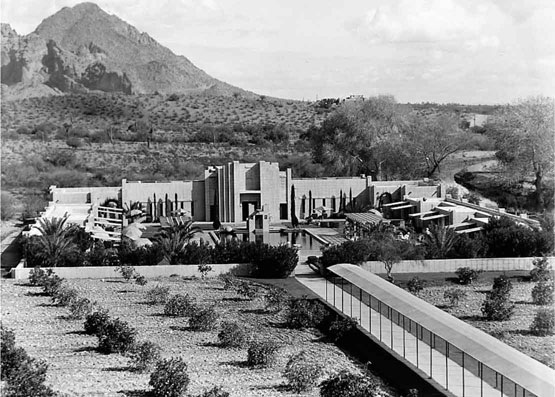
Located in Phoenix and opened in 1929, the Arizona Biltmore was built by Albert Chase McArthur with famed architect Frank Lloyd Wright’s collaboration. It was constructed with pre-cast blocks made from desert sand that was found at the construction site. Chewing gum magnate William Wrigley, Jr. once owned the resort, which has hosted many famous celebrities: Marilyn Monroe, the Reagans (they spent their honeymoon here), and Irving Berlin (who penned White Christmas during a stay). Also, a bartender created the famous tequila sunrise cocktail for a guest at the resort. Of note is The Mystery Room, a Prohibition-era speakeasy that once had a light to warn partiers of approaching federal agents.

Arizona Biltmore, circa 1931.

Arizona Biltmore today.

Camelback Inn
Opened in 1936, this resort was the dream of a young hotel manager who convinced investors to help him build a resort in the desert outside of Phoenix, Arizona. When it opened, visitors endured a 12-mile bumpy ride along a dirt road from the train station to the secluded property. Early guests included Clark Gable, Jimmy Stewart, and Bette Davis. In 1967, frequent guest Willard Marriott, Sr., purchased the Inn and made it the company’s first resort. Camelback Inn is the only Arizona resort with its own chapel, built in 1959.

Camelback Inn, circa 1936.
Camelback Inn.

Camelback Inn today.

Hotel del Coronado
In 1888, the Hotel del Coronado opened on Coronado Island in San Diego, California—a seaside resort that would become “the talk of the Western world.” The all-wooden structure was a technological marvel—it had its own ice machine, electrical generator, and a steam-powered hydraulic elevator. It has been the backdrop for dozens of movies, and Lucille Ball and Desi Arnaz developed their “Ricky and Lucy” personas here. The Crown Room’s expansive ceiling is paneled in Oregon sugar pine, and some reports say Wizard of Oz author L. Frank Baum designed the massive chandeliers. The author spent his winters at the hotel from 1904 to 1910, during which he wrote four books.

Hotel del Coronado in San Diego.

Hotel del Coronado today.

The Brown Palace Hotel

Opened in 1892 in downtown Denver, Colorado, the Brown Palace Hotel was made with Colorado red granite and Arizona sandstone, and cost $1.6 million, an astronomical sum at that time. Dwight Eisenhower used the hotel as his presidential campaign headquarters in 1952, and The Beatles stayed here on their U.S. tour. Tunnels beneath the hotel reportedly once led to a brothel across the street.

The Brown Palace Hotel in Denver, an example
of Italian renaissance architecture.

The Brown Palace Hotel today.

*****
Happy Holidays!!

Connect with Kristy

Tuesday, October 11, 2016

Haunted Route 66 in Arizona

By Kristy McCaffrey

Established in 1926, Route 66 was one of the main highways in the U.S. Highway System. Sometimes called the Will Rogers Highway, it became one of the most famous roads in America, running from Chicago to Santa Monica, California. Stops in between included St. Louis, Oklahoma City, Amarillo, Albuquerque, Winslow (Arizona), and Barstow (California). Decommissioned in 1985, sections of the highway have been designated a National Scenic Byway of the “Historic Route 66.”

After World War II, Route 66 became the ultimate road trip for intrepid travelers, leaving a lasting impression in life, and perhaps even in death.

The Hotel Monte Vista in Flagstaff has many ghostly sightings. John Wayne—a guest while filming in Monument Valley—believed he encountered the Phantom Bellboy, who knocks on doors and announces, “room service.” Other spirits include a bank robber who haunts the lounge where he bled to death, an elevator attendant who assists guests, and a woman who stares out the window of Room 305. It’s also been reported that a ghostly Alan Ladd once approached Room 309, which is named after him.

The Red Garter Inn, a former saloon and bordello in Williams, has reports of doors slamming and footsteps when no one is around. Many believe the culprit is a young Hispanic woman named Eve, although no one knows why. Other ghosts include a man who was knifed on the staircase leading to the brothel and an old man who committed suicide.

In 1927, Walter Peck discovered the Grand Canyon Caverns in Peach Springs. He offered tours to Route 66 travelers, pointing out the remains of “cavemen” who later proved to be the skeletal remnants of Hualapai tribesman. Visitors to the caves, especially those who stay overnight, report hearing moaning sounds, seeing shadowy figures, and having rocks aggressively thrown at them from the area where the skeletons were removed. The bunkhouse is also allegedly haunted.

The El Trovatore Motel in Kingman reports that many guests have heard children talking in the parking lot. This has been an ongoing phenomenon for many years. The children are never seen and seem to come from a gorge where Native Americans used to live behind the motel.

La Posada Hotel, located in Winslow, Arizona, was one of the last hotels built for the Fred Harvey Company and designed by the famous Southwest architect Mary Jane Colter. It is said there are ghosts on the property, confirmed by several ghost hunters, but none appear to be malicious. Instead, it’s believed they are the spirits of people who want to return to the most exciting trip they’d ever taken.

Route 66 runs along Interstate 40 in Arizona, and this 158-mile stretch is the longest remaining intact section in the nation.


Have a happy and spooky October.

Kristy McCaffrey has been writing since she was very young, but it wasn’t until she was a stay-at-home mom that she considered becoming published. She’s the author of several historical western romances, all set in the American southwest. She lives in the Arizona desert with her husband, two chocolate labs, and whichever of their four teenage children happen to be in residence.


Connect with Kristy


Read these spooky western romances for FREE in Kindle Unlimited.


Tuesday, July 12, 2016

Arizona State University

By Kristy McCaffrey

In 1886, the Arizona Territory offered a less-than-ideal educational environment. The Pleasant Valley War between competing cattle rustling gangs was in full swing and wouldn’t end until six years later in a fatal gunfight in the town of Tempe. Despite this, however, Tempe—with the burgeoning towns of Phoenix and Mesa nearby—would become home to the Arizona Territorial Normal School.

The school was opened on February 8, 1886 on a 20-acre cow pasture that belonged to George and Martha Wilson. The institution began with a four-classroom building, a well, and an outhouse to instruct the first 33 students. These young men and women arrived on horseback—some having ridden for miles from Mesa or tiny farming communities even farther away—and, in addition to their studies, would need to rent a room with a local family during their enrollment.

President Theodore Roosevelt speaking in front of Old
Main at ASU on March 20, 1911.
The Normal School was charged to provide “instruction of persons, both male and female, in the art of teaching, and in all the various branches that pertain to a good common school education; also, to give instruction in the mechanical arts and in husbandry and agricultural chemistry, in the fundamental law of the United States, and in what regards the rights and duties of citizens.”

Charles Trumbull Hayden
The idea for a school of higher education was spearheaded by two men, Charles T. Hayden and John S. Armstrong. Arizona Territory was struggling to achieve statehood but the national press loved to print stories of the lawlessness present. It was Hayden who sought to civilize the place with education and culture.


Today, Arizona State University is a sprawling multi-campus school with over 71,000 students and covers more than 1,500 acres in metro Phoenix.

The ASU mascot - Sparky the Sun Devil.
Kristy McCaffrey is an alumni of Arizona State, along with her husband, mother, father, and two uncles. Her oldest son currently attends. As a newly-married couple, Kristy and her husband named their dog Sparky, after the ASU mascot.

Connect with Kristy

Tuesday, April 12, 2016

Flagstaff, Arizona

By Kristy McCaffrey

Located in northern Arizona, Flagstaff lies at the base of the highest mountain range in Arizona—the San Francisco Peaks. Since the mid-19th century, the town has been a popular tourist destination due to its close proximity (75 miles) to the Grand Canyon.

The San Francisco Peaks. Mt. Humphreys is the tallest
mountain in Arizona at 12,637 feet.
On July 4, 1876 a group of campers at the base of the San Francisco Peaks stripped a pine tree and used it to raise an American flag. This tree inspired the name “Flagstaff.”

Flagstaff circa 1882.
The early economy of Flagstaff consisted of timber, sheep, and cattle. The Atlantic and Pacific Railroad arrived in 1880. When the Santa Fe Railroad purchased it in 1885, Flagstaff became the largest town between Albuquerque and the Pacific Ocean.

The Babbitt sons arrived in 1881 with $17,000 and eventually settled in Flagstaff, creating the famous CO Bar Ranch which still exists today. The establishment of the Babbitt Brothers Trading Company in 1889—along with several other businesses in northern Arizona—greatly aided the growth and development of the area.

The Babbitt brothers.
Flagstaff suffered its share of criminal activity. “Cattle rustling was rampant and only conquered by stringing the culprits to a limb of a tree and riddling the bodies with bullets. Many were the shootings in the town….They write about Tombstone and other early settlements, but Flagstaff was as bad as any of them.” (from A Brand From the Burning by Charles C. Stemmer, 1959)

The Northern Arizona Normal School was established in 1899. In 1966, it was renamed Northern Arizona University.

Flagstaff circa 1899.
Massachusetts astronomer Percival Lowell established Lowell Observatory in 1894, naming Flagstaff an ideal location due to its elevation. Pluto was discovered here by Clyde Tombaugh in 1930, and in 1978 Pluto’s moon, Charon, was also identified.

Lowell Observatory, 1897.
Today, Flagstaff still has a strong tourism economy due to its location to the Grand Canyon, Historic Route 66, the Arizona Snowbowl Ski Area, Sedona and Oak Creek Canyon, Meteor Crater, and the Navajo and Hopi Indian Reservations.


***********

My novel, Into the Land of Shadows, begins and ends in Flagstaff.

Kate Kinsella has no choice but to go after Charley Barstow and talk some sense into him. After all, he's skipped town, leaving a string of broken hearts and his pregnant fiancée, Agnes McPherson. But Kate didn't count on being kidnapped by a band of criminals along the way!

Ethan Barstow is hot on his younger brother's trail, too. He rescues Kate, believing her to be Charley's fiancée, and suggests they try to find him together. Kate's reluctance has him baffled.

All hell breaks loose when they discover Charley in search of a copper mine—not wishing to be found by anyone; certainly not Kate! But, then, Kate was always trouble—and now she's brought it to his doorstep, with tales of a pregnant fiancée and his brother Ethan, who he hasn't seen in five years.

Can Ethan and Kate ever find their own love and happiness with one another through the dark deception and hurt? Or will they both return INTO THE LAND OF SHADOWS...


Kristy McCaffrey has been writing since she was very young, but it wasn’t until she was a stay-at-home mom that she considered becoming published. She’s the author of several historical western romances, all set in the American southwest. She lives in the Arizona desert with her husband, two chocolate labs, and whichever of their four teenaged children happen to be in residence.

Connect with Kristy