Search This Blog

Tuesday, October 4, 2022

Easy Halloween Costumes for Book Lovers

 Easy Halloween Costumes for Book Lovers

C. A. Asbrey


It's that time of year again. The mists gather, the fruits mellow, and the nights draw long and dark. After so much turmoil, we can only hope that we can finally get together again in parties and trick-or-treating to enjoy the season. And what better inspiration than the world of books and literature to inspire us? I'm going to try to keep to easy DIY outfits that can generally be created cheaply at home, without the need to be a genius with the needle to create them. I've chosen only especially easy costumes to make. I'm going to avoid the Harry Potter universe and Where's Wally, as I'm sure you've seen every possible twist on that 

The Addams Family

The Addams Family
Not exactly literature for the purists, but this group is a goldmine for people looking for easy costumes, especially if you find one of them fitting your colouring or build. 

Not keen on costumes, but don't want to be accused of not playing? have a partner who is reluctant to dress up? Find a box or cushion with a hole in it, put your hand through, and there you have 'Thing'. A bit of manual terpsichorean theatrics whenever anyone asks what you've come as, and you have the easiest costume at the party.     

Gomez is another easy one for men. And dark suit, a ruler and some tailor's chalk to create the stripes, and greased down hair and you're almost there. Draw in the moustache, and there you have it. An easy Gomez. Crepe paper is easily run through a sewing machine to make a Morticia skirt to add to a black top or leotard.

For the children: Wednesday needs a dark dress, pigtails, paper collar and cuffs, coupled with pale makeup, while Puglsey needs dark shorts and a striped shirt. The addition of a torturous toy like a dagger or plastic stick of dynamite complete's the look. 

Fifty Shades of Grey is about as easy as it gets, and another one for the reluctant guisers. Cut along to your local DIY store and pick up a range of the grey cardboard colour swatches, then stick then all over a T-shirt - any colour will do, but grey is best. Voila! You're done. 

If you have dark hair, slip it back into a French roll, slip on a black dress and adorn it with numerous sets of pearls and make a cigarette lighter out of cardboard. Sunglasses are optional—and there you have your very own version of Truman Capote's Holly Golightly

Got a toddler to dress up? Put them in a onesie, add a tail, paper claws, and a paper crown with a furry trim - and you have your very Max from Where the Wild Things Are. How easy is that?


Alice's Adventures in Wonderland have a raft of easy characters to dress up as. A blue dress and a white apron gives you an Alice, while a cardboard sandwich board over black clothes can easily be painted to look like a giant playing card. A cardboard spear and helmet turns the wearer into one of the Queen of heart's guards. If you can stick a feather in the helmet, so much the better. 

Want a simple Cheshire Cat? Dress all in black, with cat tail and ears. Use face paint to put a huge cat grin on your black-painted face so that the smile 'pops' from the shadows. It is the last visible manifestation of the Cheshire Cat, after all.

The same sandwich board idea can be extended over your head to create a picture frame encasing the upper part of the body, where make up gives a ruined and dissolute appearance for The Picture of Dorian Gray.

A cardigan, a plaid skirt, and a magnifying glass gives you a basic Nancy Drew, while the more mature ladies can add a hat to a skirt suit, and carry some knitting to create an easy Miss Marple.

For men, a smart suit, oiled hair, and some wire formed into a monocle gives us Lord Peter Peter Wimsey. For the perfect literary villainess, dress all in severe black, and pull your hair into an equally serious style. All you need is a pale face to be the vindictive Mrs. Danvers from Rebecca. Another iconic character to create is Alexandre Dumas', Man in the Iron Mask. The Iron Mask, can be created by applying papier mache over an inflated balloon. The trick here is to ensure that you create two distinct halves, that can then be easily joined together with masking tape painted to the same colour as the iron mask, to act as hinges so the mask can be donned and removed without too many problems.

The same balloon and papier mache method can create a Phantom of the Opera mask, or a Whale hat for Moby Dick (just wear blue to represent the water). It can also be used to create gigantic buttons to dress up as one of The Borrowers, or multiple squid, fish, and prawns to be stuck all over any dark blue outfit to give the impression that you are 20,000 Leagues Under the Sea. 

However you spend the Halloween holiday, I hope you have a wonderful time, and that I've give you some ideas to run with. Creating things with the children can be an especially rewarding way to pass time, and make special memories to last a lifetime without it costing a fortune.

Happy Halloween!

Excerpt

A firm hand grabbed his shoulder as a hoarse voice whispered in his ear. “Git your hands up and come with me.” 

Nat’s hands rose along with his hackles. “Why?” 

“’Cause I’m robbin’ you, you idiot. Why d’ya think?” 

Nat heaved a sigh of relief. Robbery was way better than the law. “You’re kidding. You’re robbing me? This is a joke.” 

“What’s with the questions? I’m robbin’ you, now git into that alley where we can work in private.” 

“We? What’s with the idea we’re a team? You can’t rob me.” 

“Why?”

“Never mind why. Just go away.” 

“No, gimme your cash. All of it.” 

Nat’s Irish rose to the fore. “Sod off.” 

“You ain’t listenin’, mister. Git over to the alley and hand over your valuables.” 

“Why?” 

What d’ya mean, ‘why’? I want your money.” 

“Oh, I understand, but why do I have to go in an alley? You can take it right here.” 

The robber’s irritation seeped into the tense voice. “Fine. Give me your money here.” 

“No. Go away.” Nat felt the hardness of a revolver in the small of his back. ”You realize that if you shoot me now, people will pour out of every building the minute you pull the trigger. You won’t get ten feet before you’re cut down.” 

The robber paused. “Get in the alley.” 

“Now you’re repeating yourself. You haven’t thought this through. How do you know I’ve even got any money?” 

“Because you’re hangin’ around the best hotel in town.” 

Nat turned his head but the robber whacked his shoulder. “Stay still.” 

“You’re hanging around the best hotel in town, too. Give me your money.” 

“I ain’t got no money. That’s why I’m stealin’.”

“Well, neither have I. None I’m handing over to you, anyway. Maybe we should split what you’ve got?” 

“What kind of a robbery is this? You’re the most annoyin’ victim I ever met. I’ve got a good mind to shoot you for the hell of it.” 

“A good mind doesn’t do stupid things like hold up men in the street without a plan.” Nat could detect the growing uncertainty in the man’s thin voice. “Am I annoying enough to die for? That’s what’ll happen.” 

“I want your money. Hand it over or I’ll—” A dull clang cut the man off mid-sentence, followed by a thump as he tumbled to the floor. Nat swirled around, his eyes lighting with delight at the sight of the woman he was here to see not only wielding a spade, but raising it once more to slice at the robber’s right hand as it reached for the gun which had tumbled from his grasp. Nat drew his own weapon and pointed straight at the man’s head. “You’ve lost your gun, friend. Get out of here before you lose a hand, too.”  The skinny figure shimmied over the boards of the sidewalk before clambering upright and scampering off as fast as his feet could carry him. Nat grabbed the discarded weapon and thrust it into his waistband, tilting his head to keep his face in the shadow of the brim of his hat. “Thank you, Miss…? Sorry, who do I thank?” 

“You’re welcome. Don’t you want to go to the sheriff?” 

I don’t think so,” Nat holstered his own gun. “They might want to know why you were taking your shovel for a walk in the dark. It’s all a bit funereal isn’t it?” 

Her laugh tinkled through the chilled night air. “Funereal? Now, there’s a word I didn’t expect to hear in a cowtown,” she put the blade on the boardwalk and leaned on the handle. “The spade was over there. And I saw you were in trouble and stepped in. It’s none too clean.” He found the way her nose crinkled adorable. “I think someone has been clearing horse droppings with it.” 

He grinned. “So you thought you’d clean up the town? Hang around and they might give you a star to wear.” 

“A woman in the law? How ridiculous.” Her slim brows knotted in curiosity. “Where have we met before?”



Sunday, October 2, 2022

A POST ABOUT MARKETING

 Post by Doris McCraw aka Angela Raines


The author's motto: "keep on going".
photo property of the author.


A post about marketing. Hopefully the information I glean from the marketing department where I work, or other sources will be useful to some of you.

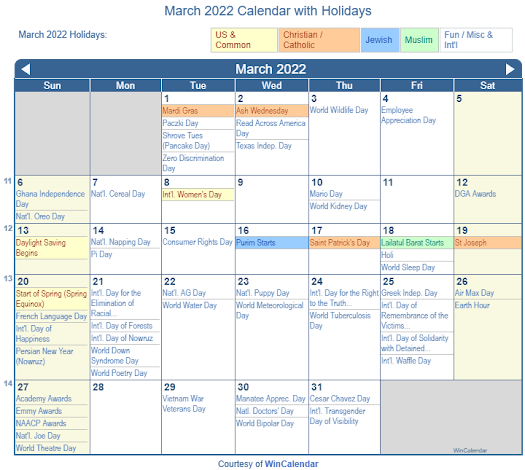
I am starting with what we call a content calendar. I try to begin with a calendar that lists holidays for that month. The one below was available online. I also note if the month has significance. For example, March is National Women's History Month. These pieces of information are the baseline I will use as I schedule the various posts, both blog, and other social media.

Once I print the below calendar, I fill in the days where blog posts are scheduled. Next, I will note the days for social media. If I have a bookversary or new release coming soon, I will tie those pieces in with the holidays for that month. 

I do not post 'marketing' pieces, ie. where I ask people to buy my book. Instead, I work to develop relationships or followers who like what I share. Most know my passion is history, women's history, Colorado History, the Old West, philosophy, and of course, Authors. Therefore, if it is an original post, it will usually be one of the above subjects.

I also started a newsletter where I share my thoughts, tips, quotes, and photos. I felt it was time as blog readings and posts have been ebbing lately. I don't worry, for everything is ebb and flow, but I wanted to have something that would be in addition to other social and blog platforms.

Hopefully some of the above will help you out. If you have ideas please share them in the comments.

Doris McCraw

Wednesday, September 28, 2022

The Evolution of Uncle Sam


Samuel Wilson via Wikimedia

     Samuel Wilson had no idea he’d go down in history and not in a way he ever would have imagined. 

     Samuel joined the Continental Army on March 2, 1781, at the age of fourteen. He was not assigned to fight on the front lines, but to care for and guard the army’s cattle, an important food source for the soldiers. During the Revolutionary War, the enemies often tried to tamper with and poison food sources. As part of his duties during his seven months of service before the British surrendered, Wilson also slaughtered, packaged, and guarded the meat.

      When he was twenty-two years old, Samuel and his older brother Ebenezer moved to the emerging settlement of Troy, New York. Upon arrival, the brothers worked for the town and began a string of successful businesses. Soon Samuel bought property close to the Hudson River and established the first brick-making company in the area, which was unique because most of the bricks at that time were imported from the Netherlands. Today, many of the historical buildings in Troy include bricks made by Wilson.

     In 1793, Samuel and Ebenezer began the E&S Wilson meat business. Their slaughterhouse was located close to the Hudson River, which allowed them to easily ship their products, enabling the company to grow. According to the folklore of Troy, Samuel became known around town as Uncle Sam “because he employed a lot of nephews and was an amiable, honest fellow.”

     E & S Wilson was a prosperous, well-established enterprise by the time the War of 1812 broke out. The company contracted to supply meat, salted in barrels, to the Army for its northern campaigns. Since the barrels were United States property, they were stamped with the initials, “U.S.” Since much of the meat was sent to nearby troops, many of the soldiers and teamsters were from the local area. They joked that the initials belonged to “Uncle Sam.” Over time, any Army property marked with “U.S.” became associated with Samuel Wilson.

     Even after his death in 1854, the initials U.S. relating to the United States continued to be linked to “Uncle Sam” Wilson. In the next two decades, a political cartoonist named Thomas Nast utilized and evolved the image of Uncle Sam. He is credited with adding the white beard and a suit with stars and stripes to the character.  

J. M. Flagg Poster via Library of Congress

      This Uncle Sam figure was especially exploited when the United States entered World War I. James Montgomery Flagg created a recruitment poster with Uncle Sam pointing straight ahead, based on the design of a British poster that first appeared three years earlier. In Flagg’s version, Uncle Sam wore a blue jacket and a tall top hat with stars on the band. The poster was wildly popular and often reused with different captions.

World War II Poster via Wikimedia Commons

       During World War II, Flagg’s poster was resurrected and slightly revised. During the war, the Uncle Sam image was used so widely by the U.S. government that the German military intelligence service Abwehr assigned the codename “Samland” to the United States.

     Today, the Uncle Sam image is still employed for various purposes in the USA.

     On September 15, 1961, Congress recognized the original Uncle Sam with a resolution stating: "Resolved by the Senate and the House of Representatives that the Congress salutes Uncle Sam Wilson of Troy, New York, as the progenitor of America's National symbol of Uncle Sam."

     Thus, Sam Wilson’s legacy has been preserved in the annals of United States history.

.    Ann Markim

 Website

Facebook


Buy Links: Paperback at Amazon                     Amazon print or digital

Amazon Kindle 


Monday, September 26, 2022

An Idle Moment, just staring out of the Window

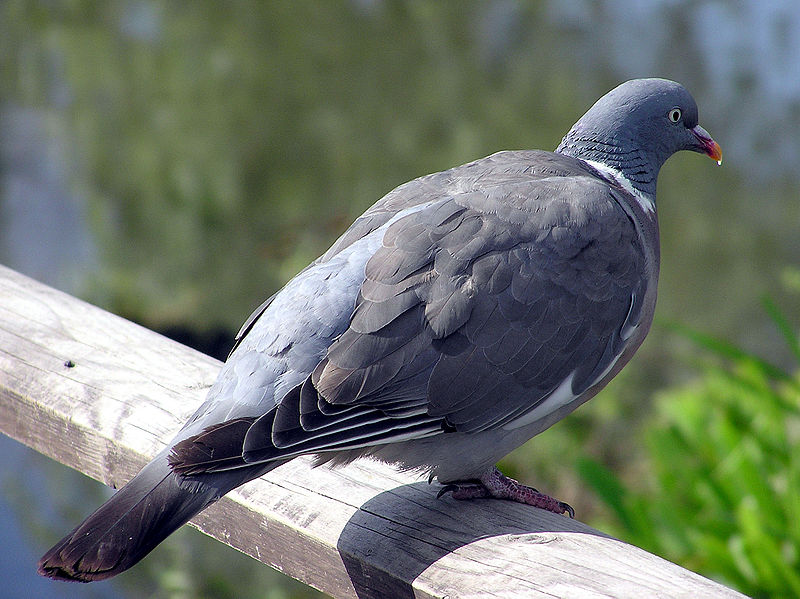
It's autumn again, the wind is blowing the rain across the garden, and in the moments when I'm trying not to write, promo or otherwise earn a living, I can stare out of the window at the bird table. We've had two families of sparrows nesting in the hedge this year (about 500 of them, by the noise in the mornings in spring, but actually rather fewer), plus a blackbird clever enough to pinch the morello cherries and leave the stones attached to the twig. We have other regular visitors: hyperactive bluetits, a determined wren and a thrush of some sort. I don't know how they find out (through Twitter?), but as soon as the nyjer seed goes into the feeder a goldfinch appears out of nowhere, followed by another, and they assault the stuff in pairs. A single fieldmouse also seems to live under the hedge and nip out to scoff any seed falling from the bird table. A pair of delicately bewildered collared doves turns up sometimes, and a small gang of jackdaws, but the most regular patrons of the birdseed restaurant are two wood pigeons. One is sleek and obviously well fed, while the other is a bit scrawny and looks a bit downtrodden. We call them Scruffbag and Fatface, and while the sparrow contingent are out in the fields these two put away at least half the birdseed and bits of bread between them. One day Fatface will probably turn up with a doggy bag. (Pictures from Wikimedia Commons.

September in the Middle Ages (the period where I set most of my historical romances) was a time of wheat harvesting. The hay had already been gathered in earlier in June, now it was time for the back-breaking work of reaping. The straw from this was saved for roofing or bedding. Beans and peas were also gathered at this time, to store and dry for winter. Apples, blackberries and other woodland fruits would be collected. Everyone worked hard, for a good harvest meant survival through the winter and early spring. 

You can read more about my medieval historical romances here. They are all free to read with KindleUnlimited. 


Lindsay Townsend 


Monday, September 12, 2022

The Hat Makes The Man

As the old cowboy saying goes, “It's the last thing you take off and the first thing that is noticed.”

Whether a top hat, derby, tam, fedora, beret, bowler – a hat does more than cover a man’s (or woman’s) head. They make a statement about the person.

If I say Bogart, can you see him, fedora pulled down low, collar turned up?

Or Charlie Chaplin in his bowler?

How about President Abraham Lincoln? 

Hats say a lot about the personality of the man - and some, like President Lincoln’s black stovepipe hat, will be forever linked with the man who wore it.

I believe the most recognizable type of hat, hands down, is the cowboy hat.

Did you see John Wayne in the movie Quiet Man and wonder where the heck his Stetson was? I did.

How about the hat Clint Eastwood wore in Pale Rider?

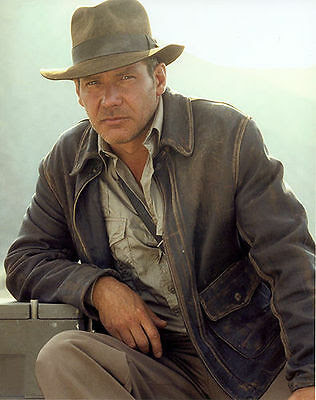
Or Indiana Jones in his battered Stetson fedora?

John Stetson was the creator of what we think of today as the cowboy hat. The son of a master hatter, John made his first cowboy hat as a demonstration to his buddies about making felt from fur. The wide-brimmed hat was so useful in keeping off the sun and rain, his companions wanted one of their own. And an empire was born.

Stetson started his company in 1865. By 1866, the “Hat of the West” or “Boss of the Plains” set the John B. Stetson Company on the path to becoming the most famous hat in the world. Originally sold in one grade (2 ounce felt) and one color (natural), that original Stetson hat sold for five dollars. The equivalent hat today would cost close to $1,000.

Made of a blend of rabbit, wild hare and beaver fur, today’s Stetson sets the mark for cowboy hats. You can get your Stetson in felt or straw, black, white, grey, tan; choose your style, for casual or dress, for outside wear or for going to church.

Stetson isn’t the only hat maker in the U.S. In Dallas in 1927, the Byer-Rolnick company began making the Resistol hats, so named because they were made to “resist all weather.” But, in spite of the lasting success of Resistol, Stetson is the name most associated with the west.


“Even after the wild aspect of the West was somewhat tamed, the cowboy hat never really lost its ability to lend that reckless and rugged aura to its wearer.”


Tracy

Tuesday, September 6, 2022

The Perfects

The Perfects

By C. A. Asbrey

Helen Alling Davis, third from left

Virginia Wolfe's seminal work, A Room of One's Own, didn't only equip many women with the language to articulate frustrations they had felt for decades, it reflected the times in which it was created. It caught a zeitgeist, albeit one growing amongst the increasingly independent and educated women in the upper middle classes. As reflected in the essay, these women had the resources and the space in which to explore their intellects, abilities, and wants, in a way denied to the poorer women scratching for survival, and dependent upon others. But they only had them because they seized the moment and took them in much the same way as men did. Most women were not so lucky.

First Edition Cover

These women felt stifled by the restrictions of Victorian society, and although the advent of the Edwardian period promised change and a new lightness, attitudes were changing slowly. The Americans called this The Gilded Age, with the sombre haughtiness lifting, replaced by a younger and broader outlook. Where the previous era had been an engine for social change based on philanthropism, the new arrivals began to look less at how worthy the poor were, and more about engineering a change in which the poor were better able to advance themselves. It was about breaking down barriers, understanding why some groups were unable to access opportunities. Social agitation against restrictions grew.

The world's largest freshwater archipelago, in Lake Huron's Georgian Bay, is studded with small islands, leading to the area being known as Thirty Thousand Islands, was an unlikely scene for rebellion. It was to this remote and rugged area that women ventured, wearing long skirts, petticoats, and sun hats, to engage with the wilderness, enjoy new freedoms, and establish a community where women struck a blow for their own independence. These intrepid ladies did more than demand a place of their own. They created a community that lasted for at least two decades.   

These free-spirits loved to kayak, fish, swim (often undressed in such a way as to cause shock on public beaches), pick berries, picnic, cook-out, camp, and hike. Nothing too revolutionary there, you'd think. But these women did more than just pass their spare time. They purchased the islands so they could enjoy the freedom of doing things their own way, and without any of the outside rules they felt crushed them.    

The first island was bought in 1902, when the women were surprised to find that they were being sold remarkably cheaply. The going rate was between five and ten dollars. One woman, Helen Alling Davis, was a gymnastics instructor, and after spending an initial seven weeks enjoying the area, she purchased the first island of the community. She called it St. Helen's, saying it was the only way she would ever be sainted. The three acre island afforded spectacular views and, rocks and woods, a jungle, hills and ravines, bays and promontories.” The first summer was spent camping, but the second summer Helen Alling Davis had help from her brother, and cheap local labour to build a cottage. This cottage soon became a haven for this group of single women to gather, along with their family, to enjoy life in the way they wanted to live.

Mary Bragdon's Diary

Another woman, Mary Bragdon, was a stenographer and secretary in Rochester, but she desperately wanted to be a writer and photographer. She was another example of the new woman; the educated, confident, and independent women pushing out without men or permission. Back in Rochester, she was a member of a club called, "The Perfect Little Ladies". This was soon abbreviated to "The Perfects." At first the diaries show schoolgirlish superiority at their cleverness, and enthusiasm at finding like-minded friends. Their stated aim at the start was to find good husbands, but that soon changed as they matured. They soon exemplified the image of the new woman: professional, self-supporting, independent, and intelligent. Furthermore, they were prepared to challenge gender-norms that had been around for centuries. They didn't feel the need to get married for security. They enjoyed not having to answer to anyone, relished their fun with female friends, drank, smoked, debated, and demanded that women be allowed to have their own space to grow. The Perfects made this group of islands their own in a way that changed them forever, and created a new kind of tourism.  

Mary kept a diary of her time exploring these islands. In summer 1903, the sisters hosted fellow Perfects May Bragdon and Mary MacArthur, and another Rochester resident, Marjorie Fowler. Helen’s parents, Oscar and Frances, her brother Hamilton, and her sister Katharine also stayed at St. Helena, along with many other guests who came and went. “Then cots, hammocks and tents overflowed and everyone helped bake pancakes in the morning on the merry little Klondike stove.” The land was described as, ''wild, beautiful and apparently untrodden by the foot of man. . . as they explored the rocky islands and gathered fresh berries. Then there were evenings of reading aloud[,] singing & playing cards or toasting marshmallows."
Charlotte Davis and Marjorie Fowler setting off to pick blueberries for dinner in 1903


The Perfects used St. Helena as a base from which to find other nearby islands to purchase. Bragdon called hers Mandalay after Rudyard Kipling's poem, and referred to Katherine's island as Minnehaha. Katherine also later bought Mary's island, Oneeishta (Ojibway for “Laughing Maiden). Charlotte Davis called hers Wonderland, clearly influenced by J.M. Barrie's Peter Pan. Charlotte explored "almost every inch” by herself, but did enjoy hosting other women to take tea and enjoy the stunning sunsets. 

Mary Bragdon on Mandalay
 

It didn't take long before a lot more women came and joined this summer community to enjoy the emancipation and stunning surroundings. They came from the USA and Canada, and purchased many of the small islands dotted around the bay. Around twenty-five small islands in the area were bought by single, professional women. Hamilton Davis, the elder brother, saw a commercial opportunity in opening an hotel in the area. The Ojibway hotel opened in 1906, and catered for those who loved the outdoor life during the day, but a good meal and comfortable bed when they got back. It closed in 1942 when the islanders bought the hotel and turned it into the Ojibway Heritage Society. It still functions today as a centre for learning, and as a shop, restaurant, and gift shop outside of its social commitments.

Helen didn't have children of her own, she became a leading light in the YWCA, and worked with her sister Katherine to reform women's corrections, education, suffrage, social science, and women's rights. Both were dedicated, respected and overlooked by history. But the family's descendants still use the rebuilt cabin on St. Helena as a holiday home.

Georgian Bay Islands Today

This story may not sound like much, but a mere fifty years before, it would have been unthinkable for a group of single women to go off hiking, camping, fishing, and holidaying without men.—especially for the whole summer. Most Victorian women didn't see free time as their own. It was time to repair or create things for the home, improve themselves, or to do things for the family. The idea of them buying up a collection of islands to keep indulging themselves would have been unimaginable. The Perfects were a small act of revolution that rang down the years, creating a wake bigger than their ripples.

These women all made a difference to those who came after, either as examples of women doing work they previously were denied, or by teaching or campaigning for those less fortunate than themselves. They are largely forgotten by history, but made an enormous difference to people's lives in a myriad of small acts. These women changed society in each woman they helped educate, in every stand they made against inaction, in the families they helped leave abusive homes. They were stealthy mutineers.

The Ojibway Club Today

On Katherine Davis Death, Rockerfeller's letter of condolence to her sister read:

" . . I found her [at first meeting in Bedford]. . . a plain work-a-day woman who deeply loved her fellowmen, who strove in her relations with them to do as she would be done by, and who applied in her work the ordinary principles of common sense and humanity, the value of which her unusually fine mind and trained intellect had long since made clear to her. She was always kind, unselfish and thoughtful to a degree. On the other hand, no one could take advantage of those qualities to get the better of her or to thwart the end which she was seeking to attain. Red tape, unnecessary motion, indirection, she abhorred, and was never willing to waste time on them. What she accomplished at the Reformatory, and in the laboratory, which I helped her build and operate, was epoch-making . . . Her contribution in [the Mitchel administration] . . . was again outstanding. . .I have always had a feeling, however, that her heart was above all in the work at Bedford . . .The years she spent in the Bureau of Social Hygiene were also productive and fruitful. . . .  Your sister was one of the great women of her day. Her life was a long and useful one, and she leaves a record of devotion and service to humanity which few can boast of. I am proud to have been her friend and often her fellow worker, and mourn deeply with you and yours her going."  


 Excerpt


“She hasn’t got the combination to the safe,” said the manager. “You can scare her as much as you want. We all know you’re not gonna use that gun on us.”

Rebecca’s breath halted as she felt a careless arm drape around her shoulder.

“I don’t need a gun to hurt someone. Give us the combination.” The manager remained mute and turned his face away. “Your call, sir.” He pulled Rebecca around to face him as she gasped in alarm. “Just remember who you’ve got to thank for this, ma’am.”

He pointed over at the manager, who refused to meet her eyes. “That man right there.”

“Anything that happens to her is down to you. Not me,” said the manager.

Rebecca felt herself dragged from the room by one arm. She was pulled into the office next door and pushed against the wall. The man walked over and pulled down the blind before returning to her. Her breath came in ragged pants of fear. “Please, no. Don’t.”

He leaned on the wall, a hand on either side of her head, and pressed his face close. “You were gonna hold this place up. Are you some kind of idiot?”

She blinked in confusion. “Huh?”

The man pulled down his mask, revealing the face of the fair man who had walked into her office looking for Fernsby. “Don’t lie to me, honey. You had the same idea as we did— look at Meagher’s bank account to see where he gets his money. We’ve watched you march up and down outside this place all day, like you were on sentry duty, while you built up your courage. You even got in the way of us doin’ it. What the hell is goin’ on in your head? How dumb can a woman get?”

“You? Here?” She couldn’t quite decide whether to stop being scared or not.

“Yeah. Me.” He indicated with his head. “Now, Nat’s in there, and he needs the combination of the safe. It’s too new and sophisticated for him to crack the combination. You and me need to put on a bit of a show to make sure the manager gives it up.”

“You’re not robbing the bank?”

Jake huffed in irritation. “Try to keep up, Becky. I need you to scream for help so the manager gives Nat the combination to the vault. We want Meagher’s records too.”

She shook her head. “Me? I can’t scream.”

“What do you mean you can’t scream? All women can scream.”

“I can’t. I’m just not made that way.”

He frowned. “Look, Becky. If you won’t scream, I’m gonna have to make you. Let’s do this the easy way, huh?”

“Please, help! Noooo.”

Jake frowned. “You call that screamin’? That’s useless.”

“I told you. I can’t.”

Jake flicked up an eyebrow. “Last chance, Becky.”

“Aaargh—”

“Nope.” A gloved hand reached up to her hat as his eyes glittered with mischief. “Don’t say you weren’t warned, sweetheart.” 


Sunday, September 4, 2022

CREATIVE PROCRASTINATION - Labor Day 2022


Post by Doris McCraw aka Angela Raines

Photo property of the author

If you're like me you are wondering where the days have gone. Wasn't it just New Year's Day or even the Summer Solstice?

At the same time, I'm almost ready to give up the heat and hunker down with a good book or finish or start that book/story that's been bugging me to write it. 

If you're even a bit like me you procrastinate. Well, I like to consider it reflective or research procrastination. In other words, 'creative procrastination' :) 

There's YouTube:

Restored Washington DC canal

The History of Cats - Part 2

Photo property of the author

There are the books:

"A Journal of the Birmingham Emigrating Company" by Leander V. Loomis 1850

"Around Monarch Pass" Duane Vandenbusche 

And of course, the quotes:

"Be careful who you give your midnights to" r.h. Sin

"I cheat my boys every chance I get. I want to make 'em sharp." William Avery Rockefeller

"Always remember that you are absolutely unique. Just like everyone else. Margaret Mead

Photo property of the author

And of course, I can't leave this post without some music:

2 Cellos - Thunderstruck

Yuve Yuve Yu

Colorado Sky - Flying W Wranglers

And yes, each and every part of this post fills my creative cup. Hope it can fill yours also.

How do you creatively procrastinate?

Here's to creativity!

Doris