Search This Blog

Tuesday, March 15, 2016

Incest and the Medieval Man

When I first started writing Enthralled (the third book in the Druids of Duncarnoch series) I knew the hero and heroine had grown up together and had known since they were children that they were soul mates.

But as children of a noble household, their desires or happiness are irrelevant. Marriage was a political and financial arrangement, especially for the nobility. The goal of marriage was to gain richer lands and more powerful alliances for the next generation—the nobleman’s grandchildren.

In the story, Amilia has been betrothed since she was a toddler, and William tasked with doing whatever necessary to win the patronage of a powerful lord (or lady) in the hopes of gaining power and wealth through marriage to an heiress.

If that's not conflict enough, they were raised as brother and sister, compounding the obstacles they face.

They are not related by blood, and they know it, but our medieval counterparts would have argued consanguinity all the same.

And that brings us to incest and the medieval man.

Although consanguinity literally means “blood relations,” its legal definition was much broader.

The Church prohibited marriage between people who were related within four degrees of consanguinity, which included blood relatives, relatives by marriage (if the man and wife became “one flesh” then all relatives on either side are related) and those related by spiritual affinity (related through relationships of godparents).

You can imagine how very quickly your medieval options dwindled. And that shallow pool became even more shallow when the Church raised the number of prohibited degrees to seven in the 9th century. Within a few hundred years, the nobility became (technically speaking) too interrelated to marry.

For the lesser folks, many of whom never traveled more than a few miles from where they were born, the pool was more like a puddle.


I've always find this side of medieval marriage fascinating, and a bit odd. The reasoning behind the prohibitions is vague, particularly when it comes to spiritual affinity, and gaining Papal dispensation to go ahead and marry your thrice-connected cousin was relatively easy.

Not surprisingly, the Church loosened the prohibitions in the 13th century, and current canon law deals only with biological kinship. 

In your research or reading, what is the oddest or most puzzling rule that you've come across?


Keena Kincaid writes historical romances in which passion, magic and treachery collide to create unforgettable stories. You can find out more about her books at: http://prairierosepublications.com. Leave a comment for a chance to win one of her books, ANAM CARA, TIES THAT BIND and ENTHRALLED.


Monday, March 14, 2016

Gunboat Tea


On my first trip ever to Charleston, SC, I wanted to see as much history as we could squeeze into the few days we were there.  On our trip to the Fort Sumpter Visitor’s Center, I spotted a partial French porcelain tea set from the 1830s.

Seeing cups and saucers that would have been part of Charleston life wasn’t unexpected. However, the reason these artifacts were included in the museum was.  The set had been donated for a Gunboat fair. Families gave up their prized possessions to be sold or raffled off to raise money for the war effort, in this case, to raise funds to build a gunboat for the Confederate Navy.

Items such as a tea set, a linen fan, even a string of pearls—anything that might bring in some needed cash. Mary Boykin Chestnut, raised the daughter of a planter and married to Brigadier General James Chestnut, Jr., an aide to Confederate President Jefferson Davis, the frivolousness of such heirlooms when lives were at stake:  “Our silver and gold, what are they?—when we give up to war our beloved.”

Here’s a couple of pictures I took through the display case so you can see the colors of the tea service. Pretty, isn’t it?


For more information, check out “Stolen Charleston--The Spoils of War” by J. Grahame Long.

Wednesday, March 9, 2016

Countdown to Release Day! The Comanchero’s Bride by Kaye Spencer #westernromance


My upcoming release with Prairie Rose Publications, The Comanchero’s Bride, was originally published in 2007. 'Comanchero' was one of 24 stories included in a publisher’s project of novella-length romances that were each based on a different rune. These stories weren’t considered a series nor were they even related to each other. They were simply stories written around a topic. I was limited to 40k for this story, and by the time I was finished, I knew there was a larger story begging to be told. In 2009, I received the rights back to ‘Comanchero’, and I set about expanding it to the current full-length edition that has a planned March 17th release date.

 So what are Runes? Briefly, runes are ancient alphabets used for writing, divination, and magic. Rune names vary by alphabet, but the meanings are generally the same. Runic inscriptions have been found in North America which supports the stories of Viking presence long before Columbus. (J. R. R. Tolkien used runes in The Hobbit.)

Example: 'The Anglo-Saxon Fuþorc' runes
My rune for The Comanchero's Bride was Uruz (from the Germanic runes) also Ur and Uru. Characteristics and attributes of this rune are:**
  • physical and emotional strength
  • untamed potential
  • energy
  • passion
  • vitality
  • instinct
  • wildness
  • sexuality
  • fertility
  • the unconscious
  • primitive mind
  • irrationality
  • rite of passage
  • termination and new beginnings
  • outgrowing the life you’ve been living so new life can develop
As you read the story, you’ll understand how I worked these characteristics into the story and into the characters’ actions, thoughts, and behaviors. Both my hero and heroine must face extreme hardship during the course of the story and, in doing so, they grow emotionally. They are able to leave behind issues from their pasts at the same time overcoming obstacles in their present lives in order to achieve their desire to be together.

Since the dominant property of Uruz is strength, I decided on two overriding themes the story:
  1. Physical strength in facing hardship and adversity
  2. Inner strength of remaining true to oneself while maintaining loyalty to another
To further incorporate Uruz attributes in The Comanchero's Bride, I included a herd of longhorn cattle, because Uruz is symbolized by a wild ox, or ancient and extinct animal called an auroch. I even managed to have the hero and heroine have a conversation about the similarities between the now-extinct auroch and the hero’s longhorns.

Auroch are: “...a species of wild ox, similar to a longhorn bull that was once found all over Europe, but which because extinct sometime in the 17th century. They were said to be slightly smaller than elephants, and had horns as long as six feet, which were highly prized by the Germanii as drinking horns… Uruz …also represents and awareness of death and own mortality…  The energy of this rune is raw, powerful, and distinctly masculine, in the sense that it is pure, elemental fire…”**

To add another layer to The Comanchero’s Bride, I developed the plot around the Marty Robbins song, Meet Me Tonight in Laredo, and I scattered references to Marty’s songs all through the story. (I even slipped in a reference to Lorne Greene’s song, Ringo, for good measure.)


More to follow...


Until next time,

Kaye Spencer


Resources:
https://en.wikipedia.org/wiki/Runes

http://www.ancientscripts.com/futhark.html
http://www.runewebvitki.com/rune%20origins1.htm
**http://sacredwicca.jigsy.com/runes

Tuesday, March 8, 2016

Emma Hart Willard

By Kristy McCaffrey

Emma Hart Willard
Born in 1787, Emma Hart Willard was encouraged by her farmer-father to read and think for herself. Emma was often included in family discussions of politics, philosophy and mathematics. At the age of 15, she enrolled in her first school in Berlin, Connecticut and progressed so quickly that two years later she was teaching at the institution.

In 1807, Emma left Berlin and worked as a principal at the Middlebury Female Seminary for two years. She was unimpressed, however, by the material taught, so in 1814 she opened a boarding school for women in her own home. She strove to improve the curriculum for girls, believing that women could master topics such as mathematics and philosophy. This passion for women’s education led her to fight for the first women’s school for higher education. In 1819, her success inspired her to write A Plan for Improving Female Education, a pamphlet that she presented to the New York Legislature. Her plan included a proposal for a women’s seminary to be publicly funded just as men’s schools were. Emma didn’t receive a response from the legislators, who believed women’s education to be contrary to God’s will.

Willard finally received support from New York Governor DeWitt Clinton, who invited her to open a school in his state. The Troy Female Seminary opened in September 1821 for boarding and day students in Troy, New York. It was the first school in the United States to offer higher education for women. By 1831, the school had over 300 students enrolled.


The Troy Female Seminary was renamed the Emma Willard School in 1895 and today still promotes her strong belief in women’s education.

* * * *
Kristy McCaffrey has been writing since she was very young, but it wasn’t until she was a stay-at-home mom that she considered becoming published. She’s the author of several historical western romances, all set in the American southwest. She lives in the Arizona desert with her husband, two chocolate labs, and whichever of their four teenaged children happen to be in residence.


Connect with Kristy


Monday, March 7, 2016

Hats Off, Dr. Seuss! By Gail L. Jenner


As writers, it’s inspiring to look at the lives of other writers who have “done it right” (whatever that means!) or who have contributed significantly to the world of ideas and imagination.

In that vein, it’s fun to consider writer and illustrator Dr. Seuss – aka Theodor Seuss Geisel. Because his birthday fell on March 2nd, and because as a former English teacher I love anything that gets kids and students reading, I thought it would be fun to do a little research on Seuss.


First of all, Seuss was “no doctor,” although his father always wanted him to become one. In 1956, he did receive an honorary doctorate from his alma mater, Dartmouth College.  Seuss was his mother’s maiden name, but he never used it until college. The story goes that after being caught with gin in his dorm room, he was removed as editor of the college’s humor magazine, hence, to continue submitting, he took on the pen name. The original pronunciation of Seuss rhymes with “voice,” but few could remember it -- so Seuss (as rhyming with “goose”) became the standard pronunciation!

During the Great Depression of the 1930s, Seuss became an advertising cartoonist. He drew for General Electric, NBC, Standard Oil, Narragansett Brewing Company and other commercial businesses.

His first book was titled And to Think I Saw It on Mulberry Street and was actually inspired by a trip home from Europe; the rhythms reflected the rhythm of the ship’s engines, and Mulberry Street was the street where his grandmother lived. Hard to imagine it today, but the book was rejected 27 times before being sold and published in 1937! It’s been written that Seuss almost burned the manuscript.


Interestingly, though we think of Dr. Seuss books as funny or humorous or even silly, many of his works were in response to the world surrounding the author. For instance, his book Yertle, the Turtle, was actually about Hitler!

Seuss’ books occasionally raised eyebrows. Yertle, the Turtle was not criticized for its caricature of Hitler, but for the fact that Yertle burps at the end of the story. THAT was the first time such an action had been included in a children’s story!

In 1960, Seuss’ editor bet him that he couldn’t write a book in 50 words or less. The result: Green Eggs and Ham is exactly 50 words long!


Obviously, Dr. Seuss’ talent goes way beyond the average writer’s imagination. He was someone who obviously took inspiration from anywhere and anyone. He was not afraid to take chances, and he was willing to push the envelope in the topics or ideas he tackled.

As an educator, a parent, a grandparent, and as a writer, I see Theodor Seuss Geisel as a model of an individual who had a vision and pursued his craft in his own way. 

Perhaps mostly as a writer, I find his idiosynchrosies inspiring! To have confidence in one’s own vision is an important and critical tool, no matter what genre or category of writing we each pursue.

                        So, Hats off, Dr. Seuss, and Happy Birthday! A few days late, perhaps, but certainly an opportunity to consider your contributions to both children and writers everywhere!


===========================================


Gail L. Jenner is the author of several books and short stories, including the WILLA Award-winning
Across the Sweet Grass Hills,
                                                     published by Prairie Rose Publications
and

Her newest PRP releases include: Valentine Angel, released Feb. 11, 2016, and her story "A Respectable Woman" in Lariats, Letters, and Love, released Feb. 4, 2016.
For more, check out her biography and titles on amazon: 


Sunday, March 6, 2016

PRE-FRONTIER; PRE-WEST

Post by Doris McCraw/Angela Raines


We love writing about the West, it seems to be in our blood. But what was the West before it was the myth we love? I'm talking about the world before the year 1,000. Of course as a teen I was fascinated with the Aztecs, Toltecs, and then the Olmecs. Then I had the gift of visiting the Cahokia mounds. Now of course we talk about the Anasazi, Chaco Canyon. So who were there peoples? How did their stories impact our lives and our own writing?

Timelines:
Cahokia peoples settled the Mississippi/Illinois river area around 700.
Anasazi people settled the Four Corners area around 200
Chaco Canyon in use by 850.
All three were in decline by around 1200-1300.

Both the Cahokia and Anasazi are the subject of much speculation. They both build amazing civilizations. Were they cannibals? Did they have human sacrifice? One of the hardest parts of archeology is putting yourself in the 'shoes' of the inhabitants of the area you are studying, much as we authors do when creating our characters. It is not easy to be historically correct, especially when you don't know all the facts about the time you are writing.

The following quote from the Cahokia Mounds website gives a hint of the influence the inhabitants had on their area: “One of the greatest cities of the world, Cahokia was larger than London was in AD 1250. The Mississippians who lived here were accomplished builders who erected a wide variety of structures from practical homes for everyday living to monumental public works that have maintained their grandeur for centuries” For additional information the following links will take you on that journey.
http://cahokiamounds.org/, http://ngm.nationalgeographic.com/2011/01/cahokia/hodges-text , https://en.wikipedia.org/wiki/Cahokia I really encourage you to read all, but if you only have time for one, the National Geographic article is a good overview.
Image result for images of cahokia mounds
en.wikipedia.org
The Anasazi are more widely recognized, mainly because of Mesa Verde and the history of the Pueblo people. Still what became of them? Why did they abandon the dwellings that they are remembered for? We may never know, but what a history these people have. The following quote from the Mesa Verde site shows how important the preservation of the history is: Preserving the “Works of Man”
Mesa Verde, Spanish for green table, offers a spectacular look into the lives of the Ancestral Pueblo people who made it their home for over 700 years, from AD 600 to 1300. Today the park protects nearly 5,000 known archeological sites, including 600 cliff dwellings. These sites are some of the most notable and best preserved in the United States. Additional information can be found here: https://en.wikipedia.org/wiki/Ancestral_Puebloans , http://www.blm.gov/co/st/en/fo/ahc/who_were_the_anasazi.html ,http://www.smithsonianmag.com/people-places/riddles-of-the-anasazi-85274508/?no-ist I love the BLM site, it allows you to follow a question and answer format.
en.wikipedia.org
Lastly there is Chaco Canyon in the Southwest. This area also contains more from the Anasazi culture. Many think it may have been part of the 'highway' through which trade goods traveled. For more on this site: http://www.nps.gov/chcu/index.htm ,https://en.wikipedia.org/wiki/Chaco_Culture_National_Historical_Park ,https://sacredsites.com/americas/united_states/chaco_canyon.html
en.wikipedia.org

That these peoples influenced future generations is without question. Still, so much is not known, or is speculation. Mesa Verde, Cahokia Mounds and Chaco Canyon are still mysteries in many ways, but oh the stories they can inspire. Did the Anasazi and the Mississippians at Cahokia know and trade with each other? So many questions but so many stories to be told, so many myths and mysteries.

Angela Raines is the pen name for Doris McCraw. Doris also writes haiku posted five days a week at - http://fivesevenfivepage.blogspot.com and has now passed one thousand haiku and photos posted on this blog. Check out her other work or like her Amazon author page:  http://amzn.to/1I0YoeL

Wednesday, March 2, 2016

The Importance of Nonhuman Characters by Sarah J. McNeal

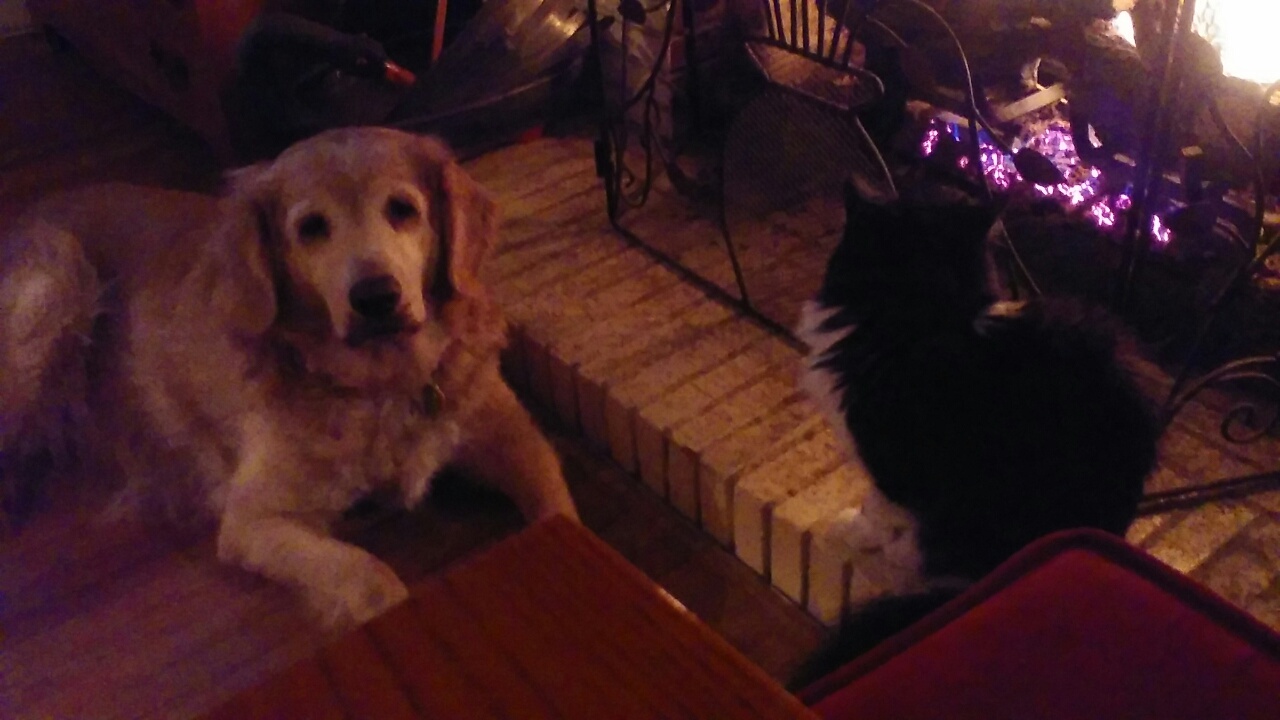
Lily and Liberty

When I say “nonhuman characters,” of course, I mean animals. Since I am deeply concerned with the welfare of animals and love my furry children, I use them in much of what I write. How characters interact with animals in a story speaks of their intentions and moral fiber.  If a character kicks a dog or runs a horse into the ground for no good reason, you can bet the reader isn’t going to like them very much.  They may seem like subtle signs of character building but they’ll make a difference in the reader’s perception of that character.

For instance, if a character who is handsome or beautiful, attentive, and charming shows up in the beginning as a possible love interest, an animal can be a way of warning the reader this person needs further investigation. A negative comment about a beloved dog, or a show of distain for a sickly cat should lead the reader to understand this character is not to be trusted.

In Harmonica Joe’s Reluctant Bride, the villain, a ridiculous, bumbling man threatens Lola believing, like everyone else in the story, that she is the infamous Callie Magraw. To intensify Weston’s villainous intentions and show what a deadly threat he truly poses, I had him shoot Joe’s dog, Argos. The dog almost dies. I hope the reader hates him for it.  If no one got what a ruthless scoundrel Weston was before he shot Argos, I’m certain they will after he commits such a horrible act on an innocent dog.  Joe and Lola, of course go into action and save the dog’s life but no one is about to forgive Weston for shooting Argos.

The dog also likes Lola right away, confusing Joe about his belief that Lola is really Callie. Callie, naturally, didn’t like Joe’s dog, but Lola showers Argos with fond attention.
So, in my mind, an animal in a story can tell the reader a great deal about the characters that live in that book.


Excerpt of Lola and Joe after they discover Argos has been shot:

Lola knelt on the floor beside the dog and worried over him.  “Is he going to be okay, Joe?  He looks so awful.”  She ran her hands through his thick fur and said a silent prayer that Argos would recover.  Her heart squatted in her chest, dark and heavy.
Kneeling beside her, Joe whispered.  “Not to worry, darlin’, Argos is going to have a hard time, but he’s going to come out on the other end just fine.  We’re going to make damn sure of that.”  He reached out a hand and ran it in a light stroke along Lola’s cheek to wipe away the tears that had fallen without her realizing how much she needed to cry.

Harmonica Joe’s Reluctant Bride is also available in a western collection titled A Cowboy’s Brand for 99 cents on Amazon.

An animal can show the deep psychological trauma of a story character as well.

In Fly Away Heart I presented an abused dog, neglected and beaten by Edgar Effird. The dog’s abuse also represented the kinds of abuse Edgar heaped on his son, Sid. Although Sid was also a villain, I hoped to show how his father dominated him and forced him to do horrible things. Sid was as abused as the dog—and that gave a bit of hope that he might eventually turn his life around some day.


Excerpt of Robin as he rescues the Effirds’ dog:

The dog drew his attention when it whined pitifully. Its brown eyes seemed to plead with him. Somehow, he just couldn’t bring himself to walk away from the suffering creature. If he couldn’t get to Lilith, at least he could get this dog to safety. He knew, if he left the poor thing here, it would die a slow death for certain.

He made his way to the shaking pile of bones that resembled a dog and removed the clamp on the heavy chain. The dog could barely walk, and it made Rob sick to see the bones protruding from the animal’s ribs and hips. What kind of human beings were these two men? Did they eat babies for breakfast? He hoisted the dog into his arms, walked back to the car, opened the back door, and placed the dog on his jacket on the back seat. Something in its brown eyes looked like gratitude, mixed with fear. Rob felt his heart crack.

Fly Away Heart is also part of a wonderful collection of five sweet novels titled Love’s First Touch on Amazon for 99 cents.


I’ve also written animals as heroes like Ajax, the war horse, in the WWI novel, For Love of Banjo. And Jasmine, the elephant,  rescued by the Wildings in The Beast of Hazard along with several other circus refugee animals. But one of my favorite hero animals is Lonesome, the patient pinto horse, in Home For The Heart, my recent submission to Prairie Rose. In this story an orphaned, half Lakota boy with a chip on his shoulder finds a change of heart during equine therapy with Lonesome.

I love animals and want them to live happy, carefree lives. I do my part to help advance their cause. Animal rescue and conservation of the earth and its creatures are things I care about passionately, so no wonder I enjoy writing them into a story. Animals can tell us so much about the characters’ true motivations for good or evil. If a dog bares its teeth and growls in one of my stories, the reader will want to pay attention. Just sayin'...


Sarah J. McNeal is a multi-published author of several genres including time travel, paranormal, western and historical fiction. She is a retired ER and Critical Care nurse who lives in North Carolina with her four-legged children, Lily, the Golden Retriever and Liberty, the cat. Besides her devotion to writing, she also has a great love of music and plays several instruments including violin, bagpipes, guitar and harmonica. Her books and short stories may be found at Prairie Rose Publications and its imprints Painted Pony Books, and Fire Star Press. Some of her fantasy and paranormal books may also be found at Publishing by Rebecca Vickery and Victory Tales Press. She welcomes you to her website and social media: