Search This Blog

Showing posts with label character development. Show all posts

Sunday, September 3, 2017

BADGE OF PAIN

by Doris McCraw (c)

You may wonder about the title of this post. I chose Badge of Pain or What Drives Our Character as the focus for this month. 


As some of you know, I come from the performing arts. I have spent years honing characters that playwrights created. I even spent six plus years teaching others the craft. The one thing an actor does is find out what makes their character 'bleed'. Not just the simple, 'mom didn't like me so...', but the deep down root of everything. It ain't always easy, but once you find it, the character you're playing comes alive. One acting coach whose concepts I've used to some degree when I am writing and performing is Ivana Chubbuck . For those who would like to hear her, here it a link to a video on her process. https://youtu.be/XOVPMV5wgv4  Or you can read her book, "The Power of the Actor".

I've also been working through Donald Maass's book "The Emotional Craft of Fiction". He also asked you to go deeper. Not just the obvious,  but take it down to the lowest level. If you start with anger, go deeper. What would be next? Frustration, embarrassment, fear, hurt. 

Characters have that one thing that keeps them from achieving their goal. Not just the outer world of conflict, but the inner world of pain. In my first novella, my main characters had pain that kept them from loving each other. It was the 'badge' they carried like a shield to keep them from taking the step to happiness. 


Each character, if you look deep enough, carries that load, and it weighs heavy on them. At the same time, to let go means they become vulnerable, they can get hurt. They would be trading a known pain for the possibility of another pain. We all do it ourselves to some degree.

So as we take our character's journey when writing, here are some tips.

1. Slow down and let yourself and readers get to know your character. Sometimes you need to take the time to really put the important scene out there, to take the time to highlight important details and actions. Not every scene, but the important ones that the reader can relate to.

2. Use body language, not just facial expressions, to convey what is going on with your character. If they are getting ready to tell someone the truth of their pain, what would they do? Would they pace, look out the window, avoid eye contact, turn their back?

3. Create tension, tease your reader, use words that draw the reader into caring. Are they going to fess up to their pain, move past it and find happiness? What happens if the don't? Dig deep, find the source of the pain and open that wound.

4. What is the moral compass of you character? How does it fit in with the pain they carry. Don't be afraid to delve into that. It adds to the depth the reader invests in the outcome. You want them to cheer for the good guy. Even the villains have a moral compass, at least most do. If you've ever read Dean Koontz's "The Watchers" you will know what I mean. Even the 'monster' brought a tear to my eye.

I leave you with a quote from Franz Kafka "A book must be the ax for the frozen sea within us". Just like the actor who allows the watcher to feel emotions while remaining safe, so too can the author allow the reader to experience the pain without living through it themselves. 


Doris Gardner-McCraw -also writing as Angela Raines
Author, Speaker, Historian-specializing in
Colorado and Women's History


For a list of Angela Raines Books: Here 

Photo and Poem: Click Here 
Angela Raines FaceBook: Click Here

Friday, March 31, 2017

Chewing the Cud - Tips for First Draft ... by Meg Mims


The terror of the blank page… ah, yes. All that white space.

Who else has heard advice like, "just vomit it out," or "get it down fast, you can fix it later," or what have you. Uh huh. If that works for you. Doesn't for me. I get stuck. Often. And I'm not a "pantser" anyway, never have been. I need at the very least Michael Hauge's 5-point outline, with the inciting incident, first and second turning points, point of no return, and climax. After writing ten plus books and novellas, I need more before I sit down to write something new.

Sure, we’ve seen quotes from famous authors about first drafts. “The first draft of anything is sh**.” (Ernest Hemingway) “I’m simply shoveling sand into a box so that later I can build sand castles.” (Shannon Hale) “The first draft is just you telling yourself the story.” (Terry Pratchett)


I like the last one best, but even in telling myself the story, I falter. Um… hmm. Hoo boy. I know A-B-C-D, but what about the points in between? The gaps in my outline. The little details about my characters that never made it into my sketches when I first started preparations. And I spend a good month preparing before every book, especially now that I’m writing a series. Ever hear of a "book bible"? Yeah, you need one. Don’t let anyone tell you otherwise, or you'll find characters with the same first or last name, or switching identities faster than models on a runway. If you don't know your characters, readers will get confused. So will you. "Uh, who's Bill? Oh, wait... he's Jim."

You also need to know your characters' backgrounds, from birthdate to family to home life to education to friends, married or single, kids or not wanting them, attitudes toward parents, religion, morals, etc., etc., etc. There are lots of charts you can fill out, or make up your own. Protagonists, minor characters, and don't forget your villains. They need motives for what they do. If you don’t know your characters well enough, they may end up worse than flat soda.

They’ll also stop talking to you. Like wayward, snotty kids holding back secrets. Yeah. They’re brutal that way. You're typing along, feeling smug, pushing to the halfway point, and then WHAM. Your hero or heroine does something stupid. And you're sitting there, wondering why.

Ooooh, man.

Or like a bad actor, they go hide in their trailer and refuse to come out. Until you beg them, bribe them, or figure out what is going on. And you'd better, or that deadline's gonna hit you right in the nose.

That's why I stop, take stock of who these people are and why they do what they do instead of what I want them to do - and what's odd, sometimes they're right.

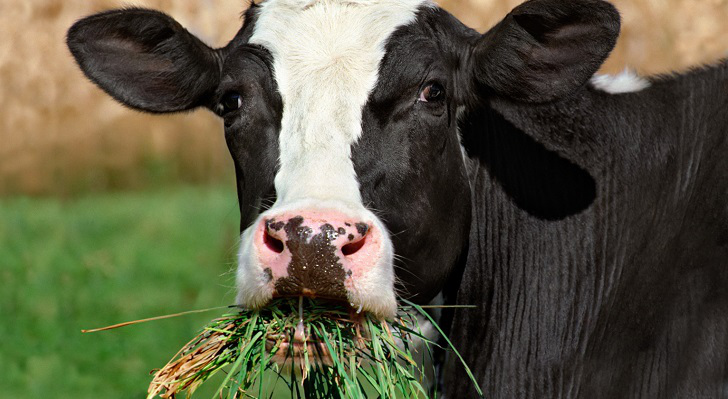
SO I'm finally getting around to the point. What does work (for me) is a process I call “chewing the cud.” Sounds gross, doesn’t it. The humble cow, or goat, alpaca, sheep, and antelope, cannot digest one time through, so they repeat the process. Rumination: “chewing the cud.” Also, “a deep or considered thought about something.”

So when I sit with my laptop, taking snippets of my outline and pasting them into the next chapter, pushing out the words, halting every so often until they run out... Sound familiar? I take a break. Get up, walk around, do the dishes (Agatha Christie swore by such chores), vacuum (you'd be surprised how the noise helps your brain ponder, almost as good as listening to music), take a shower, a walk, a box of cookies out of the fridge – er, no, I can’t do that anymore. Dang. Who can stop at one anyway...

Maybe those cattle ponder things while chewing. They do look fairly peaceful out in the pastures.


I’m flummoxed by writers who can churn out thousands of words day after day. Yeah, everyone has a different process. Mine is more of an “ocean wave” where the tide comes in and goes out, a little farther each time… but dang. Some days the tide stops. So I give my brain (and subconscious) a little break, time to ruminate, swallow, chew again. Taking a break (like right now, writing this blog post) can refresh the well, fill the cistern, drink from the stream of ... well, you get the idea. Every writer needs a few breaks to prevent burnout. Take a nap. Do yoga. READ A BOOK.

Reading is especially good, especially if it's something outside of the genre you're writing. Anything but, in fact, as far from normal as possible, like a zombie horror, or a biography (I'm tackling the one about Alexander Hamilton), a classic, whatever strikes your fancy. And read like a writer while you're at it. Nuances of character, a fresh descriptive phrase, or a vocabulary word the author uses in a unique way. File it in the back of your mind.

Thibodeau Photography
I almost always come up with something to plug in that works earlier in the draft, or where I stopped. Often what comes is something important that I’d never planned on – a happy accident, as the painter Bob Ross would call it. Sometimes it’s just a small detail. Whatever, I welcome it.

Chew on that. It might help your first draft.


Meg Mims is currently writing the "Shamelessly Adorable" teddy bear cozy mystery series - Bearly Departed will debut in June for Kensington, and she's working on Bear Witness to Murder now. Meg won a 2012 Best First Novel Spur Award for Double Crossing, a western mystery, and is also one half of the writing team D.E. Ireland for the Eliza Doolittle & Henry Higgins mysteries - with two finalist berths in 2014 and 2016 for the Agatha Award Best Historical Mystery. Meg is chafing to write another western, if she can squeeze more calendar days into the year.

Monday, August 1, 2016

WHAT IS IT THAT TAKES A STORY FROM "GOOD" TO "GREAT???" By Gail L. Jenner

As writers of romance, each of us has a perspective on what makes the PERFECT romance, right?  For some, it’s all about characters. For others, it’s all about conflict. For others, it might be the setting or the history associated with western or historical romances...

When first starting out, I wonder how many of us believe we must follow a prescription or formula. Critics of the genre always seem to point to this as a “weakness” or flaw. Of course, writers of mysteries or thrillers are no less subject to a similar criticism. In truth, stories of any sort contain certain patterns that attract readers; eg: as in romantic films, the audience expects happy endings vs. tragic endings. 


But as we explore the genre, we all develop a broader range of understanding of what makes a good romance a great romance...not that we achieve it with every story we write! It’s that element of writing, however, I want to look at: what is it that takes a story from “good” to “great?”  Or, what elevates a story?
****************************

According to Author Elizabeth Sims, “There are subtle differences between fiction that’s passable and fiction that pops—fiction that shows that you know what you’re doing. Consider agents and editors your über-readers. If you win them over, a larger audience won’t be far behind.”

I think focusing on a specific audience such as that is probably a powerful tool. At Prairie Rose, we are—of course—quite lucky in having our publishers eager and ready to consider our writing for publication, so focusing on THEM is a great “first step” in upping the ante, so to speak.

There are other elements, too, that can ramp up a story. For me, one is secondary characters. These individuals can provide comic relief or act as catalysts. They can provide a harsh and/or curious perspective on our main characters through their dialogue and actions and perceptions. Think of great films whose secondary characters increase the attraction of the audience: eg: R2D2 and C3PO or Chewbacca in “Star Wars!” Think of the sidekick characters in western films or comedies, and, more provocatively, Shakespeare or Dickens or Jane Austen. Sometimes these characters will take a film or story out of the realm of the ordinary into the realm of the delightful or powerful.

Another element is incorporating all five of our senses, eg: more than just sight or sound. Romances incorporate the beautiful people, but that is a visual. What about using more of our senses in describing our characters or settings? Incorporating the sense of smell—either good or bad—will flesh out our characters. Things to consider: what does a mountain lake smell like? What smells or feelings does the desert evoke?

Does our hero smoke, or chew? Is he a field hand or cowboy who will definitely “reek” at times? Or is he a more refined hero--and how does that affect the senses?
On a personal note that often lends itself to my western heroes:  My cowboy/ranching husband rarely walks in the door without bringing a definitive smell with him, whether it’s from cutting hay or working cows or wallowing in the mud...  And, contrary to some opinions, those smells remind me of the very physical nature of his work and life and can be alluring. YES, alluring!

Along with broadening our use of the senses, we can broaden our perspective on what makes a character attractive...Again, according to Author Elizabeth Sims, she noted that she had a student who shared, ““I once had an art instructor say, ‘If it didn’t have to be pretty, what would you draw?’”

GREAT question! What a challenge for us as authors. Of course, we have the template of Beauty and the Beast and that template has been used many times over. But it is a successful kind of storyline to study. Can our hero be beautiful on the inside, even if he’s rugged or damaged on the outside? Realistically, a soldier returning home from the Civil War would very likely be damaged—if not physically, certainly emotionally—and that might well be reflected in his walk, his talk, his demeanor.

And perhaps the last element to consider is two-fold: let’s make our readers either laugh OR cry. Not all at once, of course, but that notion takes us from the realm of a pleasing story line to a powerful one. What has happened in our characters’ lives that can be incorporated into their internal or external conflict? How can we raise the stakes of their potential love affair—and the potential failure or success of their relationship?

Again, develop secondary characters that can weave their own magic into the story and provide a comic relief or heavy-handed insult that revs up the drama. This is emotional suspense at its core: providing realistic (not caricature-like) emotions that rise and fall as the action and conflict grows. But it takes time to let these emotions develop, whether from past disappointments or failures to unfulfilled dreams or heartache. 

At the same time, we must avoid or eliminate the superficial or “cheap” emotions that are really only plastered onto the exterior surface of our characters! They must rather come from a heart-felt and deeply embedded aspect of DEEPER character.

Of course, other writers may have other kinds of ideas about what takes a good story to the level of great. The above “list” reflects some of the things I value when I read a story and sigh, “Wow....loved it!” I think about classic novels, but also novels I have read more recently, eg: Sarah’s Key or Nightingale or Widow of the South.  With each of these stories I was left with a full heart—not wanting the story to end.  

And isn’t that our goal—to affect our readers so deeply they want to come back to our stories time and again????
 ********************************************************
Gail L. Jenner has enjoyed working with Prairie Rose Publishing and her collection of stories published by PRP has grown since "joining the gang" in Dec. 2013 with the re-release of her WILLA Award-winning Across the Sweet Grass Hills. 


"Prettiest Little Horse Thief"  and "July's Bride" are two of her other favorites.....and then there are the boxed sets and anthologies!  For more about Gail, check out: www.gailjenner.com or http://www.amazon.com/Gail-Fiorini-Jenner/e/B005GHR47O


Monday, April 7, 2014

WHAT MAKES A GREAT PLOT? OR ....... WHAT MAKES A PLOT???? By Gail L. Jenner


Is there an EXACT number of PLOT "TEMPLATES"? DO PLOTS EVEN HAVE TO FOLLOW A TEMPLATE OR PATTERN???   Yes??  No?? Maybe??
If not, how do writers "arrive" at a plot?

As a writing teacher I have had many students ask about PLOT and how to develop it. They wanted to create a plot and then plug in whatever characters might move through the episodes of their stories.

In the beginning, I didn’t know how to turn that notion around, although I sensed that starting with PLOT was not the answer.  As I analyzed the stories that touched me most profoundly -- the novels and stories that were keepers, I discovered that plot was not the primary tool used.......Unfortunately, I now believe some writers think that if they can just get hold of the right kind of plot – or set up a series of actions/events that will make their story exciting -- that the work involved in developing a good story might also come easily.

I sincerely believe this is a mistake.  I also believe that even if there was such a thing as the most PERFECT plot -- it would NOT make the act of writing any easier at all!


In the quest to understand plot, I have picked up a number of books over the years. In 20 Master Plots (And How to Build Them), Ronald Tobias asks that very question: “How may plots are there?” He then lists a number of possible answers, including: Thousands or maybe millions? Sixty-nine? Thirty-six? OR Two, period?

I had to laugh the first time I read that….I knew that Aristotle had ascribed to the two basic plot theory, but the other responses were new to me. I learned that Rudyard Kipling ascribed to the idea of sixty-nine plots (WHY 69??), and Carlo Gozzi (who?) felt there were thirty six (Okay….).

Honestly, I don’t know if there IS an absolute answer to the question of plots, but I do recognize that in life, there are universal questions that seem to come up every day, no matter where we live or who we are. These are the deep, deep questions that each of us has to answer for ourselves about our life. I now see those deeper questions as being the force or energy behind any great story.

Plot, then, seems to grow out of those questions, and those are the same questions that our characters must confront and resolve. So for me, the POWER in story comes out of character (NOT plot); that is, Plot IS Character.  OR – another way to say it is that “character + conflict = plot”.

So does that mean there are two or thirty-six or sixty-nine or thousands of plots out there? I’m still not sure. There is an unlimited number of possible complications and conflicts, but how many ways can a character resolve his/her conflict? Interesting question, right?

There is, of course, tragedy. There is also comedy and adventure, etc., but those are actually genres – which do, in fact, carry certain plot elements that become part of a reader’s expectation. They are the patterns that most writers instinctively or deliberately follow.  

Writers recognize that readers expect a number of predictable elements to be present when they pick up their preferred genre. Break those unwritten “rules” and you may have some very frustrated readers. For instance, in a romance, a reader generally expects a “happy ever after” ending; if not entirely “happy,” the ending must at least be satisfying – or else that story/novel may end up thrown against the wall.

Of course, readers of “literary” fiction are often looking for those less predictable elements – even the less than satisfactory ending. I always found it amusing when my students would tell me that literary fiction was just boring fiction and that’s what made it literary! 

What matters most to a writer should be that he/she understand the elements of a particular genre (if a commercial genre is the goal), and along with that the patterns that lend themselves to the selected genre. However, that does not mean a writer can lean on those prescribed elements and forsake deep character and the questions that arise from a character’s internal struggle. No matter how simple a plotline a writer may employ, it is character that makes a story unforgettable.

So how do we arrive at those deep character questions?

We all face similar issues in life and great stories reflect those issues, eg: What complex choices can we then set up as obstacles that our hero or heroine must face and overcome? What dilemmas can we forge, which force our readers to recognize that there are no easy solutions in life, that sometimes doing the right thing actually means doing the “wrong” thing? Or what sacrifices will our protagonists have to make in order to get or have or achieve their goals? What losses are required in order to “win?”

This kind of thinking, this kind of character development is, in my opinion, what takes an average story into the better and best category of story. So, the challenge should be to take our characters on a journey that causes our readers to cheer or cry or scream!

As in the words of Willa Cather, “There are only two or three human stories, and they go on repeating themselves as fiercely as if they had never happened before.”

These are the kinds of dilemmas I played with when creating the characters that people my newly re-released WILLA Award-winning novel, ACROSS THE SWEET GRASS HILLS from Prairie Rose Publications. It’s more than just a romance. It’s the story of a man, a woman, and a people – all pitted against the terrifying and historical drama of the little-known Baker’s Massacre of the Blackfeet in 1870. Questions of loyalty, sacrifice, love, and forgiveness are the questions each of the characters must answer for themselves.


In appreciation and gratitude, I’d like to offer TWO free downloads of ACROSS THE SWEET GRASS HILLS! Leave a comment and I’ll enter your name into a drawing. 
TWO winners will be selected on WEDNESDAY of this week!


Monday, March 3, 2014

FINDING THE STORY IN HISTORY.... by Gail L. Jenner

As a former history and English teacher, one of my principal motivations for teaching was to help students to find the story in history.


Too many times students find history boring. BORING? How could the lives, obstacles, and challenges people through history and time have faced and overcome be boring? History is so much more than dates and places and names...

As writers who love history, we know that studying and writing about past lives is exciting and relevant. Perhaps that is why historical fiction is more important than most of us even realize. For those who have found the past nothing more than boring facts, writers have an obligation to provide a door into the past through story.

But what IS story? According to one definition, story is "a narrative, either true or fictitious, in prose or verse, designed to interest, amuse, or instruct the hearer or reader; a tale." But I think the definition of story goes deeper than that....

Interestingly enough, story is part of what makes our human experience unique; to some degree it's part of what makes us human. After all, in spite of all the "language" that animals can engage in, creating or relating story is not one of their communication skills.

Story is entirely human in its origin and in its impact.

Think of it: even the parables in the Bible were constructed in story form; oral history, which is traditionally without error, has been the mode of transferring knowledge and culture in societies for thousands of years. Is it any wonder we gravitate to story as not only a form of entertainment, but also as a source of solving the dilemmas of our human experience?

Through story we can look critically at the vagaries of life through another person's point of view. Through story, we can riffle through the choices we each face in life -- perhaps trying on one or another as a way of vicariously finding solutions to our own questions.

Because character development is an integral part of any good story, as writers we need to examine our characters closely -- allowing their humaneness and foibles to help bring them to life. So as we construct their personalities, we can look to the people who color our own world -- here and now. After all, human conflict has not changed since the dawn of human settlement. Letting those characters speak their own stories, we can discover their fears, hopes, dreams, and conflicts. Their stories become "everyman (or woman)" stories that will resonate with readers.

In looking for characters for my first novel, ACROSS THE SWEET GRASS HILLS, I looked to the history behind the notorious Baker's Massacre as the focus of my tale. I wanted to pit characters who would have to dig deep into themselves to survive such a horrendous event. I also wanted those characters to likewise deal with their own personal stories. The confluence of Red Eagle and Liza Ralston's personal stories had to bisect the larger regional story of a people, the Blackfeet. It was an exciting process as well as a challenge to keep those two story formats integrated.

I'm pleased to report that ACROSS THE SWEET GRASS HILLS Won a WILLA Literary Award, from Women Writing the West for Best Softcover Fiction...


In writing BLACK BART: THE POET BANDIT, I wrote the story of a real man's life -- as I imagined it, of course -- and that was a new challenge. What I sought to do was find through the facts of the historical narratives the essence of his personal story and bring it to light.

I'm happy to report that the first version of this novel placed in the Jack London Novel Contest -- and it is the first and only fictionalized biography of Charles Bowles, aka "Black Bart."  He was California's most successful stage bandit, but he was also a poet (of sorts!).....he was, indeed, an enigma...


It is interesting to me that although I have written far more nonfiction than fiction I find fiction to be as much a truth-telling genre as nonfiction! To make fiction reflect life and reality, it must reflect the human condition, the human conflicts we all face -- in short, our human story.

For more about my writing, check out my website: www.gailjenner.com
or http://prairierosepublications.yolasite.com/gail-l-jenner.php