Search This Blog

Monday, May 7, 2018

A WRITER'S JOURNEY BY ELIZABETH CLEMENTS


I lay in bed, trying to go back to sleep, but my mind was just too busy with what I should write for my first blog here. There are so many subjects to explore, comment on, and people much more knowledgeable than I, posting about many things. Yet, I kept coming back to the idea of a writer’s journey, and since I’m new here, perhaps the best starting point is the moment I threw that romance book against the wall and declared, “I can write better than that!”

Well, as it happened, I could…and I couldn’t. I was expecting twins at the time, and two years later my fourth son, therefore it was still another six years before a plot dropped into my thoughts in the middle of making breakfast eggs for my four little boys. The first chance I found, I scribbled down that plot. I did a lot of that, scribbling down scenes as one drifted across my thoughts. My dining room table was littered with scraps of scenes.

I went to the library and hauled home an armload of books about the Yukon gold rush and I researched voraciously. And wrote by the seat-of-my pants at times. But oddly enough, the sub-conscious is always at work in the background, like a computer, sifting, sorting, compiling, imagining. I had action scenes, and those prompted a reaction. Soon, I had lots of those, like a broken string of pearls. Gradually I strung a few together, and then more and my pearl necklace started taking shape. And then spring was suddenly upon me—blue skies, sweet sunshine and boys eager to play outdoors--and I just as eager to join them.

Months passed. Dust collected on those pages, but that internal computer must have still been at work. Because one day in early November I realized the end of the year wasn’t far away. And hadn’t I told myself months earlier I would write and finish a book by the end of the year?

Two weeks later on a Saturday morning, at approximately noon, I finished typing The End. What a glorious feeling. I sat at my dining room table, grinning like a fool at my IBM Selectric—only to hear a little voice declare, “Mommy, we’re hungry.” And there stood my four little guys, with their Dad standing behind them, on the other side of the wrought iron “gates” that separates the dining room from our big kitchen area. They all wore the most woebegone faces, hanging a real guilt trip on me. Of course Doug was quite capable of feeding them, too, but it was lunch time after all. And I believe it was also my hubby’s birthday…I think. By mid-December, after another edit and retype, I packaged up my manuscript and sent it to Harlequin.

The turnaround was two months, so when the third month went by, I started getting my hopes up. The day after my birthday, a large manila envelope protruded from the mailbox. My heart sank. I opened it, read the rejection letter, and bawled. Then half an hour later or so, I got angry. After all my hard work I had to right to know why. So, I phoned Harlequin and asked for the editor-in-chief who’d signed the letter—and I was actually put through to her. Unheard of these days. She advised she hadn’t personally read my manuscript, and was on her way to a meeting, but she would look it up upon her return. And she did. The fact that she bothered making a long-distance to a person they were not contracting, spoke volumes, but I was too inexperienced to know that. Apparently, my manuscript went through two reads; both readers deemed my story was old-fashioned and needed tightening up.

Well, silly me…I thought, okay, the hero and heroine can go to bed first and then get married. But what did the editor mean by tightening up? Many months later I was at a writers’ conference in Calgary and was introduced to an executive with Harlequin Toronto. I told him my little experience with that editor-in-chief and that’s when I learned how close I had been to getting a contract. Had I known that old-fashioned had nothing to do with sex, but rather too formal dialogue and narrative (perfect sentences with subject, verb and a clause drilled into me by my high school English teacher) and far too many adverbs, etc., I would have revised that manuscript and sent it right back to Toronto.

Instead, I made the biggest mistake of my writing life—I put that book away and started another. Finished it. Put it away and started another. While I was working on my second book, I was selected for a week-long writers’ retreat in Edmonton where I met Judith Duncan, a romance writer with Harlequin Superromances. Bless her dear heart, Judith saw something in my writing and I learned so much from her--but I still did not edit and submit for fear of being rejected.

However, I did begin entering contests. And encountered disappointments many times: two judges would love my story and the third judge nitpicked my entry to death. I learned a valuable lesson from that, but eventually stopped wasting my money entering contests. Failing to final in a contest was crushing, but the critiques from the published judges, who could get past style and see the big picture, helped me believe in myself. I just needed the right editor.

I found that editor when I submitted twenty pages of Beneath A Horse-Thief Moon for a romance writers conference in Calgary where it won the Readers Choice Award. It also won me recognition from a Kensington editor. I had an appointment with her Sunday morning and prayed she’d ask for two chapters. She blew me away by requesting both books. Six months went by and I was getting very hopeful until her letter arrived. It’s the best rejection letter I’ve ever received. Her words gave me the courage to believe in myself and in my writing.


It was at this time that life once again intervened, as it had several times before. My mother was diagnosed with terminal lung cancer and had, at the most, six months to live. There’s a Biblical saying I love about a time for everything, and this was the time to be with my mother. I spent every weekend with her and often left from work on Fridays to drive to my home town to be with her and leave early Monday morning to get to work. After she was gone, there was the worry of her home, packing everything up, trying to sell her house, worrying about it since I lived an hour away.

Then, when I finally found the interest to get back to my writing, a driver cut me off on the highway by swinging into my lane to make a wide turn left. I swerved around him, zigzagged across the highway and rolled my van while he blithely made his left turn and kept on going. I ended up in the hospital for eight days and lost all motivation to write.

Looking back on these years, I regret the wasted years of not writing. But are they really wasted? Yes, I wrote twelve books, on three different computers, and don’t even know if I can find the hard copies or disks for some of those books. But my internal computer still keeps on clicking away, researching, gathering information, learning and improving my writing. Characters start appearing, whispering in my ear. And dear, long-time internet friend, Jacquie Rogers, snapped her whip at my heels occasionally, never giving up on me until last year she goaded, actually flayed me to promise to do an edit and submit it to Prairie Rose Publications. As usual, I tried to procrastinate, but when I give my word—I cannot go back on it, so two days later I tackled editing three chapters and sent them to Cheryl Pierson. I could hardly believe my eyes when I read her e-mail, saying she loved it, wanted to read more and for me to submit the entire book. I sure didn’t need Jacquie’s whip after that, but hunkered down in the saddle and galloped through the rest of the chapters. And the rest is history.

I know I could have summarized this in one or two paragraphs, but I took the long-winded route in hopes that there’s someone like me out there who wants to write and submit but has self-doubts. Each writer’s journey is different, but every one of us has the same end result in mind. Getting published! There is no better time than the present for a writer to find help and information thanks to the wonderful Internet, which did not exist when I started out. There are so many free articles that one only has to type in a few key words and Google will give you a list of links. A writer can join on-line groups, find a critique partner, look up help instantly. Chat rooms are a fun place to hang out and befriend other writers and readers.

Whatever your dream, go for it, no matter how long it takes. Accept there will be stop signs and yield signs and potholes and rainy days but look for the rainbow in those misty skies. Do enter a few contests just to get the feedback (although I understand nowadays one just gets a score, and not much else from some of the contests), so enter only those where you will get scoresheets and comments back. And learn from the rejections, because sometimes there are some great nuggets of truth to guide you. Believe in yourself, because if you don’t, how can you expect anyone else to? I firmly believe we are all born with a special gift and it’s up to each of us to find out what it is and polish it till it gleams. Choose something that makes you happy. I did, and luckily, I’m now living my dream, thanks to the wonderful ladies at Prairie Rose Publications.

Elizabeth Clements
www.elizabethclements.com


https://www.amazon.com/Beneath-Horse-Thief-Moon-Prairie-Trilogy-ebook/dp/B07BHQNBDW/ref=tmm_kin_swatch_0?_encoding=UTF8&qid=&sr=


Sunday, May 6, 2018

WOMEN OF THE CRIPPLE CREEK MINING DISTRICT #PrairieRosePublications, @PrairieRosePub


Headframe-Cripple Creek Mining District (c) Doris McCraw
We hear a lot about what the men did in the early days of the settling of the West, and they did a great deal. However, as many of you know, I focus not only on Colorado History, but Women’s History. For this post I thought I’d share a bit about the women who made the Cripple Creek Mining District home during its start up and heyday years.

To make it a bit easier I’ve broken these women into groups for ease of understanding where they were in relation to what was happening. Ladies of the Evening, Business Women, High Society and Creative Women.

Ladies of the Evening

Probably the most well known lady of the evening was Pearl DeVere. She was the madam of The Homestead House, Cripple Creek’s most elegant and expensive ‘parlor house’. She died in 1897 of what the doctor said was an accidental morphine overdose. An anonymous donor sent $1,000 for her funeral, as she was reported to be broke. Pearl might have been forgotten to time, if the story of her funeral had not been immortalized in the book “Cripple Creek Days” by Mabel Barbee Lee.

Pearl DeVere headstone, Mt.Pisgah Cemetery (c) Doris McCraw
One Lady of the Evening that has almost been forgotten is Blanche Burton. Blanche arrived in Cripple Creek in 1891, at the beginning of the boom. She had her place of business on the main street, probably above a saloon. Blanche could be considered the first madam in the district. She ‘retired’ back to Colorado City, just to the west of Colorado Springs after leaving the district. Her last listed occupation prior to her death was seamstress.

Business Women

Of all the business women in the district, the one that fascinates me the most is Mollie O’Brien (O'Bryan). Mollie was the first women on a mining exchange in the United States. The following quote about Mollie was printed in the “Mining Investor” published in 1909, Miss Mollie O’Brien is a successful operator in mines, both in Cripple Creek and Nevada and has been very successful in financing some of the largest properties of the Cripple Creek and Goldfield. She was the secretary/treasurer of the Trilby Mines company.

Mollie O'Bryan headstone, Mt. Pisgah Cemetery (c) Doris McCraw
Dr. Catherine Polly was active in the Cripple Creek District Medical Society. By 1905 Dr. Polly and other women doctors of the Women’s Medical Society of Denver, created a polyclinic in December of that year. Dr. Polly along with Dr. Love were in charge of surgery. She was also involved with helping to set standards for public instruction in the state of Colorado. Her husband, was also a medical doctor.

High Society Women

Ethel Frizzell-Carlton, wife of Cripple Creek millionaire Albert E. Carlton. Ethel was the daughter of one of the early lawyers in Cripple Creek and caught the eye of banker, investor Albert Carlton. The two of them were some of the elite of the Cripple Creek District.


Creative Women

Julia Skolas was one of the most successful photographers in Cripple Creek. She moved to Cripple Creek in 1907 from Colorado Springs. She was known for her landscape and portraits. Her Skolas Madonna and waterfall photos are still available for viewing in various areas and online.


These are just a few of the women who were instrumental in helping the Cripple Creek mining district become the greatest gold camp in Colorado.

Doris Gardner-McCraw -
Author, Speaker, Historian-specializing in
Colorado and Women's History

Member of National League of American Pen Women,
Women Writing the West,
Pikes Peak Posse of the Westerners

Angela Raines - author: Where Love & History Meet
For a list of Angela Raines Books: Here 
Photo and Poem: Click Here 
Angela Raines FaceBook: Click Here


Wednesday, May 2, 2018

Story Telling From Childhood Memories by Sarah J. McNeal May #BlogABookScene


My last three Wilding stories take place in 1958. The world including the United States was a very different place from what it is now. Of course, I was a kid then and life seemed simple and good. We didn’t have a TV then except for the occasional find my mother dug up, so my sister and I didn’t watch the news and probably wouldn’t have watched the news even if we had a TV. We were kids; what did we care about the affairs of the world? Mostly I spent a lot of time in the school playground which was next to our house hanging upside-down from the monkey bars asking God to send me a sign that he saw me.


Pink Cadillac 1958

I do recall the automobiles all had these huge fins protruding from the back. In fact, the automobiles were all huge and had eight cylinder engines. They looked like lumbering dinosaurs even on the Interstate highways that were just being built. Remember the Edsel? The Edsel’s design was so unappealing it was discontinued the following year.

The middle class had arrived and the average yearly income was a whapping $3, 851. Keep in mind also that most moms did not work outside the home in those days, so that was the entire household income. I can’t even imagine it.

The primary world leaders were:
United States: Dwight D. Eisenhower
(Construction on the Interstate, or “emergency interstate” began in 1958)


United Kingdom: Prime Minister - Harold Macmillan 
France:  Charles de Gaulle 

Krushchev and his famous shoe pounding as he hollered, "We will bury you!"

Russia/ Soviet Union: First Secretary of the Central Committee of the Communist Party of the Soviet Union - Nikita Khrushchev (I remember Khrushchev pounding his shoe on the table of a United Nations meeting. How funny was that?)   
Canada: Prime Minister John Diefenbaker
China: Chairman of the People's Republic of China - Mao Zedong  (China entered their great famine in 1958 which lasted until 1961. An astounding 30 million people died through a combination of natural disasters and poor planning.)

Technology by the United States:
The Microchip co-invented by Jack Kilby of Texas Instruments and Robert Noyce of Fairchild Semiconductors later developed and marketed in US by Intel
US Nuclear Submarine " Nautilus " passes under Ice Cap at North Pole
The US Military says it will be possible with satellites orbiting the earth to make detailed maps from space—and we can’t forget the “race for space” between the United States and Russia which began October 4, 1957 when Russia launched the first satellite to orbit Earth, Sputnik. On April 12, 1961, Russia also put a Cosmonaut, Yuri Gagarin, into orbit around the Earth. For a while America dragged behind the Russians, but quickly superseded them and began the first space exploration when Apollo missions were sent to the moon and Neil Armstrong and Buzz Aldrin landed on the moon.

Inventions Invented by Inventors in the United States ( or attributed to First Use ) 
Computer Modem USA 
Remote Control USA, Zennith Corporation 
Eisenhower initiated the construction of the “emergency highways” now known as the Interstate Highways to ensure movement of military and supplies across the great expanse of America due to the threat of the “Cold War” between the United States and Russia. 


Popular Films
The Bridge on the River Kwai
South Pacific
Gigi
King Creole
Vertigo

Buddy Holly and the Crickets

Popular Singers
Elvis Presley
Billie Holiday
Ricky Nelson
Frank Sinatra
The Everly Brothers
Ella Fitzgerald
Jerry Lee Lewis

Popular Songs:
“Peggy Sue” by Buddy Holly and The Crickets
Volare” by Domenico Modugno
“Don’t”, “Hard Headed Woman”, and “King Creole” by Elvis Pressly
“It’s Only Make Believe” by Conway Twitty
“Witch Doctor” by David Seville
“All I Have To Do Is Dream” by the Everly Brothers
“Oh Lonesome Me” by Don Gibson
“To Know Him Is To Love Him” by The Teddy Bears

Popular TV Programs
Candid Camera
The Ed Sullivan Show
Come Dancing
The Jack Benny Show

Most of us remember the toys from 1958:


Hula Hoops
Play-Doh
Match Book Cars
Gumby


The last three Wilding stories take place in 1956, 1957, and 1958 with Banjo’s twin sons, Kit and Hank Wilding and their cousin, Kyle Red Sky.  Hank Wilding was the frowning rancher who had sworn off of love in HOME FOR THE HEART. Hank’s twin, Kit Wilding, has war fatigue (PTSD in modern lingo) after World War II, has married the woman he’s always loved and has won the mayoral election for Hazard, Wyoming before everything goes wrong in IT’S ONLY MAKE BELIEVE. In the final story, I DREAM OF YOU, (submitted to Fire Star Press, imprint of Prairie Rose Publications), The Wildings’ cousin, Kyle Red Sky, the Lakota spiritual advisor with special psychic abilities and gas station owner and operator has met the woman he loves in a dream. But when she arrives in Hazard, she brings with her a secret and a deadly past.


The most difficult element to include in the 1950’s era wasn’t what to include, but rather what NOT to include—most significantly, cell phones. We’ve become so used to having the ability to connect with the world no matter where we are, I had to keep in mind the limitations having only land lines to depend upon in emergencies. There were no Interstate Highways with high speed limits to allow for rapid, unimpeded mobility, and no computers to rapidly find answers to questions or receive up to the minute news.

I tried to avoid too much interjection of period information, but still maintain a true 1950’s reality. There was an occasional mention of a popular song, a famous personality, and all phone calls required someone to go to the phone to make that call or answer the phone. Kyle’s gas station was run with a bay and standard equipment of the day. HE pumped the gas--none of this pump your own gas stuff, nd a free oil check and windshield wash was always offered with that gas. When he gave someone a soda, it was in a glass bottle and maintained in a horizontal cooler filled with circulating ice water.

Since 1950’s stories are not all that popular at present, I didn’t want to bring in constant reminders of the era, just the subtle elements. I called the stories “contemporary” rather than shine that big neon sign that said, “Looky, it’s my 1950’s stories!”  I am going to be interested in how readers respond to Kyle’s story when it publishes because I have had such a growing affection for Kyle through most of the  Wilding stories and now he was in leading up to his own story. He has become so near and dear to me. Also, since it is the last story in the Wilding series, I wanted it to be a memorable story. I hope I accomplished that goal.

Do any of you write stories from the 1950’s? If so, how did you handle the promotion for them? Did you call them 1950 era stories or contemporary stories? Why do you think this era is not as popular as earlier historical fiction?


HOME FOR THE HEART

Blurb:

Lucy Thoroughgood has gone and done it now—fallen in love with Hank Wilding, a man she’s known all her life. He’s content with friendship, but Lucy’s heart has flown the coop and she knows she’s in love with the determined bachelor. When she visits him with a proposition—to let the orphans she cares for learn to ride his horses during the summer—he surprises her with one of his own. She must accompany him to the dancing lessons he’s signed up for.

Secretly pleased, she hopes that perhaps this arrangement might lead to more than friendship. But Hank’s loved hard and lost, with his engagement to one of the popular town girls going south two years earlier. He’s sworn to never lose his heart to another—including Miss Lucy Thoroughgood.

A teenage orphan, Chayton, could be the key to thawing Hank’s heart—but danger follows the embittered boy. Will Hank be able to give Chayton the home he yearns for—or will the boy’s past bring only sorrow to those he cares for? When a Lakota premonition becomes reality, Lucy’s life hangs in the balance. Will Hank have the chance to let Lucy know how wrong he was? 

Excerpt:

The crowd grew silent. Tension filled the air with nervous energy. Hank stepped forward with his hands raised. “Now listen to some sense, mister. I don’t care what you took from the house. You’re welcome to whatever you stole as long as you let go of the boy. He hasn’t done anything to hurt you. You let me have the old man and the boy, and I won’t try to stop you from leaving.”

A hollow laugh bellowed from the man. “Like you could stop me anyway. I’m the one with the gun. This boy belongs to me. He’s my son and he’s going with me just in case anybody gets any ideas of comin’ after me…sorta like an insurance policy you might say.” He squeezed Chayton’s neck with his arm so tight Hank thought the boy might pass out from lack of air. “He better learn to mind me though.”

So this is Stephen Grier. Hank glanced at Chayton. The kid is scared out of his mind. He forced himself to remain calm and to speak with quiet authority. “Turn him loose, Grier, or I swear to God I will hunt you down and end your miserable life.”

“You best back off Mister High and Mighty. Now I’m taking this boy, and these here goods what I found, and I might even take this broken down old man with me if you don’t shut your trap.” He pointed the gun at Hank just as Merrilee pulled up in Hank’s blue pick-up truck. The crowd gasped in unison.

There was no time to lose. Hank knew he had to do something or Grier was going to get Chayton. No matter what happened, Hank couldn’t allow him to do that. When Grier’s attention slipped from him to the truck, Hank knew it might be the only moment he had to act. He rushed forward toward Grier. A scream rang out from somewhere behind him. Grier turned Chayton lose and set the sights of the gun on Hank. Just as he pulled the trigger and a shot rang out, a blur of yellow flew across Hank’s vision between him and Grier. Oh God, Lucy!


IT’S ONLY MAKE BELIEVE

Blurb:

Beautiful June Wingate’s perfect marriage is in shambles—and she hasn’t even left the wedding reception! When she overhears two gossips discussing the real reason Kit Wilding married her, June believes there must be some truth to it—after all, things have happened just the way they said. Is her marriage only make believe? Trust is hard for June to accept, and now, her faith in her husband has been broken—along with her fragile heart.

Kit Wilding has loved June since the moment he laid eyes on her—a vision in pink that he couldn’t get out of his mind. Now that he’s married her, he can’t understand the changes that have suddenly turned her secretive and distant. How can he make things right between them when he doesn’t know what he’s up against?

But the tables are turned when June’s father, a pillar of the community, is accused of a crime that brings shame on the Wingate family—along with prison time. Kit Wilding’s not the kind of man to give up easily, but with his budding political career at stake, will he be able to hold his marriage together? Or will he be forced to admit IT’S ONLY MAKE BELIEVE…

Excerpt:
Kit stood, relaxed his stance and reached for her, but she stepped back. He lowered his voice as if he were calming a rambunctious horse. “Listen, I know how some things were tough for you at home. You told me your parents weren’t the warmest or most loving people on the planet. You don’t have much reason to believe what people say, but—”

“Don’t.” June shrunk deeper into her dressing gown avoiding Kit’s attempt to touch her. “Please, don’t bring up all that. I know my trust level isn’t much, but what they said made sense. You wanted to be mayor and my family’s standing in the community and their campaign contribution certainly made a difference. All you had to do was marry me to win the election.”

Kit shook his head. “Not everything that could be true is really true. Surely you have more faith in me than that. It hurts me to think you believe their gossip. Surely you can’t think I’m the kind of man to lie or take advantage of a woman’s love in such a way or you wouldn’t have agreed to marry me. You’re not the kind of woman to take guff from anyone.” He straightened his spine. “And just so you know, I did not accept campaign funds from your father, or any other businessman in town. It put me at a distinct disadvantage to my opponent, but I won’t be obliged to anyone who might compromise my values.”

“I’ve never had a reason to doubt you—not until now anyway.” June looked him dead in the eye. “Just this past summer at the charity ball you wanted to break up with me. You said I made you worry too much about my safety that you couldn’t bear to see me take chances. But you must have really meant was that you ceased to love me and wanted nothing further to do with me—until the city council told you they wanted a married man for their mayor.” She shrugged off his hand when he tried to draw her to him. “So you suddenly decided you couldn’t live without me, proposed, and wanted to marry me sooner rather than later. How very convenient, Kit. As soon as the word was out that you were marrying Albert Wingate’s daughter, you won the election by a landslide. Of course you must have felt honorable enough to follow through with our marriage, but that’s not the kind of marriage I thought I was going to have.”

And my last Wilding story:

I DREAM OF YOU

A Dream…A Kiss… And Deadly Secrets

Blurb:
Kyle Red Sky dreamed of the woman with fire in her hair, but when she comes to town, something dark and dangerous follows her. He wants to help her, but she is reclusive, avoids men, and the scarf she always wears around her neck tells him she harbors a dark secret.

Mia Beckett is a survivor. Finally, she has found sanctuary in a small western town far from danger where no one knows her or her past and she intends to keep it that way. But she can’t forget the man she saw once in a dream who told her the paths they walked were destined to meet. However, when she meets Kyle Red Sky and realizes he is the man from her dream, she knows, if the dream becomes a reality, he may die.

Excerpt:
Kyle kicked open the door of his mother’s former dress shop despite the sign that read, “No Men Allowed.” The raging fire upstairs in the private quarters made this an emergency, certainly enough to ignore that sign. Smoke began to fill the shop as he raced up the stairs calling out the name of the new shop owner. “Miss Beckett! Miss Mia Beckett, where are you?”

As he reached the landing of the second floor, he heard someone cough nearby. With the wet blanket wrapped around him he rushed toward the direction of the cough until he found the woman lying on the floor almost unconscious from smoke inhalation. As soon as he removed the wet blanket he wore and wrapped her in its protective layer, he scooped her up in his arms to carry her away from the flames and smoke. The scarf she wore fell away from her neck and her head lolled back against his chest to reveal a thin, straight scar that ran all the way across her throat from her left ear to her right. It wasn’t an old scar, most likely it was no more than two or three months in the past. She attempted to raise a hand as if to cover her throat and replace the silk scarf. He’d always seen her wear a scarf of some description or another around her neck since her arrival in town. Now he knew all those scarves were not her unique sense of fashion, but her desire to hide the scar. She was a woman attempting to keep a secret.


Sarah J. McNeal is a multi-published author who writes diverse stories filled with heart. She is a retired ER and Critical Care nurse who lives in North Carolina with her four-legged children, Lily, the Golden Retriever and Liberty, the cat. Besides her devotion to writing, she also has a great love of music and plays several instruments including violin, bagpipes, guitar and harmonica. Her books and short stories may be found at Prairie Rose Publications and its imprints Painted Pony Books, and Fire Star Press and Sundown Press. She welcomes you to her website and social media:


Tuesday, May 1, 2018

The Real Westworld - By C.A. Asbrey

The Real Westworld

By C.A. Asbrey
                                        Palisade Nevada Today
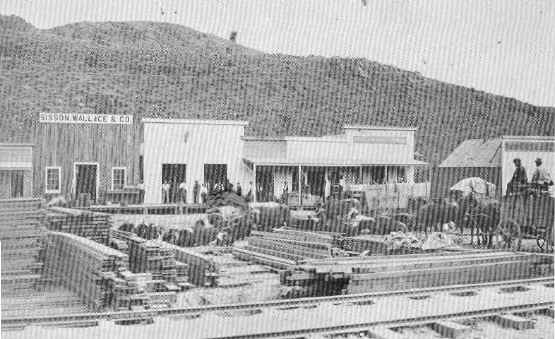
Present day visitors to the Nevada Ghost town of Palisade will find the place virtually deserted, but rich in history. You can still wander the streets and examine the creaking buildings which reflect the rich history. It was located in Eureka County, about ten miles south of Carlin, and was founded by silver miners scratching a living from the ore found in the surrounding hills. 

It was a relative success, rich enough to merit the opening of a post office in 1870, and it also got a railway station to transport out the silver with the completion of the transcontinental railway. However, the silver to ran out and the townsfolk were soon desperate for another source of income. 

It didn't take long before Palisade became known as one of the most violent cities in the West. Gunfights, bank robberies, and even marauding natives hit the town on a regular basis, and the antics were reported in newspapers all over the East. However, rather than being a place to avoid, this actually increased travel to the little town and very soon it became a must-see destination. This carried on form three long years and nobody managed to stop the spiraling cycle of violence or clean up the town, despite the pleadings of Newspaper editors. In fact, the reports only seemed to increase interest and even more people headed to Palisade to experience the rawness of the Wild West for themselves. The Eastern press couldn't get enough of the goings-on in this frontier town.  
                                           Palisade Nevada 1870

It all started one day when passengers got off the noon train to eat lunch. Frank West leaned against a corral fence when Alvin Kittleby approached. West saw him coming, stiffened, took his cigarette from his mouth and dropped it to the ground. He watched Alvin until the two were within range.

"There ya are, ya lowdown polecat!," screamed Al. "I've been waitin' for ya. I'm gonna kill ya for what ya done to my pore little sister!"

Frank remained mute and gave the meanest grin the passengers had ever seen, and quickly drew his revolver. Cocking it, he took careful aim and fired.

Kittleby clutched his chest, and dropped to the ground, writhing in pain until his life ebbed away. Only two or three seconds later his life ended.

Women screamed and fainted. Men ran in all directions, seeking shelter from the danger. Several approached poor Alvin's still body, gently picked him up, and carried the lifeless bundle to the nearest saloon. Others quickly disarmed West and dragged him, kicking and screaming, to the jail.

The battle took seconds must the impact lasted far longer for the frightened passengers. Lunch was abandoned and the climbed back into the cars. Some even crouched on floors and behind seats.

As soon as the train disappeared behind the first curve out of town, the people of Palisade began laughing and continued to enjoy themselves for three more years. This was their first performance, an act they put on for rail travelers more than one thousand times before tiring of the joke. 

The whole town was in on the drama and courted the attention to ensure they  were mentioned in dime novels and the press. Tourism was their new trade and their antics were bringing in much needed money the silver mines were failing to provide. West was a tall, good-looking cowhand from a nearby ranch and Kittleby was a deeply-religious resident agent and buyer for a cattle company.
           Palisade Canyon, during construction of the Transcontinental Railroad in 1868

Their productions flourished  growing grander and more spectacular. Sometimes there was a bank robbery with a noisy shootout between the sheriff, his posse, and the robbers. Another time local Shoshones were drafted to 'massacre' the townspeople, especially those near the depot. The massacre was a full-fledged production taking ten minutes and a gallon of beef blood from the slaughterhouse. Townsfolk who weren't directly involved with actually being a participant in the gun battles, bank robberies, Indian attacks, and what have you, helped out manufacturing blanks for the pistols and rifles by the thousands. But their job didn't stop there, they were to ones tasked with collecting the beef blood from the local slaughter house for the fake wounds and such.

During the three years Palisade people indulged in pretend violent episodes not one real crime was committed. In fact, the town was so law-abiding and peace-loving that the local Eureka County deputy had nothing to do. The town jail was only for show.

Truth was, joshing the emigrants traveling west was a common pastime and Palisade wasn't the only town doing it. Usually the actors were the boys from the saloons who concocted magnificent con jobs to rattle tourists. The showmen really embraced the stereotype and gave the Eastern dudes a taste of the West they'd read about. Some even travelled just to see it happen.  

On April 7, 1880, a westbound passenger train stopped in Elko. A few locals headed for the railway station. One ran over to the train conductor waving a fake telegraph message."I just received this from my brother who has a little spread a few miles this side of Carlin. He says the Indians have broken loose and are playing hell with the settlers at Blue Horse Gulch. They are scalping women and children and headed this way."

                        The Scene of the Crime - CPRR at Elko Nevada 1869

Train passengers, already infiltrated with locals, mobbed the two men asking them what they should do. One ran to the crowd and told them he and some companions had been captured by the Indians. He took off his hat, held it to his heart and declared half his group had been lost. He burst into tears and sobbed, "Poor little Jimmy! I saw him shot and scalped right before my eyes!"

Panicking passengers begged the conductor to delay the train in Elko until the Indian trouble was over but he pulled out his watch and told them the train had to proceed and that everyone should arm themselves for the expected confrontation.  

That did it. The passengers were ready to take over the train, even if by force. With a straight and serious face the conductor put on an arm-bending sales pitch promising he would back the train back to Elko at the first sign of Indian trouble. With his reassurance, the reluctant tourists climbed back into the cars and began cleaning and checking their weapons.

As the train pulled out of Elko the bunch relaxed into uncontrollable laughter. Scaring hell out of scores of tenderfeet from back east was excellent sport.

Even 20th century train passengers were not immune to high jinks by locals. In August 1902 hundreds of Knights of Pythius members headed for San Francisco for a national meeting.

One of the special convention trains was struck at Deeth, Nevada. In the words of one of the Knights when he reported the incident in Elko: "I've read a lot about the wild and wooly west, but this morning I witnessed the genuine article.

"Out there on the desert, at a little station called Deeth, we saw a man hanging from a telegraph pole. A placard on his coat stated that he had been hanged by vigilantes for stealing a horse.

"Then, while the train waited, a crowd of men rushed out of a saloon and fired their rifles at another crowd of cowboys, killing four of them.

"Then a number of Indians dressed in feathers and blankets, with war paint on, rode down the street, pointed their guns at the train and threatened to kill anyone who stuck his head out of a window. I tell you, Nevada is a lawless place!"
                             Knights of Phythias Membership Certificate 1890

Local Knights of Phythias planned the whole thing and kept the fictionalized Wild West alive for a few minutes that left a lot of traveling Knights with blanched faces as the train pulled out of Deeth.

Who started these hoaxes is still not clear but a consistent theme involves the conductors getting kickbacks for trains staying longer in towns where the passengers spent money, or on food (which was already paid for) being forgotten in the clamor for the safety of the carriage. 

So who was in on it? Well, by all accounts, the railroad conductors and engineers made sure they hit the train whistle ahead of time so that everyone could get into position. So it's for certain they were in on it. And yes, just about everyone was in on it, including the local townsfolk, the Indians, the U.S. Cavalry, and probably others.

One thing seems certain to me. Palisade certainly gave the passengers the most bang for their bucks.

It's all these amazing people and places which have influenced my writing and stimulated my imagination. I love it when fact is stranger than fiction.

The Innocents (The Innocents Mystery Series Book 1) by C.A. Asbrey @prairierosepubs #historicalmystery #theinnocentsmysteries


 ''The Innocents", by C.A. Asbreypublished by Prairie Rose Press is now available to buy.


Pinkerton Detective Abigail MacKay is a master of disguises—and of new crime-solving technology! But she’ll have to move fast to stay a step ahead of Nat Quinn and Jake Conroy.

Nat and Jake are the ringleaders of The Innocents, a western gang that specializes in holding up trains carrying payrolls—and Nat is pretty savvy when it comes to using the new sciences of 1868 in committing his crimes.

Charismatic Nat and handsome Jake are on the run, and they’ve always gotten away before—before Abi. But when Abi is caught by another band of outlaws during the chase, there’s no other choice for Nat and Jake but to save her life. Abi owes them, and she agrees to help them bring in the murderer of a family friend.

The web of criminal activity grows more entangled with each passing day, but Nat, Jake, and Abi are united in their efforts to find the murderer. Once that happens, all bets are off, and Abi will be turning Nat and Jake over to the law. But can she do it? She finds herself falling for Nat, but is that growing attraction real? Or is he just using her to learn more about the Pinkertons’ methods? Abi always gets her man—but she may have met her match in her “best enemies”—THE INNOCENTS.

EXCERPT


     “So, you want to pretend you’re a Pinkerton? As a female?” His eyes darkened. “I’ve questioned one before, although he didn’t know who I was. They’re trained real well on being both sides of interrogations. You don’t want to do this. Not as a woman. He had a real hard time. You’ll have it even harder.”
     She sat staring ahead once more, her face impassive and stony.
     “You’ve nothing to say?”
     Her eyes flashed. “Beating the hell out of me won’t change anything but my view of you.”
     Nat reached out and entwined a hard fist in her hair and dragged her backward until the chair balanced on the back legs. He brought his face close to hers, his hot breath burning into her cheek.  “Think harder, lady. This isn’t a game. Who are you?”
     Abigail felt the dragging pain at the back of her head as shards of pain lanced across her scalp. He held her, balanced between his painful grip and a clattering fall to the floor but her stubborn nature wouldn’t let her acquiesce.
     “Others will come after you, no matter what you do to me.” She darted her eyes to meet his, unable to move her pinioned head. “I won’t be the last.”


Blog - C.A Asbrey - all things obscure and strange in the Victorian period 
The Innocents Mystery Series group 

Facebook - https://www.facebook.com/mysteryscrivener/

Amazon - https://www.amazon.com/author/caasbrey